
Nm to lb-ft Conversion Explained (With Easy Formula + Examples)
Convert nm to lb ft instantly using formula, examples, and calculator. Learn torque conversion for bolts, motors, and industrial maintenance work.
Different countries and industries use different torque units, so understanding how to convert them correctly is essential for safe and accurate operations.
In this guide, you’ll learn:
- Nm to lb-ft conversion formula
- Step-by-step calculation method
- Real-world examples
- Common mistakes to avoid
👉 For instant results, use our Torque Calculator (Nm ↔ lb-ft)
What is Nm and lb-ft?
Torque is measured in different units depending on the measurement system.
- Newton-meter (Nm) → Metric system
- Pound-foot (lb-ft) → Imperial system
Both represent rotational force but use different units of measurement.
👉 Learn basics here: Torque Formula Explained
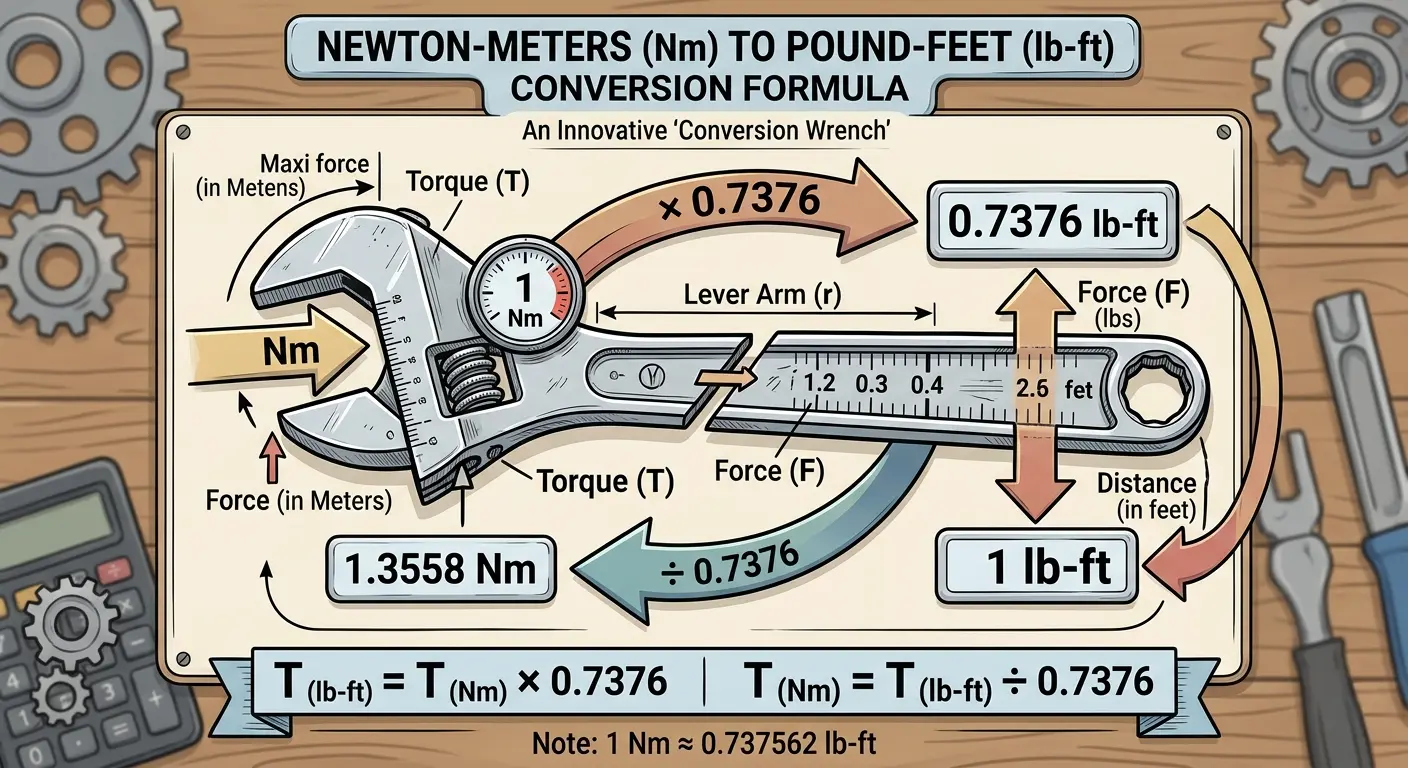
Nm to lb-ft Conversion Formula
1 Nm = 0.737562 lb-ft
So the formula is:
lb-ft = Nm × 0.737562
How to Convert Nm to lb-ft (Step-by-Step)
- Take torque value in Nm
- Multiply by 0.737562
- Result is in lb-ft
Example:
50 Nm × 0.737562 = 36.88 lb-ft
👉 For full calculation method: How to Calculate Torque
Quick Conversion Table
Quick Reference: Common Nm to lb-ft conversion values for daily mechanical and maintenance work.
| Torque (Nm) | Torque (lb-ft) | Typical Use Case |
|---|---|---|
| 10 Nm | 7.38 lb-ft | Light fittings, small screws |
| 20 Nm | 14.75 lb-ft | Small mechanical parts |
| 50 Nm | 36.88 lb-ft | Medium bolt tightening |
| 100 Nm | 73.76 lb-ft | Automotive and industrial bolts |
| 200 Nm | 147.51 lb-ft | Heavy-duty equipment |
👉 For more values: Torque Chart Guide
Real-Life Examples (Practical Use)
🔧 Example 1: Bolt Tightening
If a bolt requires 80 Nm torque:
80 × 0.737562 = 59 lb-ft
👉 See full guide: Bolt Torque Calculation
⚙️ Example 2: Automotive Use
Many vehicle manuals use lb-ft, while tools may display Nm.
⚡ Example 3: Industrial Maintenance
In Gulf industries, metric (Nm) is common, but imported equipment may use lb-ft.
Why Unit Conversion Matters
- Prevents over-tightening
- Avoids equipment damage
- Ensures correct maintenance standards
👉 Learn importance: Why Torque Matters in Maintenance
Common Conversion Mistakes
- Using incorrect conversion factor
- Mixing Nm with kg-cm
- Rounding errors in critical applications
👉 Avoid errors: Common Torque Mistakes
Nm vs lb-ft vs Other Units
- Nm → Metric standard
- lb-ft → Imperial system
- kg-cm → Older systems
👉 Full breakdown: Torque Units Explained
Best Way to Convert Torque (Recommended)
Manual calculation is useful, but for speed and accuracy, using a calculator is better.
👉 Try now: Torque Calculator (Instant Conversion)
Pro Tip (Field Insight)
Always match your torque unit with your tool settings.
Using the wrong unit can lead to serious equipment failure.
Frequently Asked Questions (FAQs)
How do you convert Nm to lb-ft?
To convert Nm to lb-ft, multiply the value by 0.737562. For example, 50 Nm equals 36.88 lb-ft.
What is 100 Nm in lb-ft?
100 Nm is approximately 73.76 lb-ft.
Why do we convert Nm to lb-ft?
Conversion is needed because different countries and tools use different torque units, especially in automotive and industrial applications.
Is Nm stronger than lb-ft?
No, they measure the same torque but in different unit systems.
What is the easiest way to convert torque units?
The easiest way is to use an online torque calculator for instant and accurate results.
Final Thoughts
Understanding Nm to lb-ft conversion is essential for technicians, engineers, and maintenance professionals.
Whether you're working with bolts, motors, or machines, accurate conversion ensures safety and reliability.
👉 Use this tool for quick results: Torque Calculator