
Torque Formula Explained (Easy Calculation + Real Examples)
Torque formula explained is something every technician must understand to avoid loose bolts, machine damage, and repeated maintenance issues.
In real maintenance work, I have seen many situations where bolts were tightened properly but still failed after some time. The issue was not effort, it was incorrect torque calculation.
If you do not understand how torque is calculated, you are simply guessing. This guide will help you understand the torque formula in a simple way and show how to apply it correctly in real industrial situations.
👉 Need quick and accurate results? Use this: Torque Calculator (Nm to lb ft)
What is Torque? (Simple Explanation)
Torque is the rotational force applied to an object.
In simple terms:
Torque is what causes something to rotate.
- Turning a wrench
- Opening a valve
- Rotating a motor shaft
The more force you apply and the longer the lever arm, the greater the torque.
👉 Read more: What is Torque in Engineering
Torque Formula (Core Concept)
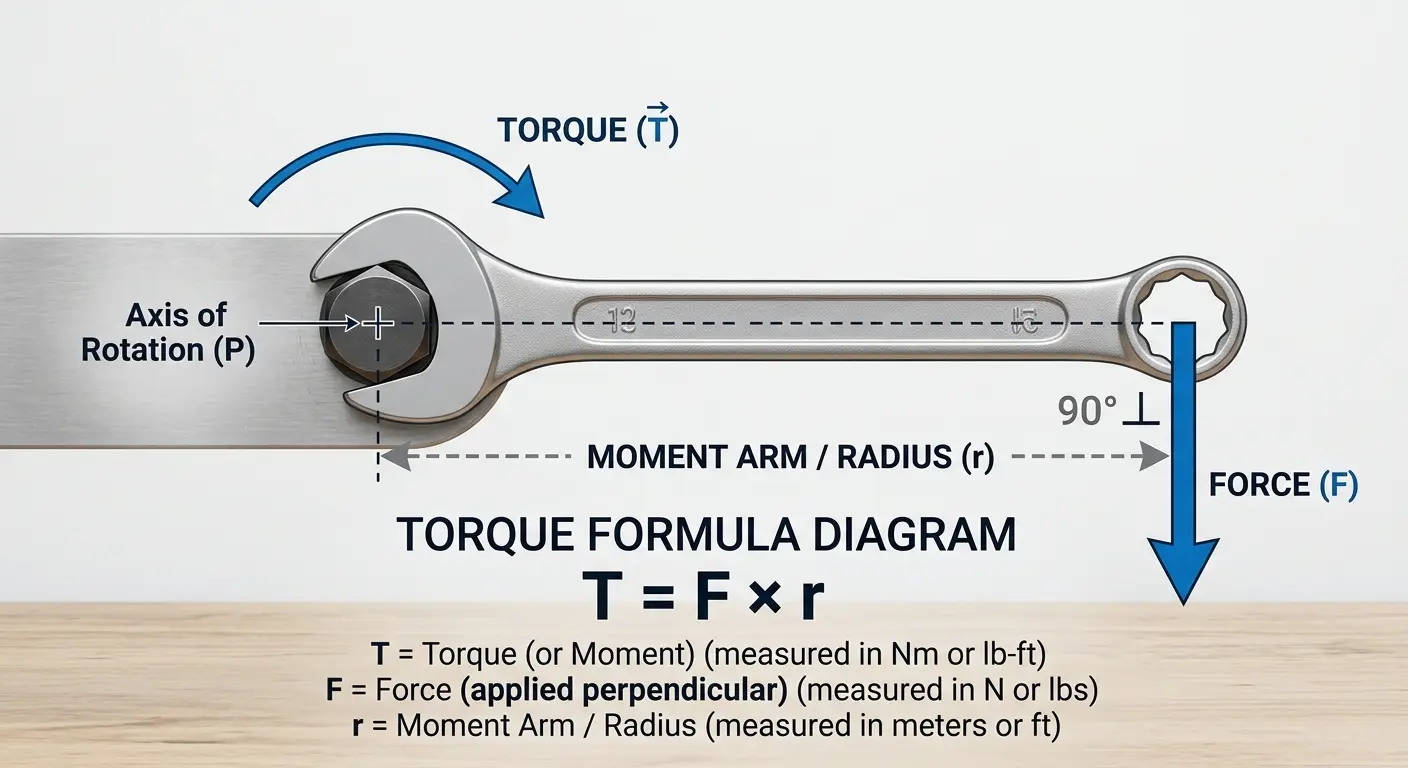
Torque (T) = Force (F) × Distance (r)
- T = Torque (Nm or lb-ft)
- F = Force applied
- r = Distance from pivot point
Why This Formula Matters
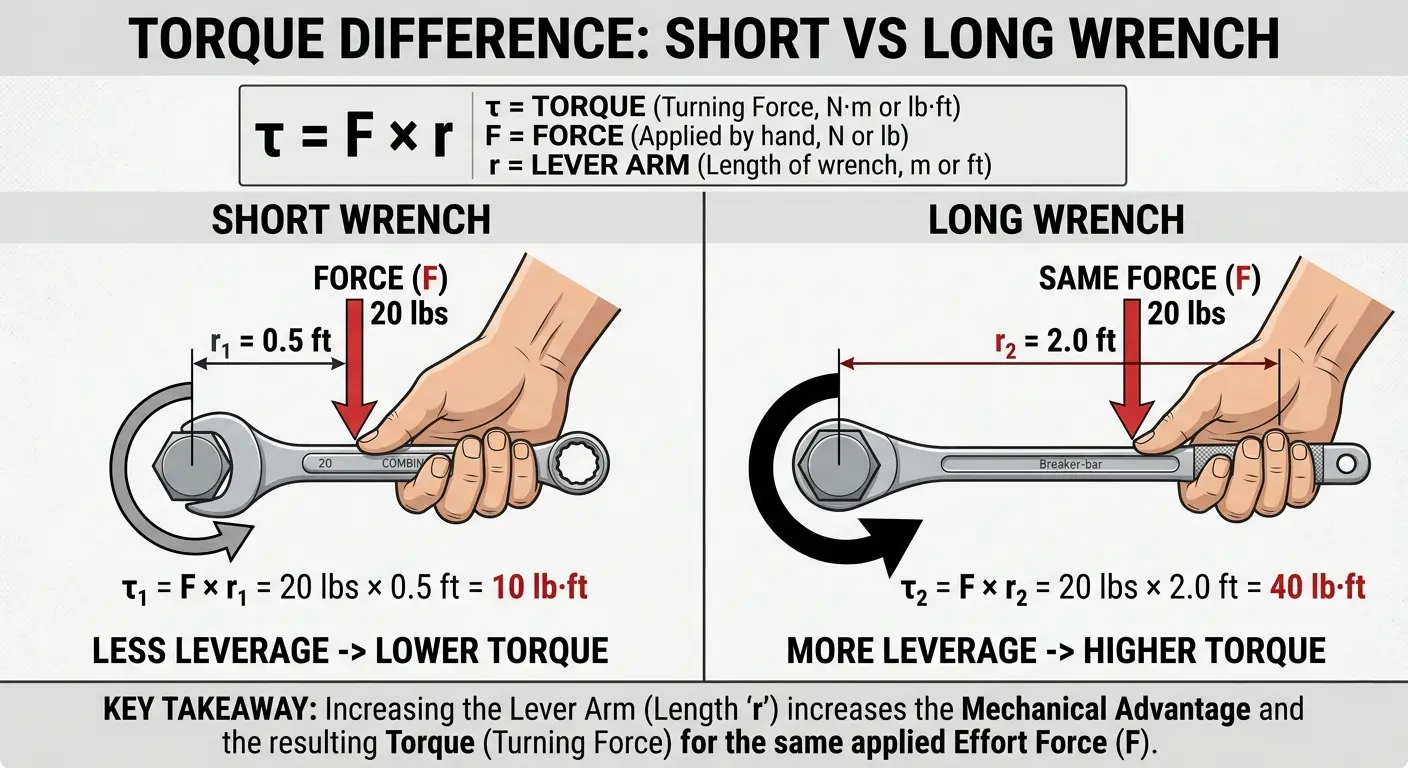
- Increase force → more torque
- Increase distance → more torque
That’s why a longer wrench makes tightening easier.
👉 Need quick calculation during work? Use this: Torque Calculator Tool
How to Calculate Torque (Step-by-Step)
- Identify force (example: 50 Newtons)
- Measure distance (example: 0.5 meters)
- Apply formula
Torque = 50 × 0.5 = 25 Nm
👉 Detailed guide: How to Calculate Torque
Torque Formula Examples (Real-Life Use)
Example 1: Tightening a Bolt
Force = 100 N, Length = 0.3 m → Torque = 30 Nm
👉 See full guide: Bolt Torque Calculation Guide
Example 2: Longer Wrench
Same force but longer length increases torque significantly.
Example 3: Motor Application
Torque determines how much load a motor can handle.
👉 Learn more: Torque in Electric Motors
Torque Units Explained
- Newton-meter (Nm)
- Pound-foot (lb-ft)
- Kilogram-centimeter (kg-cm)
👉 Full explanation: Torque Units Explained
Nm to lb-ft Conversion
1 Nm ≈ 0.737 lb-ft
👉 Use tool: Torque Calculator
👉 Learn more: Nm to lb-ft Conversion Guide
Common Torque Calculation Mistakes
- Wrong distance measurement
- Incorrect angle of force
- Unit confusion
In real maintenance work, I’ve seen many technicians apply force without understanding the torque formula. This leads to either loose connections or damaged components. In Gulf industries, especially in heavy machinery, correct torque calculation is critical for safety and long-term equipment performance.
👉 Avoid mistakes: Common Torque Mistakes
Why Torque Matters in Maintenance
- Ensures equipment safety
- Prevents bolt failure
- Improves performance
👉 Learn more: Why Proper Torque Matters
Torque vs Force vs Power
- Force = push or pull
- Torque = rotational force
- Power = rate of work
👉 Full comparison: Torque vs Force vs Power
Pro Tip (Field Insight)
Torque is not about strength—it’s about control.
Correct torque ensures reliability, safety, and long equipment life.
Frequently Asked Questions (FAQs)
What is the basic torque formula?
The basic torque formula is T = F × r, where torque equals force multiplied by the distance from the pivot point.
What are the units of torque?
Torque is measured in Newton-meters (Nm), pound-feet (lb-ft), and kilogram-centimeters (kg-cm).
How do you calculate torque easily?
You can calculate torque by multiplying the applied force by the distance from the pivot point. For quick results, use a torque calculator.
Does increasing wrench length increase torque?
Yes, increasing the length of the wrench increases torque because the distance from the pivot point becomes larger.
What is the difference between torque and force?
Force is a push or pull, while torque is the rotational effect of that force. Learn more in our Torque vs Force guide.
Final Thoughts
Understanding the torque formula is essential for any technician or engineer.
Once you master it, you can confidently perform real maintenance tasks.