
Belt Speed Formula Explained
A belt drive system can appear mechanically healthy while still causing airflow loss, reduced conveyor output, excessive vibration, or premature bearing wear. In many industrial facilities, the real problem is not the motor or the belt itself—it is a misunderstanding of the belt speed formula used to determine operating speed.
Understanding the belt speed formula helps maintenance technicians, engineers, and plant operators verify equipment performance before small efficiency losses become costly downtime events.If you need an instant calculation, use the Belt Speed Calculator to determine belt velocity using pulley diameter and RPM values before applying the formula manually.
Whether you are troubleshooting an HVAC blower, conveyor system, industrial fan, compressor, or pump, knowing how the formula works provides a stronger foundation for maintenance decisions and equipment optimization.
What Is the Belt Speed Formula?
The belt speed formula calculates the linear velocity of a belt as it travels around a rotating pulley. It converts rotational movement into linear motion and is one of the most commonly used calculations in industrial maintenance and mechanical engineering.
A belt drive transfers power from a motor shaft to another rotating component through pulleys and belts. As the pulley rotates, the belt moves along its circumference. The formula determines how fast that movement occurs.
The standard engineering formula is:
This formula is used across manufacturing plants, mining facilities, HVAC systems, processing equipment, conveyors, and workshop machinery where rotational speed directly affects performance.
Why Belt Speed Formula Matters
Many maintenance issues can be traced back to incorrect belt speed calculations. Even a small error in pulley diameter measurement or RPM identification can significantly affect machine performance.
When belt speed is too high, equipment may experience:
- Reduced energy efficiency
- Shorter belt replacement intervals
- Excessive vibration
- Premature bearing wear
- Increased belt temperature
- Higher energy consumption
- Reduced belt life
When belt speed is too low, common problems include:
- Reduced conveyor throughput
- Insufficient HVAC airflow
- Poor pump performance
- Lower production efficiency
- Unexpected process bottlenecks
Technicians often investigate these symptoms while performing preventive maintenance inspections on shafts, bearings, pulleys, couplings, and motors. Understanding the formula allows them to quickly identify whether operating speed is contributing to the problem.
Many engineers first learn the calculation through guides such as How to Calculate Belt Speed Step by Step, then use the formula during real-world troubleshooting and commissioning activities.
Understanding Each Variable in the Formula
Although the formula appears simple, every variable has a direct influence on final belt speed.
π (Pi)
A mathematical constant approximately equal to 3.1416. It is used to calculate pulley circumference.
Pulley Diameter
The outside diameter of the driver pulley. Larger pulleys move more belt during each revolution and therefore generate higher belt speed.
RPM (Revolutions Per Minute)
The rotational speed of the driving shaft or motor. Increasing RPM increases belt velocity proportionally.
60
Used to convert minutes into seconds because the final result is expressed in meters per second (m/s).
Accurate measurement of these variables is essential. Many technicians use laser tachometers, digital calipers, alignment tools, and vibration monitoring equipment to verify actual operating conditions before performing calculations.
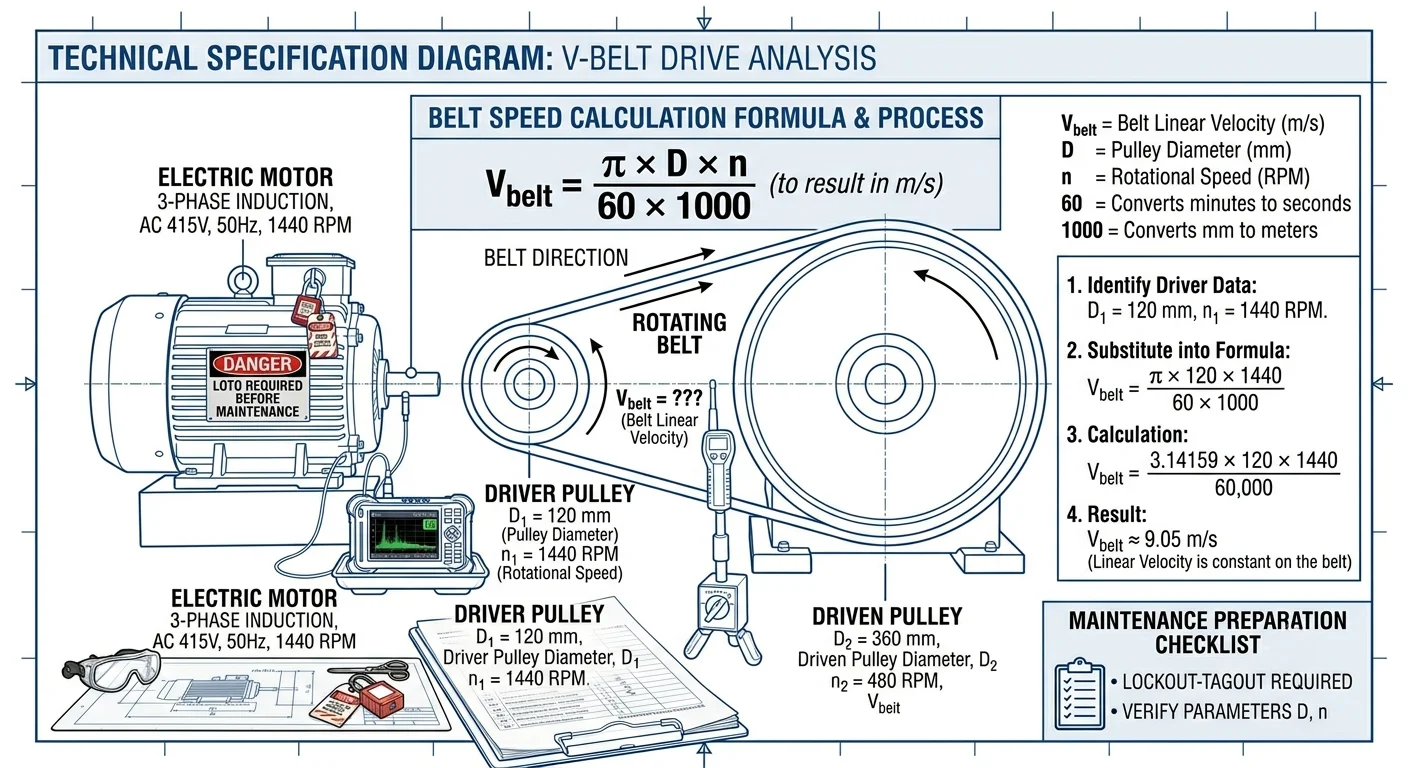
How the Belt Speed Formula Works
The belt speed formula is based on a simple mechanical principle: every time a pulley completes one revolution, the belt travels a distance equal to the pulley's circumference.
Circumference is calculated using:
If a pulley rotates 1450 times per minute, the belt travels that circumference 1450 times every minute. The formula converts that total distance into meters per second, giving maintenance personnel a standardized measurement for evaluating system performance.
This calculation is important when comparing equipment specifications, verifying production targets, troubleshooting airflow issues, and optimizing conveyor operation.
The same principle applies whether the equipment is a conveyor system, HVAC blower, industrial fan, compressor, agricultural machine, or manufacturing line.
When combined with RPM measurements and pulley inspections, the formula becomes a valuable troubleshooting tool for diagnosing hidden performance losses.
Practical Belt Speed Calculation Examples
The examples below show how pulley diameter and RPM affect final belt speed. These values represent common industrial applications encountered during maintenance inspections and equipment commissioning.
| Pulley Diameter | RPM | Calculated Belt Speed | Application |
|---|---|---|---|
| 150 mm | 900 | 7.07 m/s | Packaging Conveyor |
| 200 mm | 1450 | 15.18 m/s | HVAC Blower |
| 250 mm | 1750 | 22.91 m/s | Industrial Fan |
| 300 mm | 1800 | 28.27 m/s | High-Speed Processing Line |
Notice how increasing either pulley diameter or RPM increases belt speed. This relationship becomes important when replacing pulleys, upgrading motors, or modifying production equipment.
Instead of calculating manually every time, technicians often verify results using the Belt Speed Calculator before making changes to operating equipment.
During troubleshooting, it is also common to compare calculated belt speed against measured values obtained with laser tachometers. Significant differences may indicate slip, wear, contamination, alignment problems, or incorrect installation practices.
Common Mistakes When Using the Formula
The formula itself is straightforward, but many calculation errors originate from incorrect measurements or assumptions.
One of the most common mistakes is using the wrong pulley diameter. Technicians may accidentally measure a driven pulley instead of the driver pulley or fail to account for pulley wear. Even a small measurement error can significantly affect the final result.
Another common issue is unit conversion. The formula requires pulley diameter in meters when calculating meters per second. Mixing millimeters, inches, and meters often creates unrealistic results that lead to poor maintenance decisions.
Ignoring operating conditions is another frequent problem. A calculated value represents theoretical belt speed, but actual operating speed may differ due to:
- Belt slip
- Worn pulley grooves
- Improper tension
- Shaft misalignment
- Bearing wear
- Excessive vibration
- Contamination from dust or oil
Maintenance teams sometimes focus solely on RPM readings while overlooking mechanical conditions. However, alignment issues, lubrication problems, damaged couplings, and worn bearings can influence overall system performance even when calculated belt speed appears correct.
Engineers investigating recurring speed-related problems often study topics such as Conveyor Belt Speed Calculation, Pulley Diameter and Belt Speed Relationship, RPM to Belt Speed Formula and Calculation, Belt Speed ft/min Conversion Guide, What Is a Good Belt Speed, and Common Belt Speed Calculation Mistakes to build a complete understanding of belt drive performance.
Continue Learning About Belt Speed
Understanding the belt speed formula is only the first step. The following engineering resources explain how to calculate belt speed accurately, evaluate operating performance, troubleshoot speed-related problems, and optimize industrial belt drive systems.
Learn the Fundamentals
- How to Calculate Belt Speed – Follow the complete calculation process using pulley diameter and RPM.
- RPM to Belt Speed Formula and Calculation – Convert rotational speed into belt velocity using practical examples.
- Pulley Diameter and Belt Speed Relationship – Learn how pulley size influences belt speed.
Improve Performance
Troubleshooting
Engineering Tools
Real-World Engineering Insight
In Gulf industrial facilities, belt speed calculations are often verified during major shutdown maintenance activities rather than waiting for equipment failure. High ambient temperatures, airborne dust, and continuous operating schedules create conditions where even small performance losses can grow into significant maintenance issues.
During inspections across manufacturing plants, HVAC systems, and material handling facilities, maintenance teams frequently discover that the calculated belt speed differs from actual operating performance. In many cases, the formula itself is correct, but field conditions have changed.
Common findings include worn pulley grooves, loose belt tension, shaft misalignment, bearing deterioration, contamination, and excessive vibration. These conditions reduce efficiency and may create symptoms that resemble motor problems or mechanical failures.
Experienced technicians rarely rely on calculations alone. They combine formula verification with tachometer readings, alignment checks, vibration analysis, bearing inspections, and visual examinations of belts and pulleys.
One practical recommendation is to establish a baseline operating speed immediately after equipment commissioning. Recording pulley diameters, RPM values, vibration readings, and inspection findings creates a valuable maintenance reference that can simplify future troubleshooting.
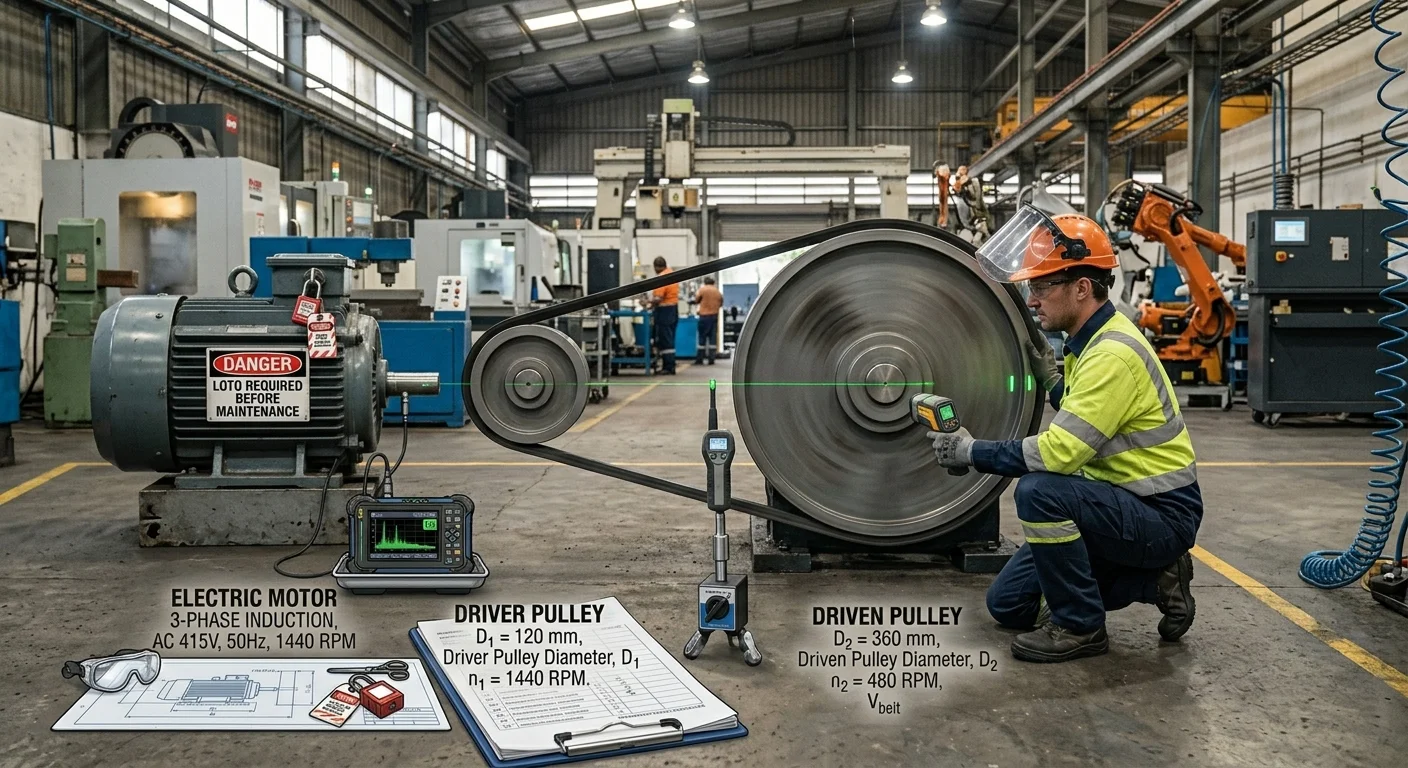
When speed-related issues occur, comparing current operating conditions against historical baseline data often reveals hidden changes long before major equipment failures become visible.
Frequently Asked Questions
What is the belt speed formula?
The standard belt speed formula is: Belt Speed (m/s) = (π × Pulley Diameter × RPM) ÷ 60. It converts pulley rotation into linear belt velocity.
Why is the belt speed formula important?
It helps maintenance personnel verify equipment performance, optimize production systems, troubleshoot speed-related problems, and prevent efficiency losses.
Does pulley diameter affect belt speed?
Yes. Increasing pulley diameter increases belt speed when RPM remains constant because more belt travels during each pulley revolution.
Can actual belt speed differ from calculated belt speed?
Yes. Belt slip, pulley wear, contamination, improper tension, alignment problems, and mechanical wear can reduce actual operating speed.
How do technicians verify belt speed in the field?
Technicians commonly use laser tachometers, contact tachometers, digital calipers, vibration analyzers, and alignment tools to verify operating conditions.
Should the belt speed formula be verified after changing pulley sizes?
Yes. Any change in driver pulley diameter or motor RPM changes the calculated belt speed. Always verify the new speed after replacing pulleys or modifying the drive system to ensure safe and efficient operation.
What equipment commonly uses belt speed calculations?
Conveyors, HVAC blowers, industrial fans, pumps, compressors, agricultural machinery, and manufacturing equipment frequently rely on belt speed calculations.
Recommended Next Steps
Now that you understand the belt speed formula, continue with these practical engineering resources to improve calculations, optimize belt drive performance, and troubleshoot real-world problems.