
Torque Wrench Guide (Types, Usage, Settings & Practical Tips)
Torque wrench guide is essential for every technician and engineer working in mechanical maintenance, automotive systems, and industrial environments. A torque wrench ensures that bolts and fasteners are tightened to the correct specification, preventing damage, failure, or safety risks.
In Gulf industries such as oil & gas, construction, and manufacturing, improper torque application is one of the most common causes of equipment failure. Using a torque wrench correctly helps maintain precision, reliability, and safety.
This guide will help you understand how torque wrenches work, how to use them properly, and how to avoid common mistakes.
👉 For quick torque values and conversion: Torque Calculator (Nm ↔ lb-ft)
What is a Torque Wrench?
A torque wrench is a tool used to apply a specific amount of torque to a fastener such as a bolt or nut. Unlike a regular wrench, it ensures that the correct torque value is applied.
Torque wrenches are critical in applications where precision matters, such as:
- Engine assembly
- Pipeline flange tightening
- Industrial machinery maintenance
👉 Learn torque basics: What is Torque in Engineering
Using the correct torque prevents both over-tightening (which can damage threads) and under-tightening (which can cause loosening).
Types of Torque Wrenches
Different types of torque wrenches are used depending on the application:
- Click Torque Wrench: Most common, produces a click sound at set torque
- Beam Torque Wrench: Simple design with scale indicator
- Digital Torque Wrench: Provides precise digital readings
- Hydraulic Torque Wrench: Used for heavy industrial applications
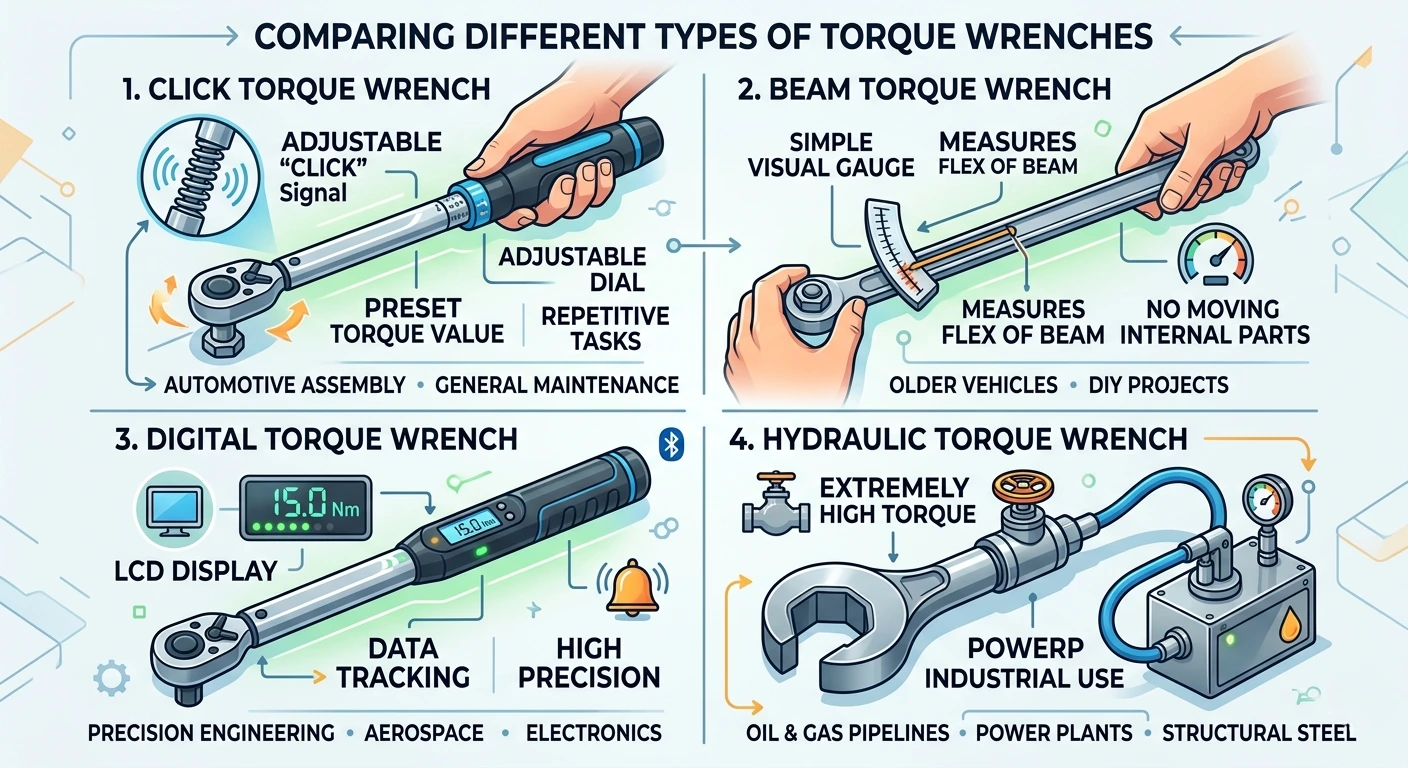
Figure: Different types of torque wrenches used in mechanical work.
Choosing the right type depends on accuracy requirements and working conditions.
How to Use a Torque Wrench (Step-by-Step)
Using a torque wrench correctly is essential for accurate results. Follow these steps:
- Set the required torque value on the wrench
- Attach the correct socket to the fastener
- Apply force slowly and steadily
- Stop when you hear a click (for click-type wrench)
👉 Learn calculation basics: How to Calculate Torque
Example:
If a bolt requires 50 Nm, set the wrench to 50 Nm and apply force until it clicks.
Always ensure the wrench is calibrated and used within its range.
Torque Wrench Settings and Units
Torque wrenches allow you to set values in different units such as Nm and lb-ft.
Common settings include:
- Metric units (Nm)
- Imperial units (lb-ft)
👉 Conversion guide: Nm to lb-ft Conversion
Understanding units is important to avoid incorrect torque application.
👉 Detailed units: Torque Units Explained
Torque Wrench Applications in Industry (Gulf Context)
Torque wrenches are widely used in Gulf industries due to strict safety standards:
- Oil & gas pipelines
- Heavy machinery assembly
- Construction equipment
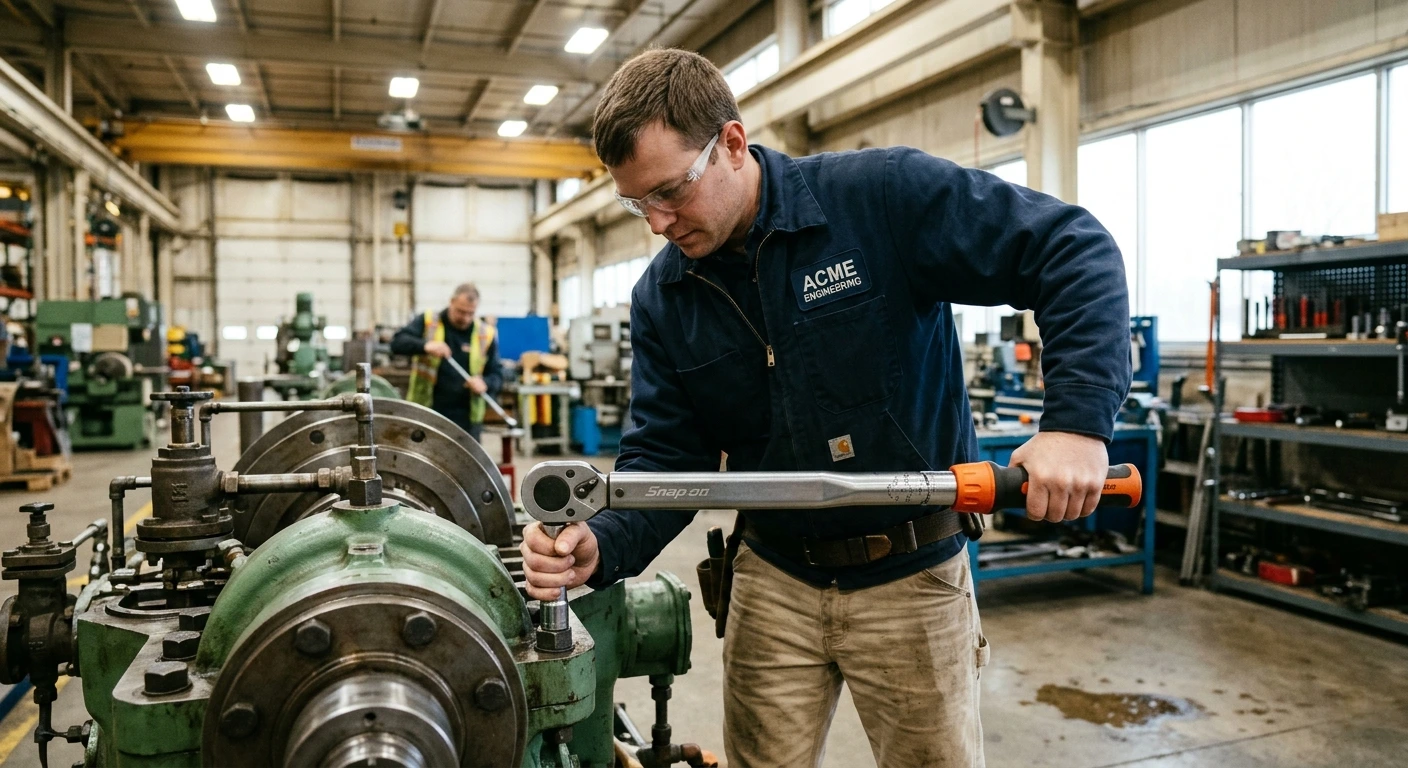
Figure: Torque wrench used in real industrial maintenance work.
Proper torque ensures safety compliance and reduces downtime.
Common Torque Wrench Mistakes
Many technicians make mistakes that affect accuracy:
- Not calibrating the wrench
- Applying force too quickly
- Using wrong torque units
- Using wrench beyond its range
👉 Avoid errors: Common Torque Mistakes
These mistakes can lead to equipment failure or safety hazards.
Torque Wrench Comparison Table
| Type | Accuracy | Best Use | Application |
|---|---|---|---|
| Click | High | General work | Automotive & maintenance |
| Beam | Medium | Simple tasks | Basic mechanical work |
| Digital | Very High | Precision work | Advanced engineering |
| Hydraulic | Extreme | Heavy-duty | Industrial applications |
When to Use a Torque Wrench
You should always use a torque wrench when:
- Working with critical fasteners
- Following manufacturer specifications
- Safety is important
👉 Related: Torque Calculation Examples (Real-Life)
👉 Recommended torque values: Bolt Torque Chart (Standard Values)
Using a torque wrench ensures consistency and accuracy in every job.
Final Summary
This torque wrench guide provides a complete understanding of how to use torque wrenches effectively. From selecting the right type to applying correct torque values, every step plays a critical role in maintenance and engineering work.
Using a torque wrench properly ensures safety, accuracy, and long equipment life.
Frequently Asked Questions (FAQs)
What is a torque wrench used for?
A torque wrench is used to apply a specific torque to bolts and fasteners.
Which type of torque wrench is best?
Click torque wrenches are most commonly used for general applications.
How accurate is a torque wrench?
Accuracy depends on type, but most provide reliable precision when calibrated.
Can I use a torque wrench for loosening bolts?
No, torque wrenches are designed for tightening, not loosening.
Why is calibration important?
Calibration ensures accurate torque application and prevents errors.