
Bolt Torque Chart Standard Values (Quick + Practical Guide)
Bolt torque chart – standard values are essential for technicians and engineers working in maintenance, assembly, and industrial environments. In real maintenance work, applying correct torque ensures bolt integrity, prevents loosening, and avoids equipment failure.
Technicians often face situations where bolts are either over-tightened or under-tightened, leading to serious issues such as leaks, vibration damage, or broken fasteners. In Gulf industries such as oil & gas, construction, and heavy equipment maintenance, correct torque values are critical for safety and reliability.
This guide provides a practical bolt torque chart along with real-world insights to help you apply correct torque in daily work.
👉 For quick calculations: Torque Calculator (Nm ↔ lb-ft)
Bolt Torque Chart – Standard Values Explained
A bolt torque chart provides recommended torque values based on bolt size, material, and application. In real maintenance work, these charts act as a quick reference to avoid guesswork.
Technicians often face confusion when selecting torque values without proper charts, especially when working under pressure in shutdown or emergency conditions.
👉 Learn basics: Torque Formula Explained
A common mistake I’ve seen is using “feel-based tightening” instead of referring to standard torque values, which leads to inconsistent results.
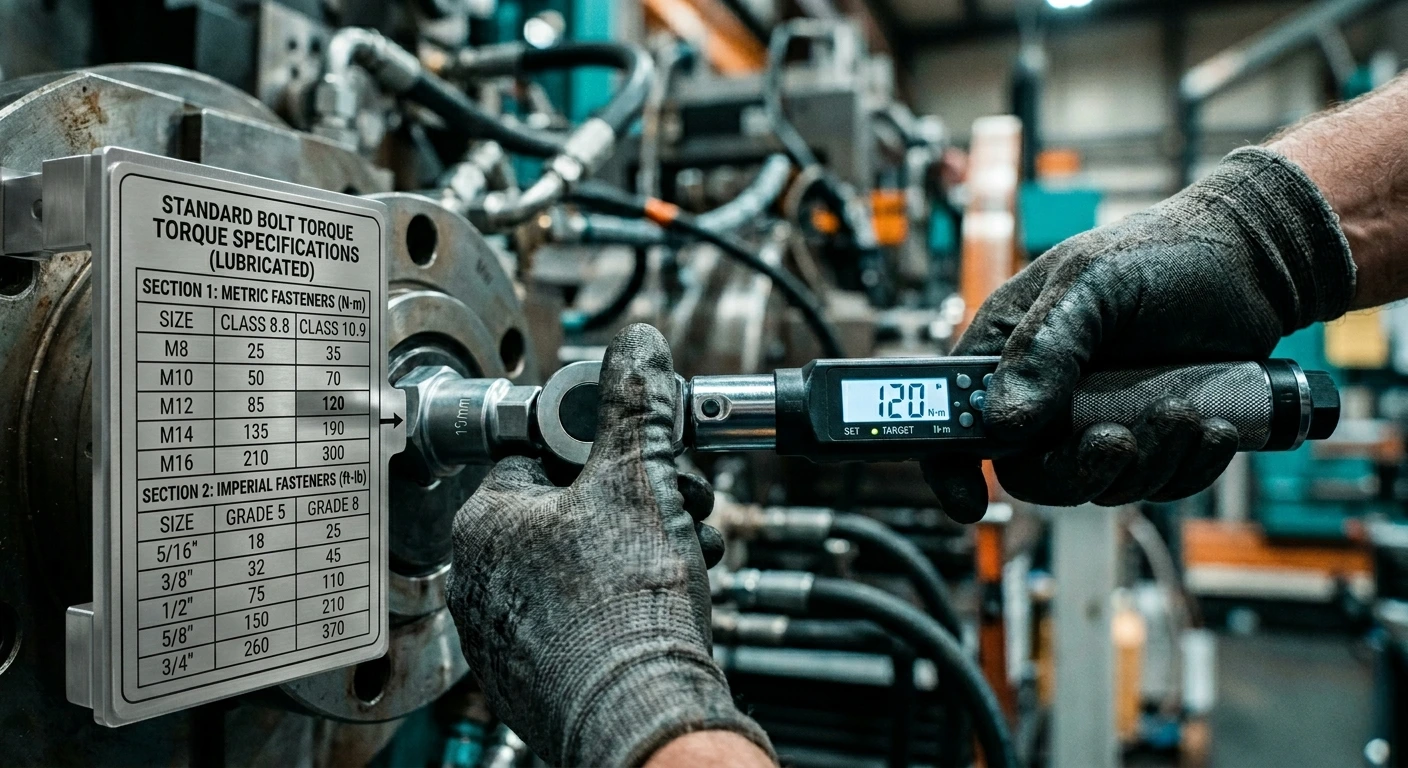
Figure: Standard bolt torque values reference chart.
Standard Bolt Torque Chart (Metric Values)
| Bolt Size | Torque (Nm) | Material Grade | Use Case |
|---|---|---|---|
| M6 | 10–12 Nm | 8.8 | Light machinery |
| M8 | 25–30 Nm | 8.8 | General maintenance |
| M10 | 45–55 Nm | 8.8 | Automotive & equipment |
| M12 | 80–100 Nm | 8.8 | Heavy machinery |
| M16 | 200–240 Nm | 8.8 | Industrial equipment |
This bolt torque chart helps technicians quickly select appropriate torque values based on application.
👉 See real-world torque applications: Torque Calculation Examples (Real-Life)
How to Use a Bolt Torque Chart Correctly
In real maintenance work, using a torque chart correctly is just as important as having one.
Follow these steps:
- Identify bolt size and grade
- Select correct torque value from chart
- Use calibrated torque wrench
- Apply torque gradually
👉 Tool usage: Torque Wrench Guide
Technicians often face errors when they ignore bolt grade or lubrication conditions, which can affect torque values significantly.
Bolt Torque in Real Industrial Applications
In Gulf industries, bolt torque is critical in:
- Pipeline flanges
- Pressure vessels
- Structural assemblies
- Heavy equipment joints
In real maintenance work, incorrect torque can cause:
- Leakage in pipelines
- Structural failure
- Equipment vibration
👉 Learn how torque affects machine performance: How Torque Affects Machine Performance
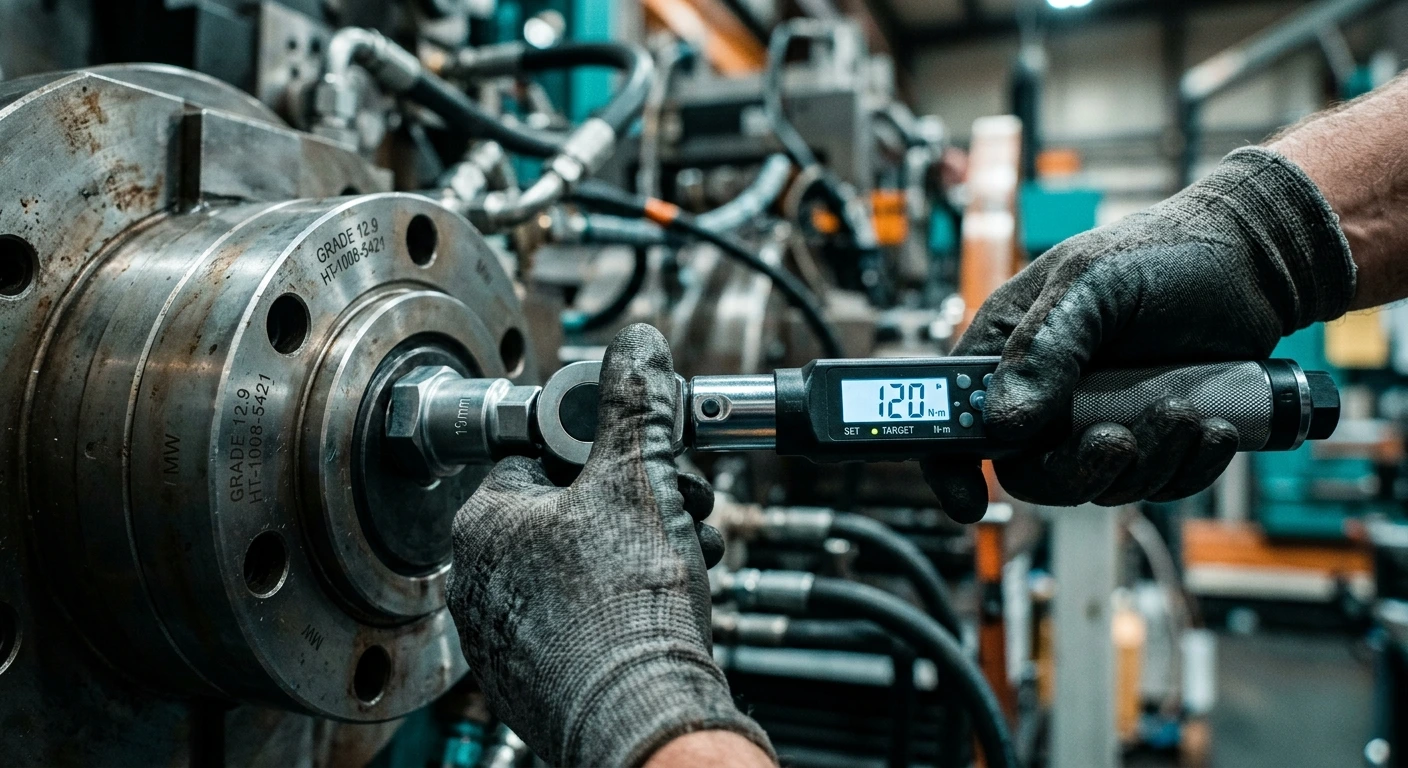
Figure: Applying torque using torque wrench in industrial setup.
A common mistake I’ve seen is uneven tightening across bolts, which causes stress imbalance.
In real maintenance work, I have seen many failures caused not by bolt quality, but by incorrect torque application. In Gulf industries, especially in oil and gas, even a small torque mistake can lead to leakage, vibration, or complete system failure. That’s why technicians rely heavily on standard torque charts combined with proper tools.
Common Bolt Torque Mistakes in Field Work
Technicians often make these mistakes:
- Over-tightening bolts
- Ignoring torque charts
- Using incorrect tools
- Not following tightening sequence
👉 Avoid errors: Common Torque Mistakes
In real maintenance work, these mistakes can result in safety hazards and equipment damage.
When to Use Standard Torque vs Manufacturer Specs
In real maintenance work, technicians often ask whether to use standard torque charts or manufacturer specifications.
Rule:
- Use manufacturer specs when available
- Use standard charts as reference
👉 Learn proper torque specifications: Torque Specifications Explained
A common mistake I’ve seen is blindly following charts without checking equipment manuals.
For a deeper understanding of why tightening torque and resulting bolt preload are not always the same, see our guide to Bolt Torque vs Preload.
Final Summary
Bolt torque chart – standard values provide a reliable reference for technicians to apply correct torque in real-world applications. In real maintenance work, proper torque ensures safety, prevents failures, and improves equipment life.
Using torque charts along with proper tools and techniques helps maintain consistency and reliability in industrial environments.
👉 Need accurate values instantly? Use: Torque Calculator Tool
Frequently Asked Questions (FAQs)
What is a bolt torque chart?
A bolt torque chart provides standard torque values for different bolt sizes and grades.
Why is torque important for bolts?
It ensures proper tightening and prevents loosening or damage.
Can I use standard torque values for all bolts?
No, manufacturer specifications should be followed when available.
What happens if bolts are over-tightened?
It can damage threads or cause bolt failure.
Which tool is used to apply torque?
A torque wrench is used to apply precise torque values.