
How Torque Affects Machine Performance (Real + Practical Guide)
How torque affects machine performance is a critical concept that every technician and engineer must understand to avoid equipment failure, inefficiency, and downtime. In real maintenance work, many machines fail not because of poor design but because torque is either too high, too low, or improperly applied.
If you’ve ever seen a motor overheating, bolts loosening, or a machine struggling under load, then torque is directly involved. Understanding how torque impacts performance helps you make better decisions in troubleshooting, maintenance planning, and equipment selection.
👉 Convert torque instantly for accurate setup: Torque Calculator (Nm ↔ lb-ft)
What Does Torque Do in Machine Performance?
How torque affects machine performance depends on load handling, resistance, and speed, making it one of the most critical factors in machine efficiency.
Torque is the turning force that allows machines to perform work. In simple terms, it determines how much load a machine can handle.
In real maintenance work, technicians often face confusion between torque and power. Torque is responsible for starting and moving loads, while power defines how fast that work is done.
👉 Learn fundamentals: What is Torque in Engineering
For example:
- High torque → better load handling
- Low torque → weak performance under load
A common mistake I’ve seen is assuming that increasing power alone improves machine performance without adjusting torque.
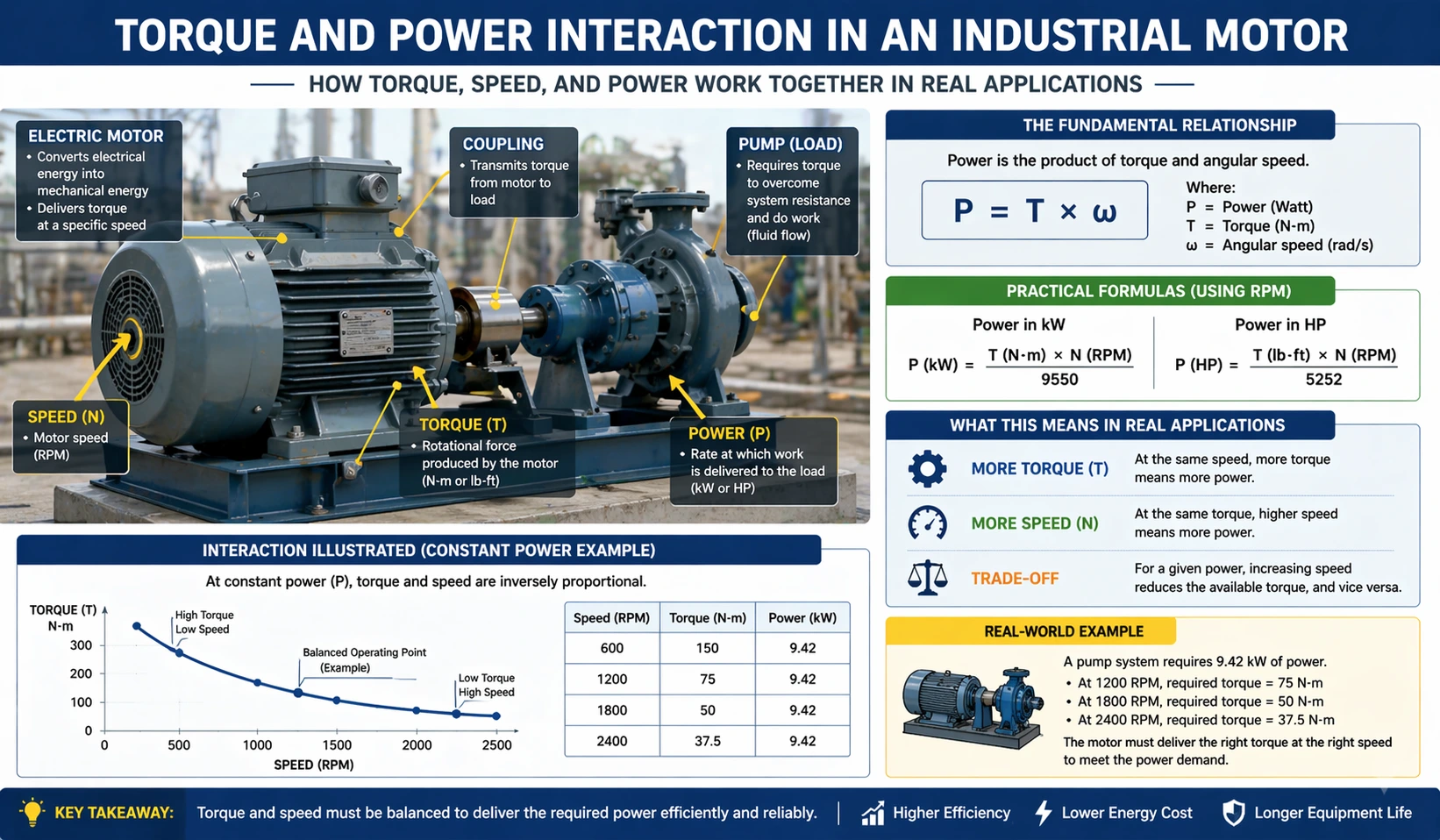
Diagram showing how torque influences machine performance.
How Torque Affects Machine Performance Step-by-Step
In real maintenance work, torque directly impacts machine operation in the following sequence:
- Step 1: Torque initiates movement
- Step 2: Load resistance is applied
- Step 3: Machine performance adjusts based on torque availability
Technicians often face issues when machines fail to start under load. This usually means insufficient torque.
👉 Related concept: Torque and Power Relationship
In Gulf industries, heavy-duty machines like compressors and pumps require precise torque settings to maintain stable performance.
Real Industrial Scenario (Gulf Maintenance Experience)
In Gulf industries such as oil & gas and construction, torque plays a major role in machine efficiency.
In real maintenance work, consider a conveyor system:
- If torque is too low → belt slips
- If torque is too high → mechanical stress increases
Technicians often face situations where machines run but do not perform efficiently. The real issue is incorrect torque application.
👉 Practical calculation: Motor Torque Calculation Explained
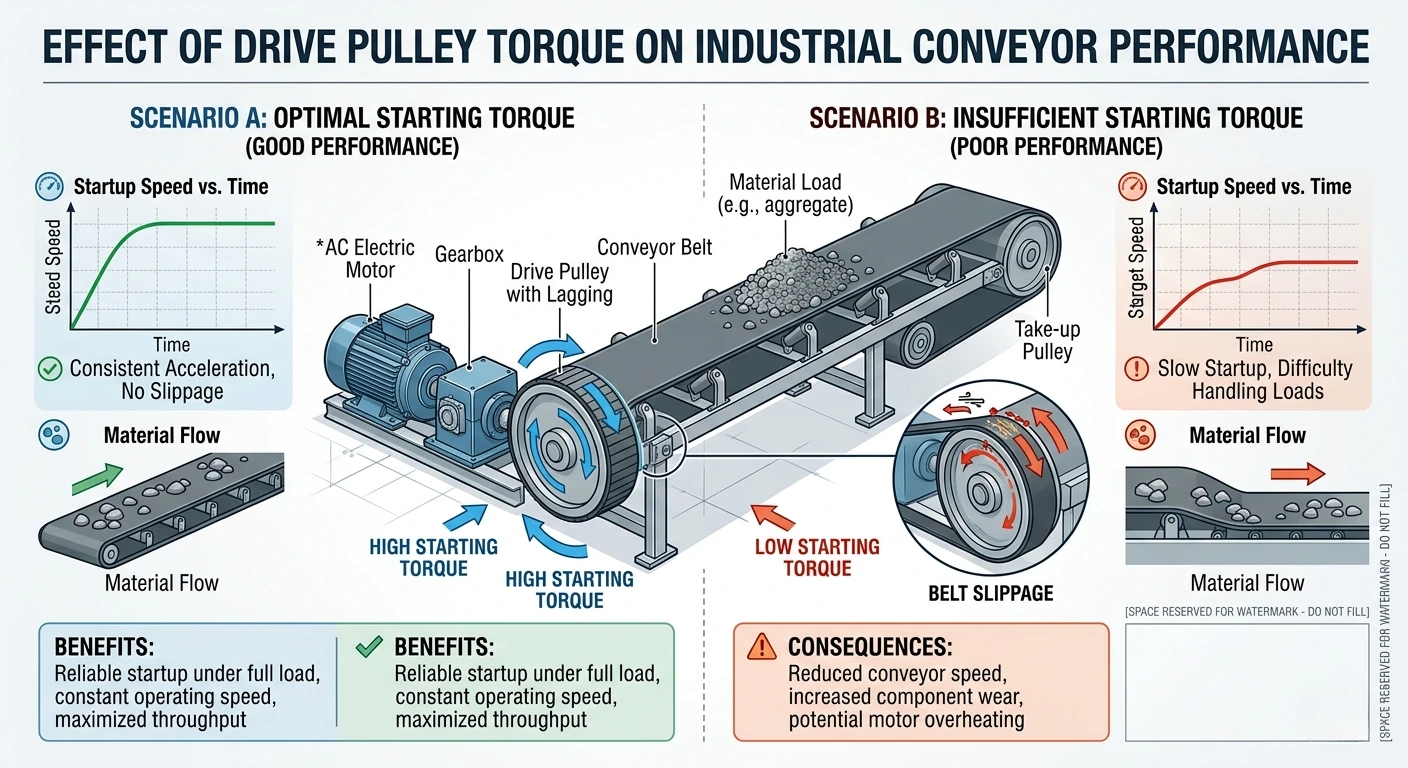
Example of torque affecting performance in industrial machinery.
Practical Use Cases Where Torque Impacts Performance
In real maintenance work, torque directly affects:
- Motor efficiency
- Gearbox operation
- Pump output
- Conveyor systems
Technicians often face performance drops due to improper torque settings.
👉 Conversion support: Torque Conversion Chart
👉 Avoid mistakes: Common Torque Problems and Solutions
Each application requires a balance between torque, speed, and load.
Common Torque Problems Affecting Machine Performance
A common mistake I’ve seen in field work is ignoring torque limits.
- Over-torque → damage and wear
- Under-torque → loose components
- Incorrect units → miscalculation
👉 Ensure accuracy: Torque Wrench Calibration Guide
Technicians often face repeated failures because they don’t verify torque settings properly.
Torque vs Performance Optimization Table
| Condition | Torque Effect | Action | Use Case |
|---|---|---|---|
| Low Torque | Poor performance | Increase torque | Heavy load start |
| High Torque | Stress & damage | Reduce torque | Precision systems |
| Balanced Torque | Optimal performance | Maintain settings | Industrial machinery |
Decision Guide: When to Increase or Reduce Torque
In real maintenance work, decision-making depends on machine condition:
- Increase torque → when machine cannot handle load
- Reduce torque → when components show stress
- Balance torque → for optimal efficiency
👉 Understand speed relation: Torque vs RPM Explained
Technicians often face confusion when machines fail without visible damage. In most cases, torque imbalance is the hidden cause.
In real maintenance work, I have seen machines fail not due to design issues but because torque was not properly adjusted for load conditions. In Gulf industries, incorrect torque settings often lead to overheating, vibration, and reduced machine life.
Final Summary
How torque affects machine performance is essential knowledge for any technician working in industrial environments. Proper torque ensures efficient operation, reduces wear, and prevents failures.
In real maintenance work, understanding this concept helps you troubleshoot faster, improve machine life, and maintain safety.
👉 Calculate torque instantly for accurate setup: Torque Calculator Tool
Frequently Asked Questions (FAQs)
How does torque affect machine performance?
Torque determines how much load a machine can handle and directly affects its efficiency and operation.
Can low torque damage a machine?
Yes, low torque can cause slipping, poor performance, and system instability.
What happens if torque is too high?
Excess torque can lead to mechanical stress, wear, and component failure.
Is torque more important than power?
Both are important, but torque is critical for handling load.
How can I measure torque accurately?
Use a calibrated torque wrench or an online torque calculator.