
Torque Wrench Calibration Guide – Avoid Costly Errors Fast
Torque wrench calibration guide is critical if you want accurate torque, safe equipment, and reliable performance in real maintenance work. Many failures do not happen because of bad bolts but because of incorrect calibration.
In real maintenance work, I have seen properly tightened bolts fail simply because the torque wrench was not accurate. In Gulf industries, this leads to leakage, vibration, and costly shutdowns.
Technicians often face situations where bolts fail even after tightening correctly—this is usually due to inaccurate torque tools. In Gulf industries such as oil & gas, power plants, and construction, torque accuracy is critical for safety compliance and system reliability.
This guide explains how to calibrate a torque wrench step by step using practical methods used in real industrial environments.
👉 For correct torque values: Bolt Torque Chart (Standard Values)
Torque Wrench Calibration Guide Explained
A torque wrench must be calibrated regularly to ensure accurate torque output. Calibration ensures that the applied torque matches the set value.
In real maintenance work, technicians often assume their tools are accurate without checking calibration, which leads to inconsistent tightening.
👉 Learn basics: What is Torque in Engineering
A common mistake I’ve seen is using torque wrenches for years without recalibration, especially in field conditions.
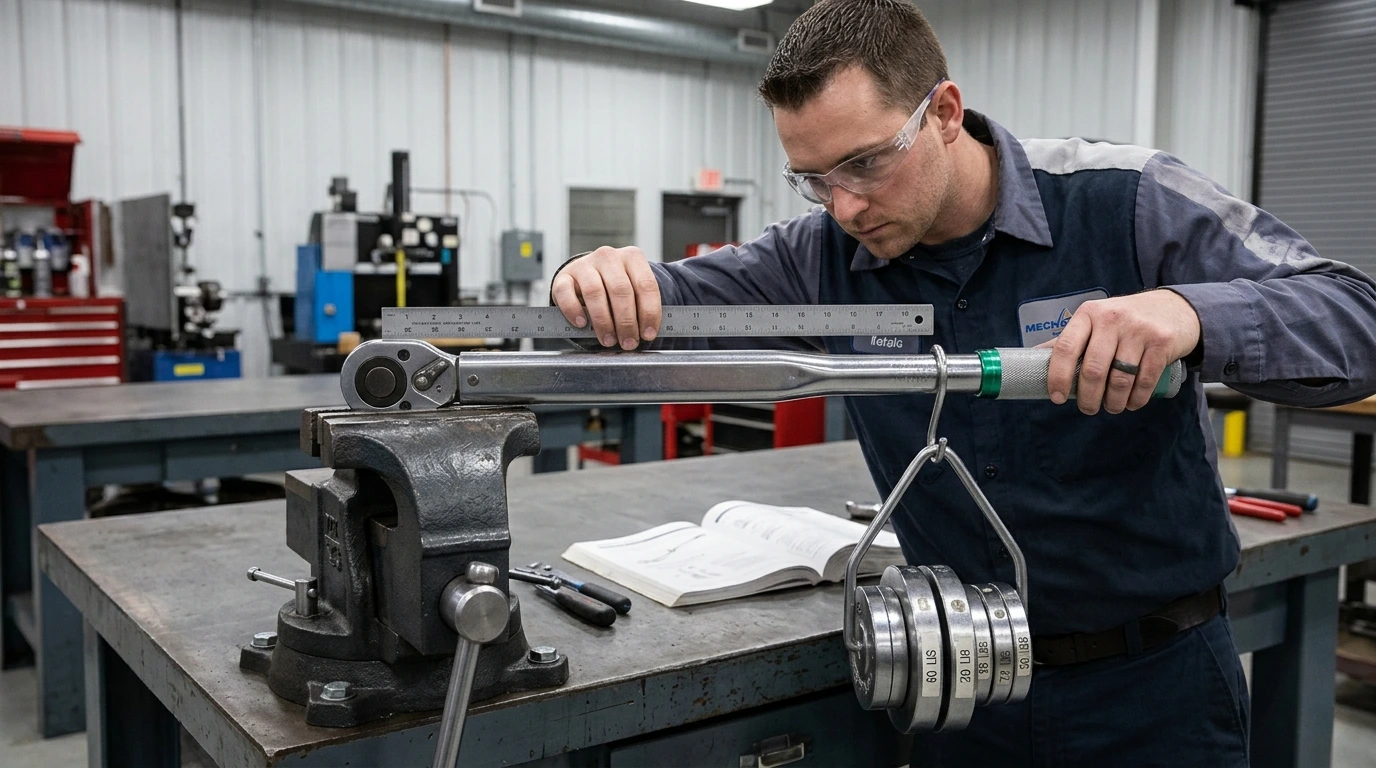
Figure: Basic setup for torque wrench calibration using weights and lever.
When Should You Calibrate a Torque Wrench?
In real maintenance work, torque wrench calibration should not be ignored. It is required:
- After every 5000 cycles (or manufacturer recommendation) After dropping the tool
- Every 6–12 months (recommended)
👉 Related: Torque Wrench Guide
Technicians often face calibration issues after heavy usage, especially in harsh Gulf environments with heat and dust.
A common mistake I’ve seen is continuing to use a dropped wrench without recalibration.
Step-by-Step Torque Wrench Calibration Method
In real maintenance work, calibration can be done using a simple method:
- Secure the torque wrench in a vice
- Measure the distance from handle center
- Hang a known weight at that point
- Calculate torque using T = F × r
- Compare with wrench reading
👉 Learn calculation: Torque Calculation Examples Real Life
👉 For quick and accurate torque calculation during calibration: Torque Calculator (Nm ↔ lb-ft)
👉 Understand torque formula before calibration: Torque Formula Explained
Technicians often face errors when distance measurement is incorrect, which leads to wrong calibration results.
Calibration in Real Industrial Applications
In Gulf industries, torque wrench calibration is critical in:
- Pipeline flange tightening
- Pressure vessel assembly
- Heavy machinery maintenance
👉 Motor relevance: Motor Torque Calculation Explained
In real maintenance work, incorrect calibration leads to leaks, vibration, and equipment damage.
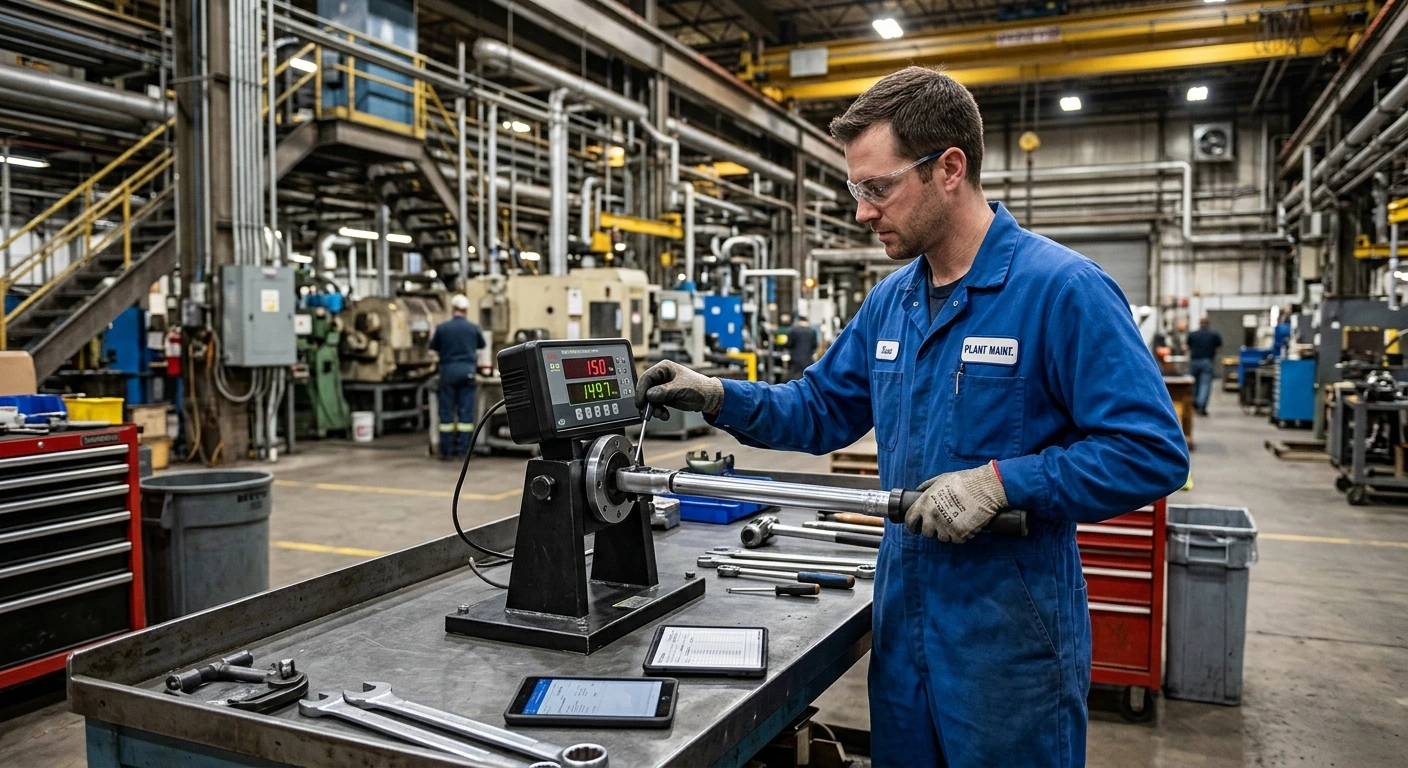
Figure: Torque wrench calibration in industrial maintenance environment.
Torque Wrench Calibration Tolerance Standards
| Torque Range | Tolerance | Use Case |
|---|---|---|
| Low torque | ±6% | Light assembly |
| Medium torque | ±4% | General maintenance |
| High torque | ±3% | Critical industrial use |
This table helps technicians understand acceptable error limits during calibration.
Common Torque Wrench Calibration Mistakes
Technicians often make these mistakes:
- Not calibrating regularly
- Using incorrect weight
- Wrong distance measurement
- Ignoring tool damage
👉 Avoid errors: Common Torque Mistakes
In real maintenance work, these mistakes reduce accuracy and increase failure risk.
When to Replace Instead of Calibrate
In real maintenance work, calibration is not always enough. Replace the wrench if:
- Internal mechanism is damaged
- Calibration fails repeatedly
- Tool shows inconsistent readings
👉 Related: Torque Problems and Solutions
A common mistake I’ve seen is repeatedly calibrating a damaged tool instead of replacing it.
In real maintenance work, I have seen torque wrenches give completely wrong readings after being dropped or used heavily without recalibration. This is one of the hidden causes of repeated bolt failure in industrial systems.
Final Summary
Torque wrench calibration guide is essential for maintaining accuracy in industrial maintenance work. In real maintenance work, proper calibration ensures safety, consistency, and equipment reliability.
Do not rely on guesswork during calibration. Even small errors can lead to major failures.
👉 Calculate torque accurately here: Torque Calculator Tool
Frequently Asked Questions (FAQs)
What is torque wrench calibration?
It is the process of checking and adjusting a torque wrench to ensure accurate torque output.
How often should a torque wrench be calibrated?
Every 6–12 months or after heavy usage.
Can I calibrate a torque wrench manually?
Yes, using weights and distance measurement methods.
What happens if calibration is ignored?
It leads to inaccurate torque and possible equipment failure.
When should I replace a torque wrench?
When it cannot maintain accuracy after calibration.