
How Accurate is Belt Length Formula? (Real-World Analysis)
Belt length formula accuracy is an important factor in determining how reliable your calculations are in real-world applications. While the formula provides a solid theoretical result, practical conditions can slightly affect the final belt length.
In this guide, we analyze how accurate the belt length formula is, what factors affect its accuracy, and how to get the most reliable results in practical applications.
For a quick calculation, use our Belt Length Calculator to calculate belt length using pulley diameters and center distance.
What is the Belt Length Formula?
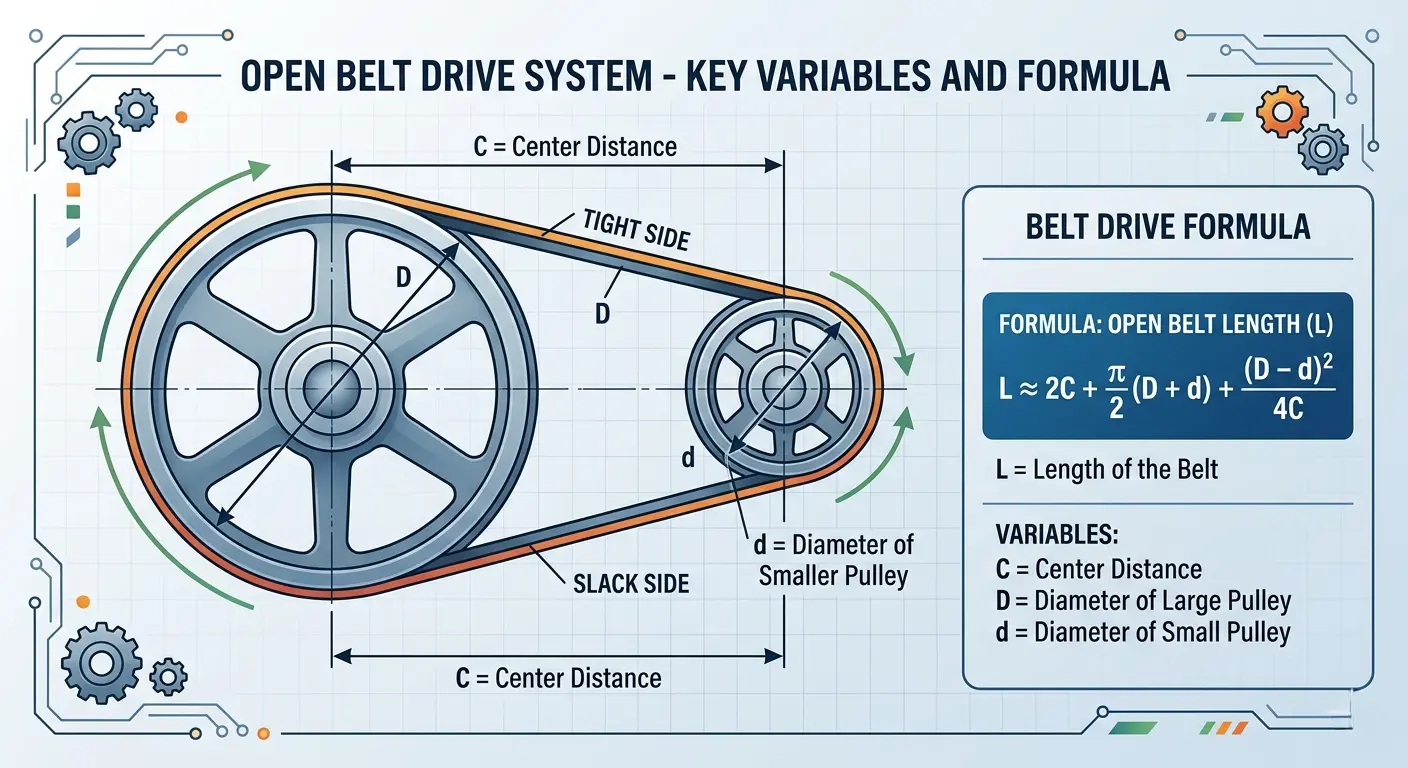
The standard formula used for belt length calculation is:
L = 2C + (π/2)(D + d) + ((D − d)² / 4C)
It calculates belt length based on pulley diameters and center distance.
Learn full method in our belt length manual calculation guide.
Is the Belt Length Formula Accurate?
The formula is mathematically accurate, but real-world conditions can affect the final result.
In ideal conditions, the formula provides highly reliable results. However, in practical industrial setups, small variations are common.
Why Belt Length Formula is Not 100% Accurate
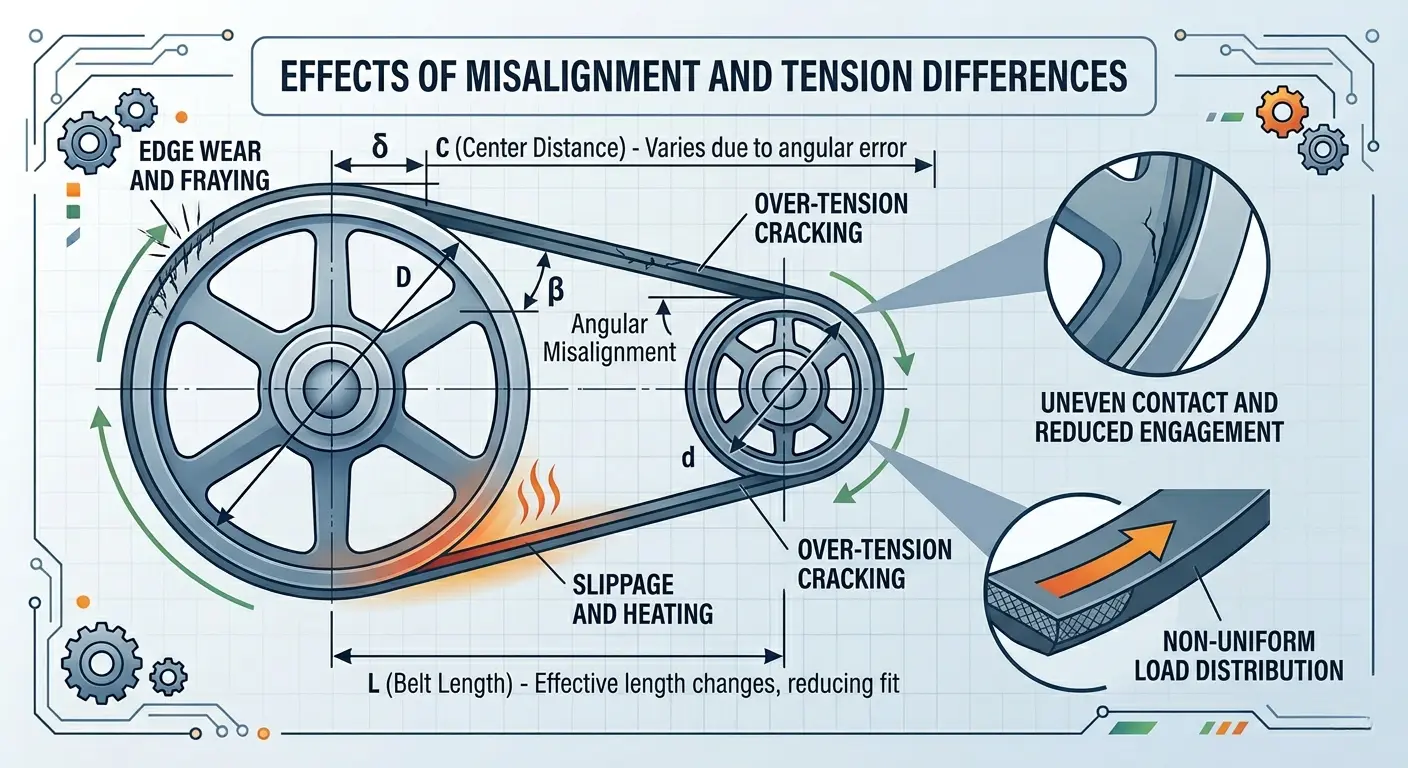
In practical applications, belt length formula accuracy can be affected by multiple factors. The formula assumes ideal conditions, but real systems rarely operate under perfect setups.
For example, slight misalignment, pulley wear, or incorrect installation can create differences between calculated and actual belt length.
Factors That Affect Accuracy
1. Belt Tension
Proper tension changes the effective belt length slightly.
2. Pulley Wear
Worn pulleys can alter diameter and affect calculation accuracy.
3. Measurement Errors
Incorrect center distance or pulley measurement leads to inaccurate results.
4. Installation Conditions
Alignment issues and mounting conditions can impact final belt fit.
Accurate measurement is essential for better results. Learn how in our pulley center distance measurement guide.
Real-World Accuracy Range
The belt length formula provides a useful theoretical estimate when pulley diameters and center distance are measured correctly. However, the actual belt selected for a machine can differ from the calculated value because of belt construction, standard belt sizes, pulley condition, measurement accuracy, and the machine's adjustment range.
For this reason, the calculated value should be treated as a starting point for belt selection and verified against the manufacturer's belt dimensions and the machine's available adjustment range.
This small variation is acceptable in industrial applications and is usually adjusted during installation.
Real-World Example of Accuracy Variation
In a typical industrial setup, even when the belt length formula is applied correctly, the final installed belt may differ slightly. This happens due to factors such as belt tension, pulley alignment, and installation conditions.
For example, a calculated belt length of 1500 mm may not correspond exactly to an available standard belt size. The final selection should consider the manufacturer's available belt sizes and the machine's tensioning or center-distance adjustment range.
See how the calculation works with real numbers in this belt length calculation example.
This is why experienced technicians always consider small adjustments when applying the formula in real-world situations.
How to Improve Belt Length Formula Accuracy
- Measure pulley diameters precisely
- Ensure correct center distance measurement
- Use proper tools instead of rough estimation
- Double-check all values before calculation
You can learn accurate measurement in our pulley center distance measurement guide.
Manual Calculation vs Calculator Accuracy
Manual calculation depends on user accuracy, while tools reduce human error.
Common Mistakes That Reduce Accuracy
- Incorrect measurements
- Ignoring belt stretch
- Using worn components
Read full guide in our belt calculation mistakes article.
Practical Tip (Important)
Do not apply a fixed percentage adjustment to every belt installation. After calculating the theoretical belt length, compare the result with the manufacturer's standard belt sizes and confirm that the machine provides sufficient center-distance or tensioning adjustment for proper installation.
FAQs
How accurate is the belt length formula?
The belt length formula provides a reliable theoretical estimate when pulley diameters and center distance are measured correctly. Actual belt selection can vary because of belt construction, standard belt sizes, pulley condition, measurement accuracy, and machine adjustment range.
Why does calculated belt length differ in practice?
Due to tension, wear, and measurement variations.
Can I rely only on the formula?
The formula is useful for calculating the theoretical belt length, but final belt selection should also consider the belt manufacturer's standard sizes, pulley condition, measurement accuracy, and the machine's available adjustment range.
Is a calculator more accurate than manual calculation?
Yes, it reduces human error and improves consistency.
Practical Recommendation
Use the calculated belt length as a theoretical reference, then verify the result against the manufacturer's belt dimensions and the actual machine setup. Check pulley condition, center distance, alignment, and the available tensioning adjustment before selecting the final belt size.
For a quick calculation, you can also use the Belt Length Calculator and then verify the result against the manufacturer's specifications.
Conclusion
The belt length formula is a reliable tool, but understanding its limitations is key to achieving accurate results in real-world conditions.
Combining proper measurement, calculation, and practical adjustments ensures the best performance.