
Conveyor Belt Slip Causes in Industrial Conveyor Systems
Conveyor Belt Slip Causes silently reduce production efficiency long before operators notice major conveyor failure. In many industrial plants, small slipping problems slowly create RPM instability, overheating, excessive vibration, motor overload, and unexpected downtime that can disrupt entire production lines during critical operations.
In Gulf industrial plants, conveyor systems operate continuously under dust, heat, heavy loads, and harsh operating conditions. Even minor belt slip can reduce throughput, create RPM instability, increase vibration, and damage pulley assemblies over time. During troubleshooting, maintenance teams often use the Pulley RPM Calculator to compare actual conveyor RPM against expected output speed and identify hidden slippage problems. Engineers also compare system behavior using the How to Calculate Belt RPM guide to verify whether pulley ratio problems are reducing conveyor efficiency.
Understanding conveyor belt slip causes helps technicians reduce downtime, improve belt life, stabilize conveyor speed, and prevent expensive equipment failures in industrial production environments.
What Is Conveyor Belt Slip
Conveyor belt slip occurs when the conveyor belt loses proper grip between the drive pulley and belt surface. Instead of transferring full rotational force, the belt partially slides across the pulley surface.
This causes:
- RPM loss
- Reduced conveyor speed
- Material handling inconsistency
- Heat generation
- Belt wear
- Pulley damage
- Motor overload
- Excessive vibration
Industrial conveyor systems rely on proper friction between:
- Drive pulley
- Conveyor belt
- Tail pulley
- Tensioning system
- Motor assembly
- Bearings
- Gearbox
- Shaft alignment
When this balance is disturbed, conveyor efficiency drops immediately.
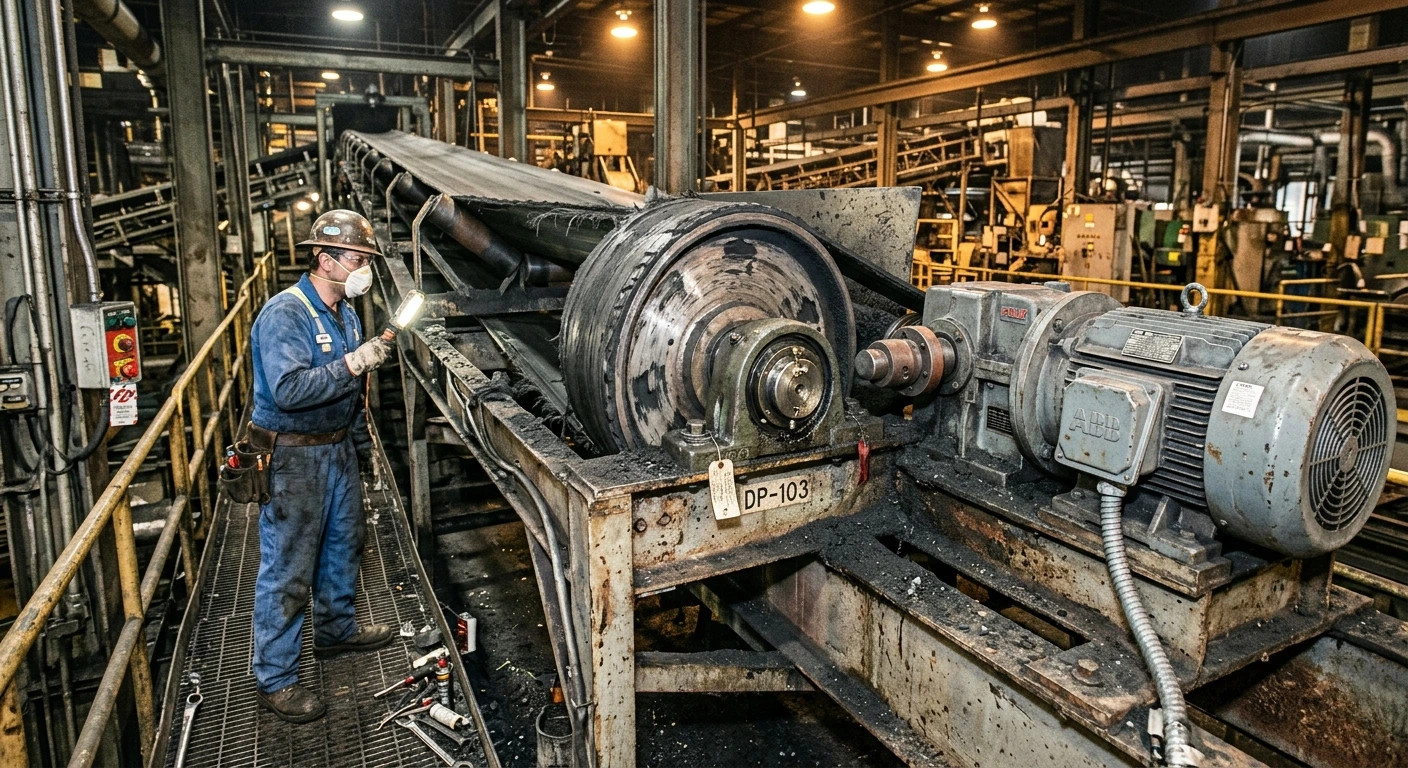
Most Common Conveyor Belt Slip Causes
Industrial conveyor slip problems usually develop from multiple mechanical and operational issues rather than a single failure.
The most common conveyor belt slip causes include:
- Incorrect belt tension
- Worn drive pulley
- Pulley misalignment
- Oil contamination
- Excessive conveyor load
- Worn lagging surface
- Improper pulley ratio
- Bearing failure
- Moisture contamination
- Damaged belt surface
In Gulf industrial facilities, dust contamination and high temperature frequently accelerate pulley wear and reduce belt grip efficiency.
One major mistake technicians make is tightening the belt excessively to stop slip temporarily. This may reduce slipping for a short time but often overloads bearings and increases shaft vibration.
These conditions are frequently related to Belt Tension Calculation, Pulley Wear Symptoms, Belt Slip and RPM Loss, industrial shaft vibration analysis, and drive pulley lagging inspection.
How Conveyor Belt Slip Affects Industrial Performance
Even small conveyor slip problems can create major production losses over time.
In several Gulf industrial facilities, operators initially ignored small conveyor speed fluctuations because production was still running. Weeks later, severe pulley wear, overheated bearings, and unstable conveyor loading forced emergency shutdowns that stopped production completely.
When conveyor speed becomes unstable, the entire production process may suffer from:
- Material handling delays
- Product accumulation
- Uneven product flow
- Motor overheating
- High power consumption
- Unexpected downtime
In food processing plants, conveyor slip may affect packaging timing and product positioning.
In cement plants and aggregate facilities, conveyor slip can reduce throughput and overload conveyor motors continuously.
In HVAC manufacturing plants, unstable conveyor speed may affect assembly line synchronization.
These issues are closely connected to Conveyor Belt Speed Calculation, Belt Speed Calculation Formula, belt drive efficiency troubleshooting, conveyor RPM monitoring procedure, and industrial conveyor load balancing.
Industrial Conveyor Belt Slip Inspection Table
| Slip Condition | Visible Symptom | Industrial Effect | Risk Level | Recommended Action |
|---|---|---|---|---|
| Loose belt tension | Visible belt slip | Low conveyor speed | Medium | Adjust belt tension |
| Worn pulley lagging | Poor belt grip | RPM instability | High | Replace lagging |
| Pulley misalignment | Edge belt wear | Bearing stress | High | Perform alignment check |
| Oil contamination | Wet belt surface | Continuous slipping | Critical | Clean conveyor system |
Warning Signs Technicians Should Never Ignore
Conveyor belt slip rarely appears suddenly. Most systems show warning signs weeks before major failure occurs.
Common warning indicators include:
- Belt dust accumulation
- Squealing noise during startup
- Hot pulley surfaces
- RPM fluctuation
- Uneven material movement
- Frequent belt adjustments
- High motor amperage
- Vibration increase
Many technicians initially blame the motor or gearbox while the actual problem is worn lagging or unstable belt tension.
Another common mistake is increasing conveyor tension aggressively during operation. While this may temporarily reduce slip, it often accelerates bearing stress and shaft loading, creating larger maintenance problems later.
In industrial conveyor systems, early detection prevents severe damage to:
- Bearings
- Drive shafts
- Gearboxes
- Couplings
- Pulley assemblies
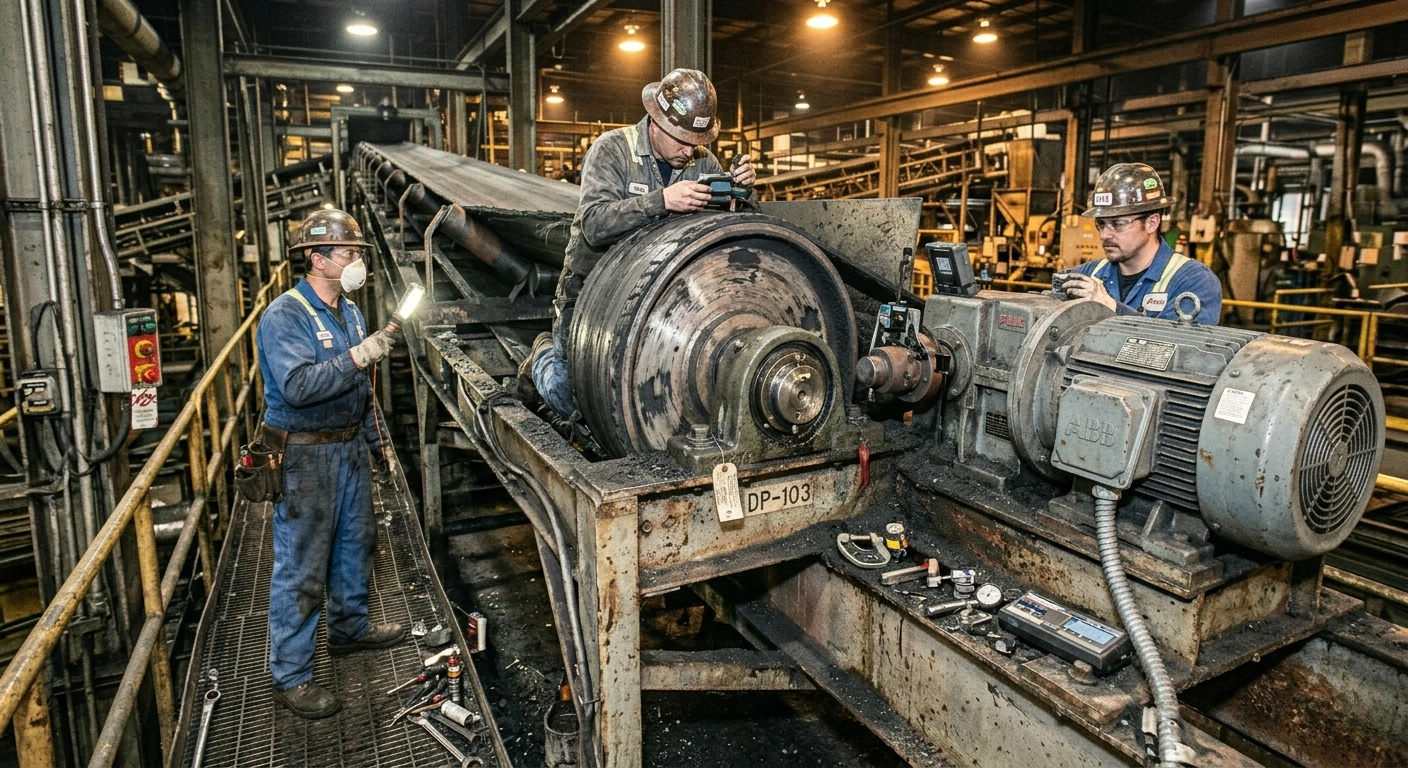
How Experienced Technicians Troubleshoot Conveyor Slip
Professional maintenance teams troubleshoot conveyor belt slip systematically instead of replacing components randomly.
Typical troubleshooting procedures include:
- Checking conveyor RPM
- Inspecting pulley lagging condition
- Verifying alignment
- Measuring belt tension
- Inspecting bearing temperature
- Checking conveyor loading conditions
- Inspecting contamination sources
During shutdown maintenance, technicians often compare actual conveyor speed against design calculations to identify hidden slip.
Many industrial slip problems originate from combined issues such as:
- Dust contamination
- Incorrect pulley sizing
- Bearing wear
- Improper lubrication
- Damaged lagging
These issues are closely connected to Conveyor Belt Speed Calculation, Belt Speed Calculation Formula, belt drive efficiency troubleshooting, conveyor RPM monitoring procedure, and industrial conveyor load balancing.
Why Conveyor Slip Creates Hidden Downtime Risks
One of the most dangerous aspects of conveyor belt slip is that production may continue temporarily while internal damage increases silently.
Over time, continuous slipping creates:
- Excessive heat
- Pulley wear
- Lagging deterioration
- Bearing overload
- Motor stress
- Energy waste
In Gulf industrial facilities, high ambient temperatures make these failures even more dangerous because heat accelerates rubber deterioration and lubrication breakdown.
Many catastrophic conveyor failures begin with small belt slip problems that technicians initially ignore during routine inspections.
In continuous production plants, conveyor downtime can quickly affect packaging systems, material transfer operations, and upstream processing equipment. This is why experienced maintenance teams treat even small conveyor slip symptoms as early warning indicators instead of minor efficiency issues.
Real-World Engineering Insight
During maintenance work in a Gulf cement plant, operators reported unstable conveyor speed and repeated material overflow problems during peak production hours.
Several technicians had already tightened the conveyor belt multiple times, but slipping continued. After inspection, we discovered severe pulley lagging wear combined with oil contamination near the drive pulley.
The excessive belt tension had already overloaded the bearings and increased shaft vibration significantly.
Situations like this are extremely common in high-temperature Gulf industrial environments where dust contamination, heat exposure, and continuous conveyor loading gradually reduce belt grip efficiency without immediate visible damage.
After replacing the lagging, cleaning the pulley surface, correcting alignment, and resetting belt tension properly, conveyor performance stabilized immediately.
Experienced technicians understand that conveyor belt slip causes are usually connected to multiple mechanical conditions rather than a single component failure.
Many industrial troubleshooting teams also verify conveyor RPM behavior using the Belt Drive RPM Calculation method because incorrect pulley sizing and hidden RPM loss often create repeated conveyor slip problems.
Frequently Asked Questions
What causes conveyor belt slip?
Common causes include loose belt tension, pulley wear, oil contamination, pulley misalignment, and excessive conveyor load.
Can conveyor belt slip damage bearings?
Yes. Continuous slip creates vibration and unstable loading that can overload bearings and shafts.
How do technicians detect conveyor belt slip?
Technicians inspect RPM, pulley condition, lagging wear, belt tension, vibration, and motor amperage.
Why does belt slip continue after tightening the belt?
Worn lagging, pulley damage, contamination, or alignment problems may still prevent proper grip.
Can conveyor slip increase energy consumption?
Yes. Slipping belts waste power and force motors to work harder to maintain conveyor movement.
Use RPM Tools for Conveyor Slip Troubleshooting
For accurate conveyor troubleshooting and RPM verification, technicians can use the Pulley RPM Calculator to calculate conveyor speed, detect RPM loss, and troubleshoot industrial belt slip problems more accurately. Engineers also use the How to Calculate Pulley RPM resource and the Pulley Speed Ratio Formula guide to diagnose conveyor RPM instability and pulley drive problems.