
Belt Tension Calculation for Industrial Belt Drive Systems
Belt Tension Calculation directly affects industrial equipment reliability, energy efficiency, RPM stability, and bearing life in belt-driven systems. In many industrial plants, small belt tension mistakes gradually create belt slip, airflow reduction, vibration, overheating, and unstable conveyor performance long before major mechanical failure becomes visible.
One loose V belt inside a conveyor or HVAC blower system may look harmless, but it can create belt slip, heat buildup, vibration, and unstable shaft speed within days. Before adjusting pulley assemblies, maintenance teams often verify RPM behavior using the Pulley RPM Calculator to identify speed loss caused by improper belt tension. Engineers also compare pulley speed behavior using the How to Calculate Pulley RPM guide to confirm whether improper belt tension is affecting driven shaft RPM.
Understanding belt tension calculation helps technicians improve power transmission efficiency, extend bearing life, reduce maintenance costs, and stabilize industrial equipment performance in HVAC systems, cooling towers, conveyors, crushers, compressors, and manufacturing plants.
What Is Belt Tension in Industrial Systems
Belt tension refers to the pulling force applied to a belt as it transfers power between pulleys inside a belt drive system. Correct tension allows smooth power transmission while preventing slippage and excessive mechanical stress.
Industrial belt tension directly affects:
- Motor load
- Pulley RPM stability
- Bearing lifespan
- Belt wear rate
- Vibration levels
- Airflow performance
- Torque transmission
Loose belts reduce friction between the pulley groove and belt surface, while overtight belts create excessive radial load on shafts and bearings.
In industrial HVAC and conveyor systems, these small tension problems often continue unnoticed until airflow performance drops, conveyor speed becomes unstable, or maintenance teams begin experiencing repeated belt replacement issues.
In Gulf industrial environments, dust accumulation and high ambient temperatures increase the importance of proper belt tension because overheated belts deteriorate faster under continuous operation.
Belt Tension Calculation Formula Explained
One commonly used industrial belt tension formula is:
Tension Force = (Torque × 2) ÷ Pulley Diameter
Where:
- Torque = transmitted rotational force
- Pulley Diameter = drive pulley size
- Tension Force = belt pulling force
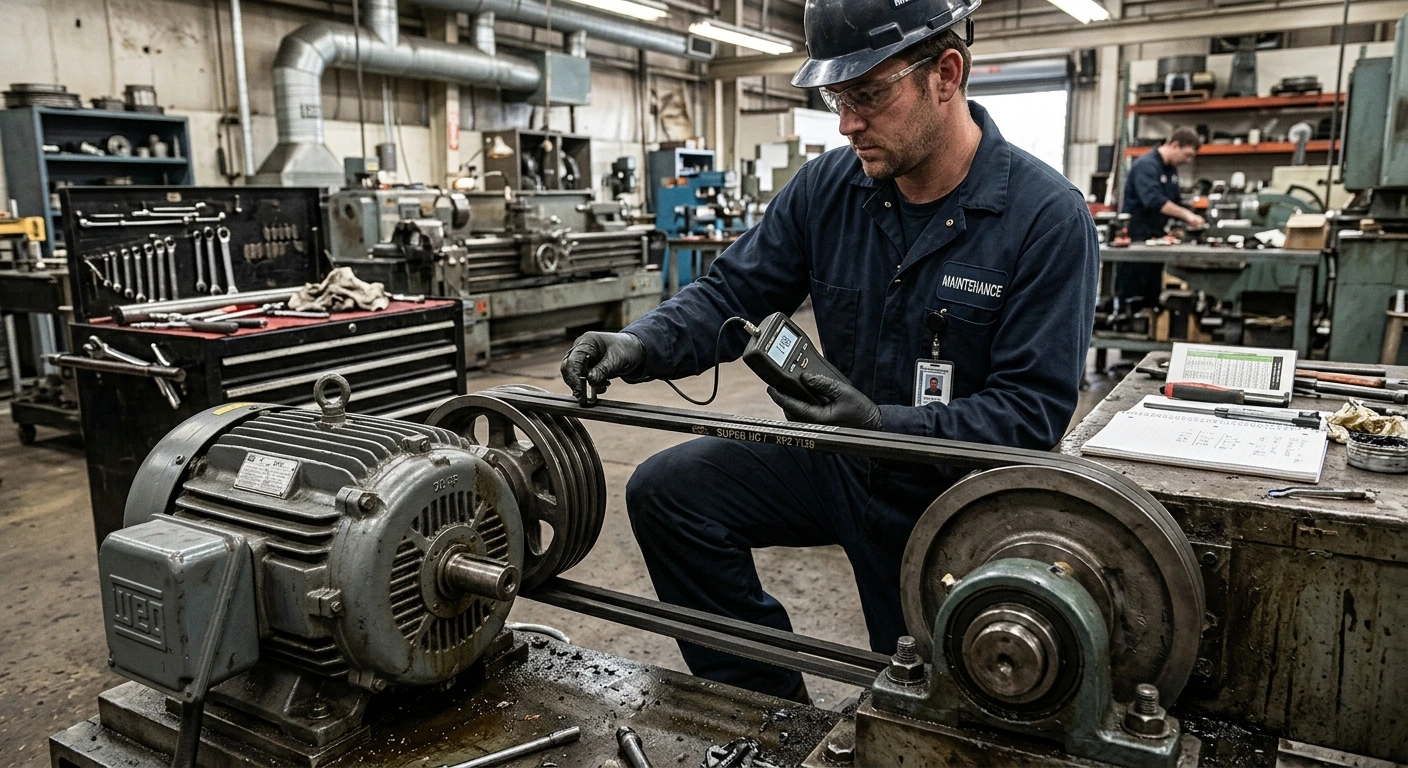
Technicians also verify belt deflection during maintenance inspections using manufacturer-recommended force values.
In practical industrial maintenance, technicians combine:
- Belt deflection method
- Tension gauge readings
- Motor amperage monitoring
- RPM verification
- Vibration analysis
This calculation process is closely connected to Belt Drive RPM Calculation because belt tension directly affects RPM stability and power transfer efficiency. Maintenance engineers also use the Pulley Speed Ratio Formula to verify whether pulley ratio changes are increasing belt load or creating unstable RPM conditions.
Signs of Incorrect Belt Tension
Many industrial belt drive failures begin with incorrect belt tension settings.
Loose belt symptoms include:
- Belt slip
- Squealing noise
- RPM loss
- Reduced airflow
- Heat generation
- Dust buildup around pulleys
Overtight belt symptoms include:
- Bearing overheating
- Motor overload
- Shaft vibration
- Pulley wear
- Premature bearing failure
One common mistake in industrial maintenance is tightening belts excessively to stop slippage. This temporarily reduces slip but creates serious bearing stress over time.
Proper Belt Tension Calculation helps technicians reduce belt slip, improve power transmission, and extend bearing life in industrial pulley systems.
These conditions are frequently connected to Belt Slip and RPM Loss, Pulley Alignment Problems, belt drive vibration analysis, pulley alignment procedure, and industrial shaft balancing guide.
How Technicians Check Belt Tension
Experienced technicians never rely only on visual inspection when adjusting belt tension.
Common industrial belt tension inspection methods include:
- Belt deflection testing
- Tension gauge measurement
- Laser alignment inspection
- Motor current monitoring
- RPM testing
- Thermal inspection
Technicians usually inspect belt tension during:
- Shutdown maintenance
- Motor replacement
- Pulley replacement
- Conveyor servicing
- HVAC airflow troubleshooting
Experienced maintenance teams also compare motor amperage, vibration behavior, and operating RPM during inspections because incorrect belt tension can affect overall system performance without obvious visible damage.
In cooling tower systems, improper belt tension commonly causes unstable fan RPM and airflow imbalance.
Maintenance teams frequently compare airflow performance using the Fan Speed vs Airflow guide because incorrect belt tension often reduces fan RPM and cooling efficiency without obvious motor failure.
Industrial Belt Tension Reference Table
| Industrial Condition | Common Cause | Operational Effect | Equipment Example | Recommended Action |
|---|---|---|---|---|
| Loose belt tension | Insufficient adjustment | RPM loss and slipping | HVAC blower | Adjust belt tension |
| Overtight belt | Excessive force | Bearing overheating | Cooling tower fan | Reduce belt tension |
| Uneven belt tension | Pulley misalignment | Belt vibration | Industrial conveyor | Check alignment |
| Worn belt surface | Heat and friction | Reduced grip | Crusher drive system | Replace belt set |
Most belt tension problems develop gradually during continuous operation. Early inspection and proper RPM verification help technicians identify instability before it creates larger bearing or pulley failures.
How Belt Tension Affects Bearings and Pulleys
Many technicians focus only on belt condition while ignoring the effect of tension on bearings, shafts, and pulleys.
Excessive belt tension increases radial load on:
- Motor bearings
- Fan shaft bearings
- Pulley bushings
- Couplings
- Shaft assemblies
Over time, this creates:
- Lubrication breakdown
- Bearing noise
- Heat buildup
- Shaft misalignment
- Unexpected shutdowns
One common field issue in Gulf facilities is overtightening belts after repeated slip complaints. Technicians temporarily solve the slip problem but unknowingly shorten bearing life.
Although this may temporarily reduce slipping, long-term overtension often increases maintenance cost by accelerating bearing wear and creating unnecessary downtime during shutdown maintenance.
These failures are frequently connected to Common Pulley Mistakes, Pulley Wear Symptoms, industrial bearing vibration causes, shaft balancing procedure, and bearing lubrication inspection procedure.
Improving Belt Drive Reliability Through Correct Tension
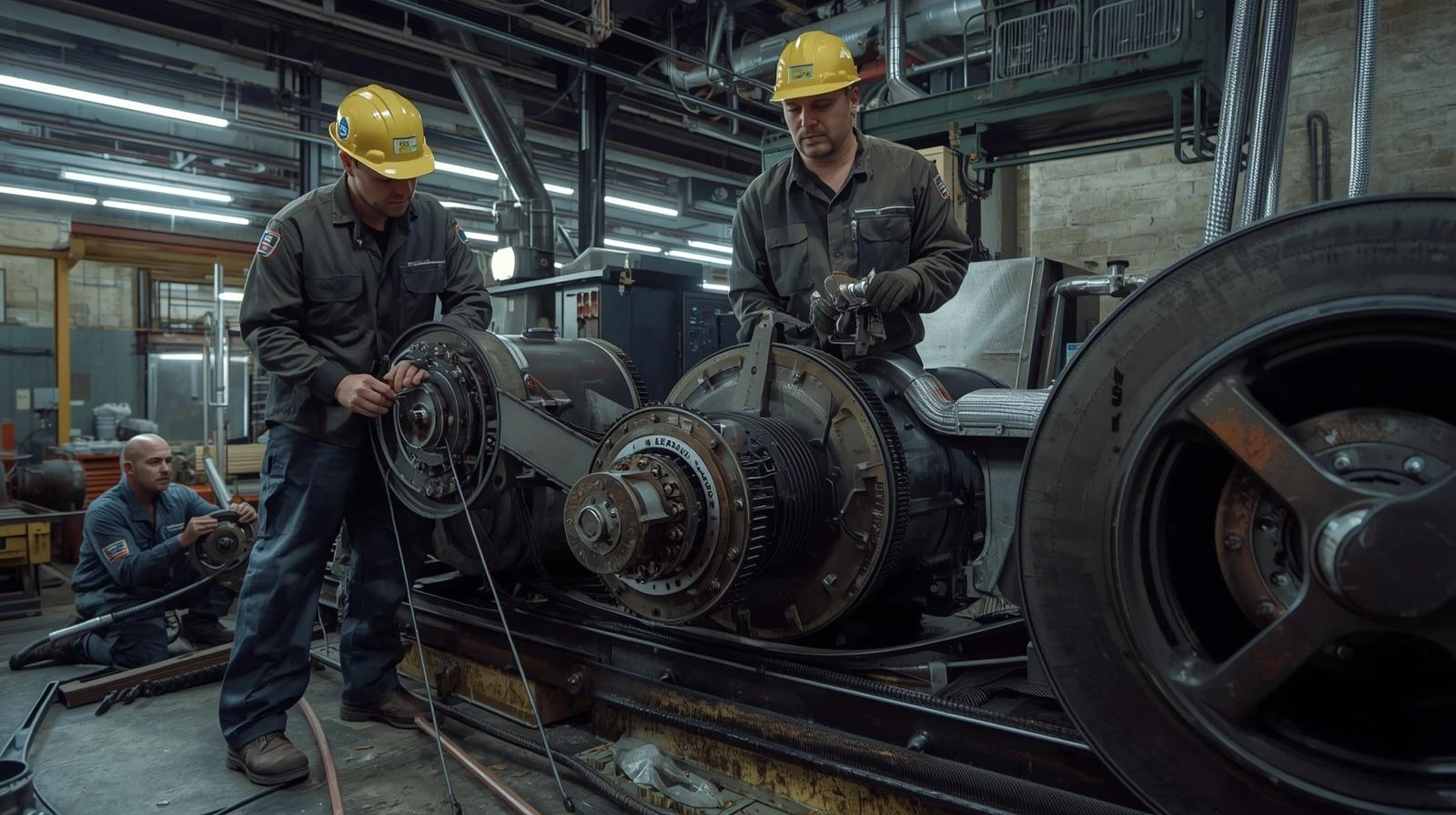
Correct belt tension improves overall equipment reliability and energy efficiency.
Properly tensioned belts provide:
- Stable RPM transfer
- Reduced vibration
- Longer belt life
- Lower bearing stress
- Better airflow stability
- Improved conveyor performance
Experienced maintenance teams combine:
- Correct pulley sizing
- Alignment inspection
- Tension measurement
- RPM verification
- Regular lubrication
For deeper understanding, technicians should also study Conveyor Belt Slip Causes, Pulley Ratio Explained, fan airflow troubleshooting, industrial pulley wear inspection, shaft speed calculation basics, belt drive efficiency calculation, and industrial conveyor vibration analysis.
Real World Engineering Insight
In Gulf industrial plants, one of the most common maintenance mistakes I’ve seen is adjusting belt tension based only on sound. If a belt squeals, technicians immediately tighten it harder without checking alignment, pulley wear, or RPM behavior.
In one cooling tower system, repeated bearing failures continued for months even after replacing bearings and belts multiple times. During shutdown inspection, we discovered the belts were severely overtightened to compensate for worn pulley grooves.
The excessive radial load created continuous bearing overheating and shaft vibration.
After replacing the pulley set, correcting alignment, and adjusting proper belt tension using manufacturer specifications, bearing temperature dropped significantly and system reliability improved immediately.
During shutdown maintenance, accurate Belt Tension Calculation prevents RPM instability and unnecessary conveyor downtime.
Experienced technicians understand that belt tension calculation is not only about stopping belt slip. It directly affects motor load, bearing life, RPM stability, airflow performance, vibration levels, and long-term maintenance cost.
Frequently Asked Questions
What is belt tension calculation?
Belt tension calculation determines the pulling force applied to a belt during power transmission between pulleys.
Why is correct belt tension important?
Correct belt tension prevents belt slip, reduces bearing stress, improves RPM stability, and increases equipment reliability.
What happens if a belt is too loose?
Loose belts create RPM loss, slipping, heat generation, noise, and reduced airflow or conveyor efficiency.
Can overtight belts damage bearings?
Yes. Excessive belt tension increases radial load on bearings and shafts, causing overheating and premature failure.
How do technicians check belt tension?
Technicians use belt deflection methods, tension gauges, RPM testing, alignment tools, and thermal inspections.
Use RPM Tools for Accurate Belt Drive Troubleshooting
For accurate pulley RPM verification and belt drive troubleshooting, technicians should use the Pulley RPM Calculator to identify RPM loss, pulley ratio problems, and belt tension related performance instability before they create larger industrial maintenance issues. Engineers also use the How to Calculate Belt RPM guide and the Conveyor Belt Speed Calculation resource to improve troubleshooting accuracy during shutdown inspections.