
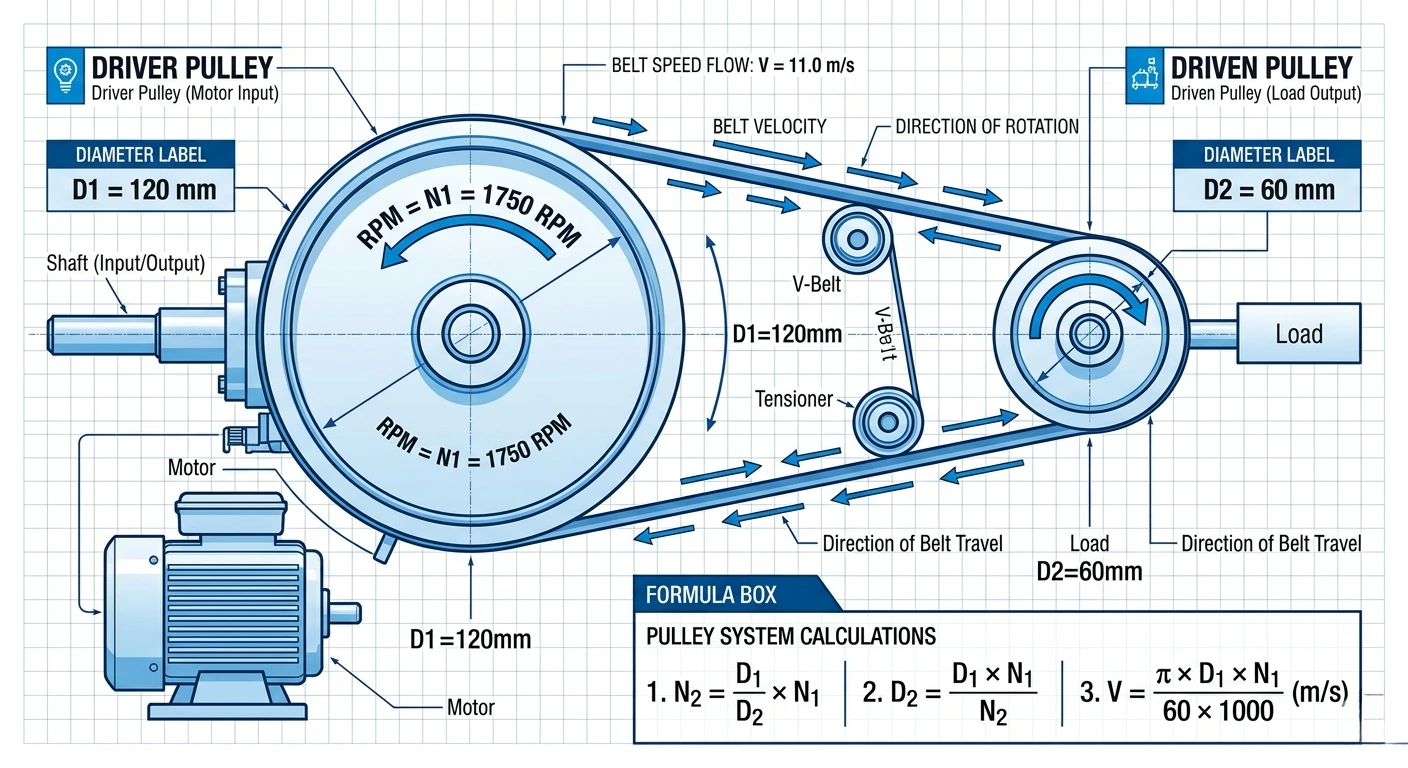
Pulley RPM refers to how fast a pulley rotates in a belt-driven system. It is directly affected by:
- The size (diameter) of the pulleys
- The speed of the driving motor
In simple terms:
- A smaller pulley rotates faster
- A larger pulley rotates slower
This principle is widely used in mechanical systems to control speed and torque without changing the motor.
HVAC Systems
Pulley systems control fan speed and airflow in air handling units. Incorrect RPM can reduce cooling efficiency.
Water Pump Systems
Pulleys help adjust pump speed to maintain proper pressure and flow rate.
Workshop Machines
Machines like drilling machines and lathes use pulleys to change speed depending on material and operation.
Conveyor Systems
Industrial conveyors use pulley ratios to control belt speed and production flow.
Common Pulley RPM Problems and Fixes
Even when using a pulley RPM calculator, real-world factors can affect accuracy.
Here are the most common reasons:
Belt Slippage
Loose belts reduce efficiency and lower actual RPM.
Incorrect Tension
Too tight or too loose belts affect speed and wear.
Pulley Wear
Worn pulleys change effective diameter, altering RPM.
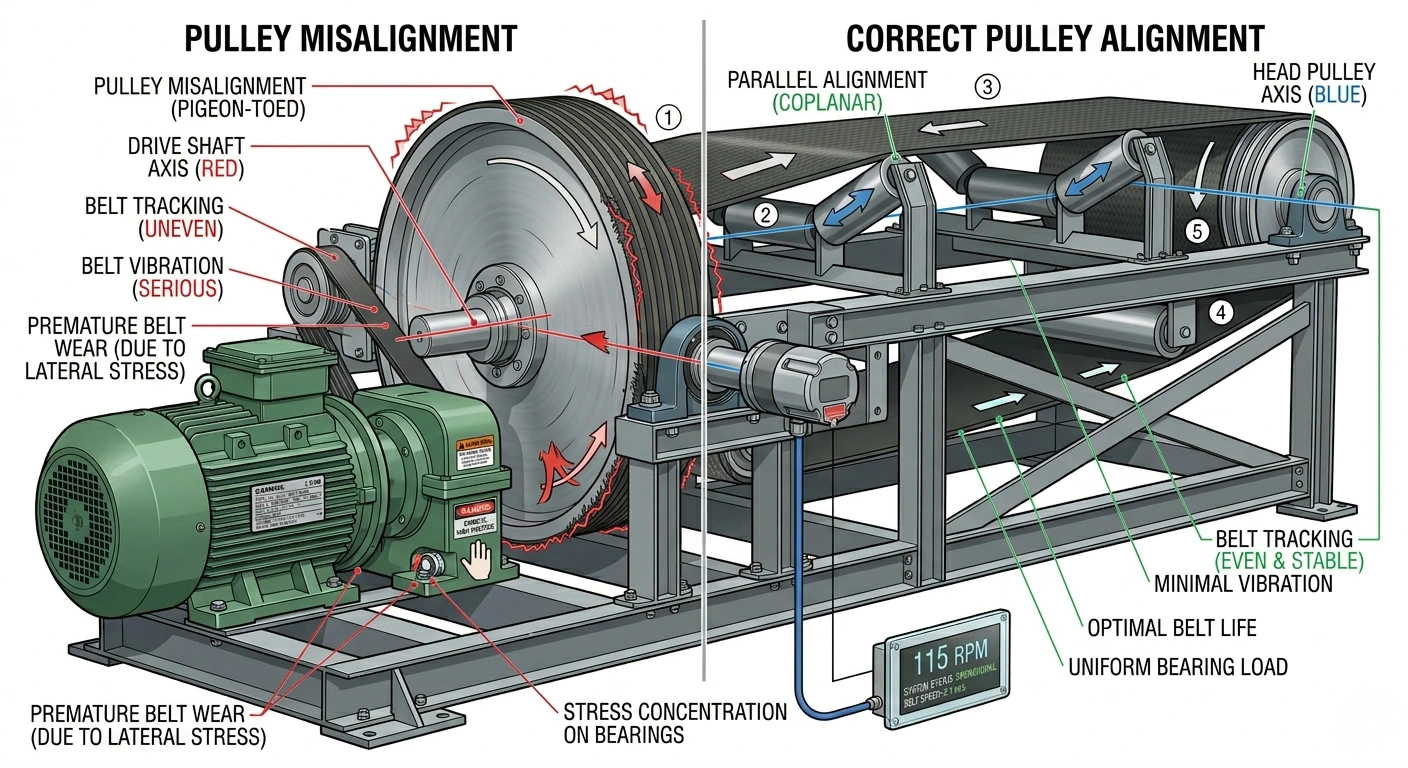
Misalignment
Improper alignment causes vibration and speed loss.
In many systems, you may also need to calculate rotational force. Use our Torque Calculator to determine torque requirements.
Most of these issues are related to belt slip and RPM loss and pulley alignment problems, which are commonly observed in industrial maintenance environments.
HVAC Systems
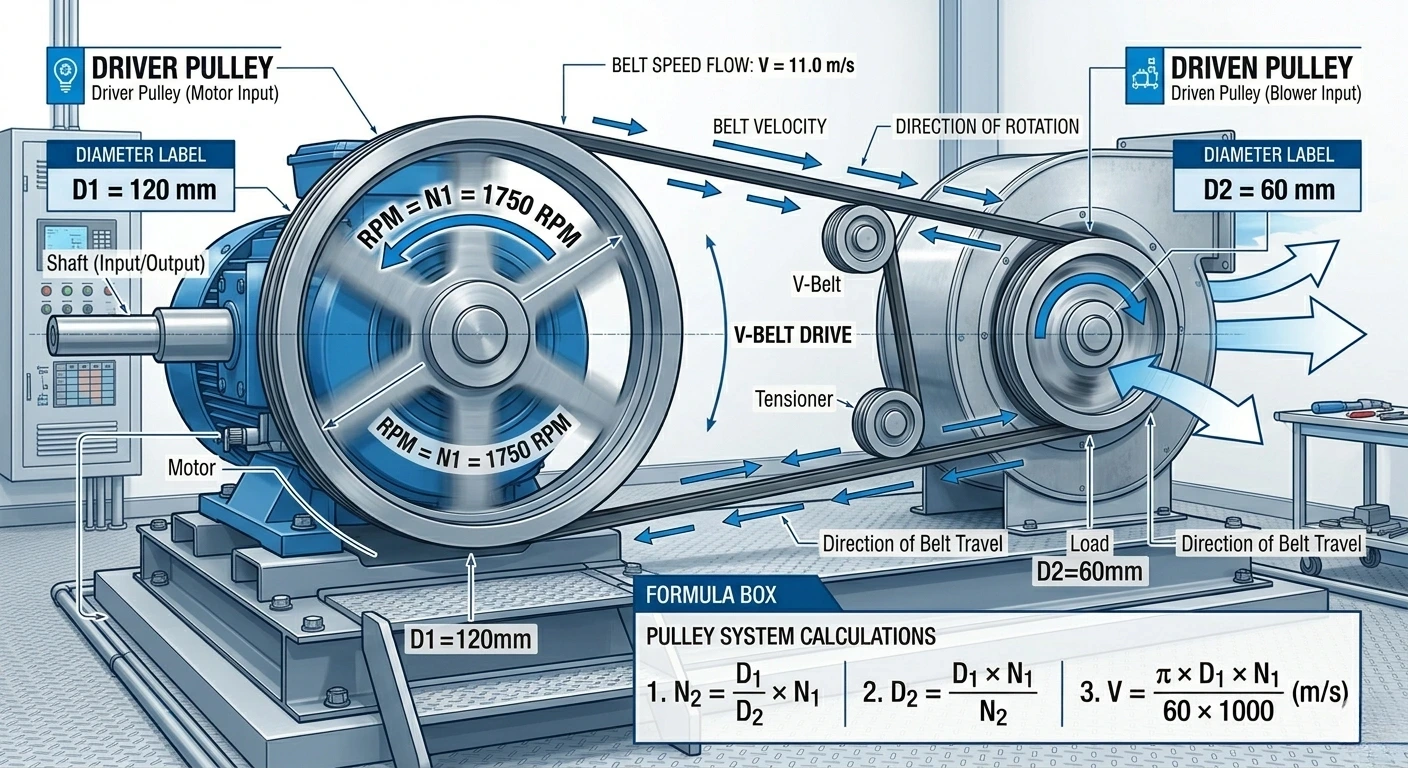
In HVAC systems, pulley RPM directly affects blower fan speed, airflow performance, cooling efficiency, and energy consumption. Maintenance technicians commonly adjust pulley sizes and belt tension to balance airflow inside air handling units (AHUs), exhaust systems, and ventilation equipment.
Incorrect pulley RPM can reduce airflow, overload motors, increase vibration, and create premature belt wear in continuous operating environments. This is why HVAC engineers frequently verify pulley speed during troubleshooting and preventive maintenance inspections.
Conveyor Systems
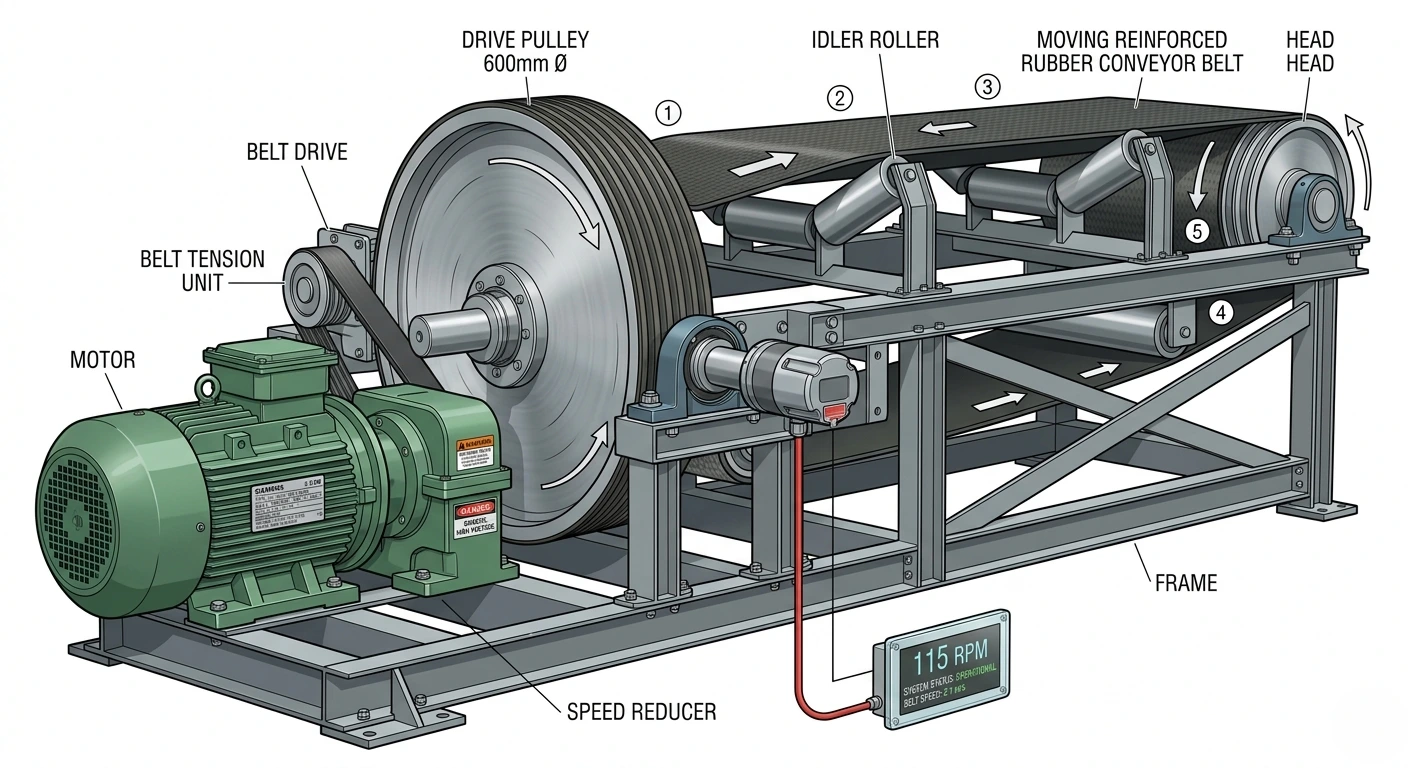
Industrial conveyor systems use pulley RPM to control belt speed, material flow, and production efficiency. In manufacturing plants, mining operations, and packaging industries, even small RPM changes can affect conveyor output and system stability.
Maintenance teams often calculate pulley RPM when replacing motors, adjusting pulley diameters, troubleshooting belt slip, or correcting conveyor slowdown problems. Proper RPM verification helps reduce downtime, prevent belt tracking issues, and improve overall conveyor performance.
These practical tips can save time and prevent errors:
- Always measure actual pulley diameter, not nominal size
- Consider belt slip in high-load systems
- Use correct belt type for your application
- Recheck RPM after maintenance adjustments
👉 These small checks can significantly improve system performance.
These practical tips help improve accuracy when using any pulley RPM calculator in industrial environments.
Before moving to common questions, it is also useful to understand pulley speed ratio formula and difference between driver and driven pulley to build a complete understanding of pulley systems.
Common Pulley RPM Problems and Fixes
Even when pulley RPM calculations are correct, real industrial operating conditions can still create speed loss, vibration, belt wear, and unstable machine performance. Problems such as belt slippage, incorrect tension, pulley misalignment, bearing wear, and heat-related belt damage often affect actual RPM in belt-driven systems.
In industrial maintenance environments, technicians regularly inspect pulley condition, alignment accuracy, belt tracking, and vibration behavior to identify the root cause of RPM-related performance issues before major equipment failure occurs.
Continue troubleshooting content…