
Torque vs Force vs Power (Simple Guide with Examples)
Torque vs force vs power is one of the most confusing topics for beginners, especially when working with machines, tools, and rotating equipment.
Technicians often use these terms interchangeably, but in real maintenance work, confusing them can lead to wrong calculations, poor performance, and even equipment failure.
In this guide, you will clearly understand the difference between torque, force, and power, along with practical examples from real industrial situations.
👉 Quickly calculate torque here: Torque Calculator (Nm to lb ft)
What is Force? (Basic Concept Explained)
Force is a push or pull applied to an object. It is measured in Newtons (N) and is the most basic concept in mechanics.
In industrial work, force is used when:
- Pushing machine components
- Applying pressure during assembly
- Operating hydraulic systems
Force alone does not create rotation. It only creates linear motion unless applied at a distance.
Example:
If you push a machine part straight, you are applying force. But if you apply that force using a wrench at a distance, it becomes torque.
👉 Learn more: Torque Formula Explained
What is Torque? (Rotational Force)
Torque is the rotational effect of force. It is calculated using the formula:
T = F × r
Where:
- T = Torque
- F = Force
- r = Distance from pivot
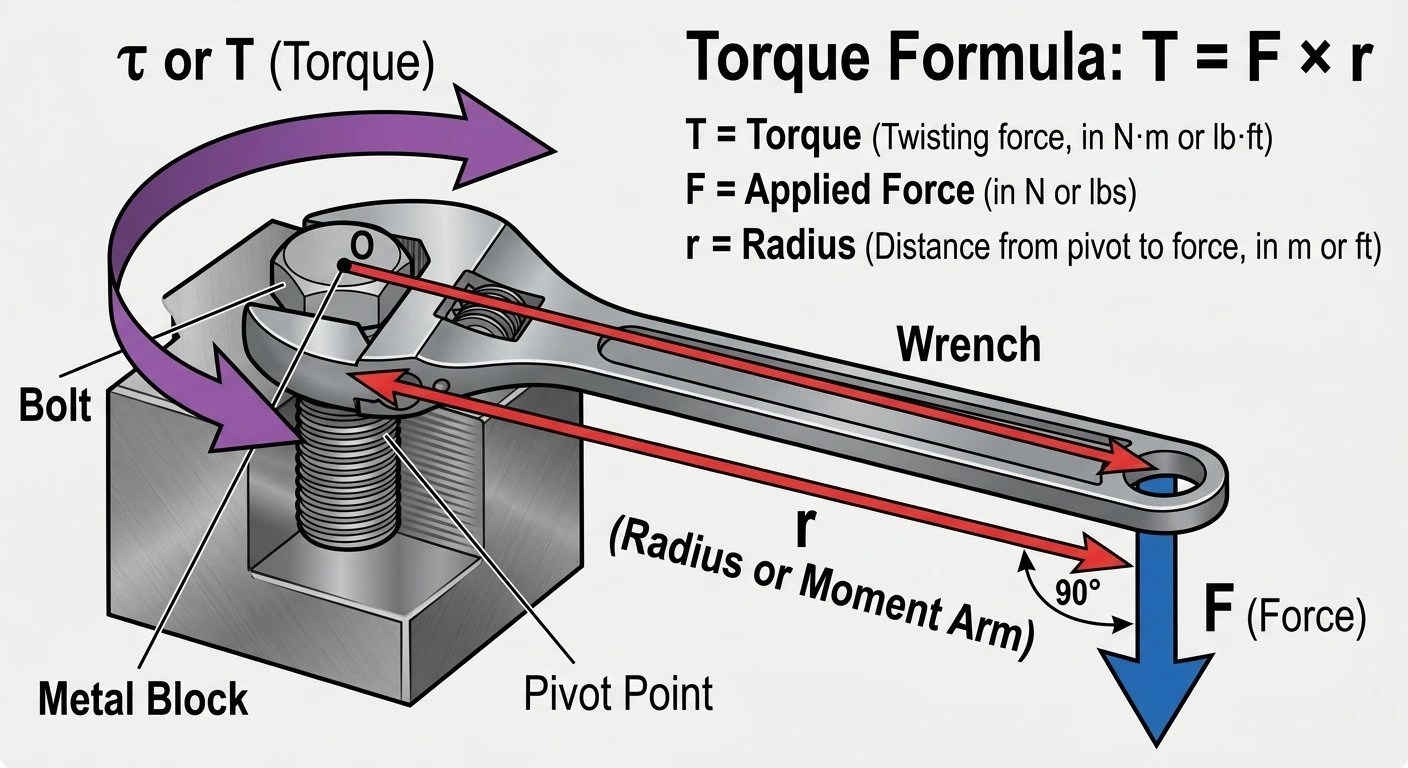
Figure: Torque depends on applied force and distance from the pivot point.
Torque is used in:
- Bolt tightening
- Motor shaft rotation
- Mechanical assemblies
👉 Step-by-step calculation: How to Calculate Torque
What is Power? (Work Over Time)
Power is the rate at which work is done. It measures how quickly energy is transferred.
Formula:
P = Work / Time
In mechanical systems, power is often linked with torque and speed.
Example:
- A motor with high torque but low speed has lower power
- A motor with moderate torque but high speed can produce higher power
Power is measured in Watts (W) or horsepower (HP).
In industrial applications:
- Motors are rated by power
- Machines require specific power levels to operate efficiently
Torque vs Force vs Power (Key Differences)
| Concept | Definition | Unit | Application |
|---|---|---|---|
| Force | Push or pull | Newton (N) | Linear motion |
| Torque | Rotational force | Nm / lb-ft | Bolt tightening, rotation |
| Power | Work over time | Watt / HP | Motor performance |
Real Industrial Applications (Gulf Context)
In Gulf industries such as oil & gas, manufacturing, and maintenance services:
- Torque ensures bolts are tightened correctly in pipelines
- Force is used in hydraulic systems
- Power determines motor performance in heavy machinery

Real-world torque application in industrial maintenance.
👉 Learn method: Torque Calculation Examples Real Life
Incorrect understanding of these concepts often leads to equipment failure and safety hazards.
Common Mistakes Technicians Make
- Confusing force with torque
- Ignoring distance in torque calculation
- Assuming power equals strength
- Using wrong units
👉 Avoid these: Common Torque Mistakes
When to Use Each Concept
- Use force when pushing or pulling objects
- Use torque when rotating bolts or shafts
- Use power when evaluating machine performance
👉 Related: Nm to lb-ft Conversion
Related Guides
Frequently Asked Questions (FAQs)
What is the difference between torque and force?
Force is a push or pull, while torque is the rotational effect of that force.
Is torque the same as power?
No, torque is rotational force, while power is the rate of doing work.
Why is torque important?
It ensures proper tightening and prevents mechanical failure.
Can force exist without torque?
Yes, if force is applied directly without distance.
How are torque and power related?
Power depends on torque and rotational speed in mechanical systems.
Final Summary
Understanding torque vs force vs power helps technicians make correct decisions in maintenance and engineering work. Each concept has a specific role, and using them correctly improves safety, efficiency, and performance.
👉 Need quick torque value during work? Use this: Torque Calculator Tool