
What is Torque in Engineering? (Simple Explanation + Real Examples)
What is torque in engineering is one of the most important concepts every technician must understand to avoid machine failure, loose connections, and performance issues.
If you’ve ever used a wrench, tightened a bolt, or worked on rotating equipment, you have encountered torque. In real maintenance work, understanding how force, lever arm length, and direction affect torque helps technicians apply the correct tightening force and troubleshoot rotating equipment more effectively.
👉 Instantly calculate torque here: Torque Calculator (Free Tool)
Understanding Torque in Simple Terms
Torque is the turning effect produced by a force about a point or axis. Unlike a force acting only to push or pull an object, torque depends on both the applied force and the perpendicular distance from the axis of rotation.
For example:
- Using a wrench to tighten a bolt
- Rotating a motor shaft
- Opening a valve
In each case, you are not just applying force—you are applying force at a distance, which creates torque.
👉 Learn formula here: Torque Formula Explained
This concept is simple but extremely powerful. Once you understand torque, many mechanical problems become easier to solve.
Torque Formula and Basic Principle
The basic torque formula is:
T = F × r
Where:
- T = Torque
- F = Force
- r = Perpendicular distance from the axis or pivot to the force line of action
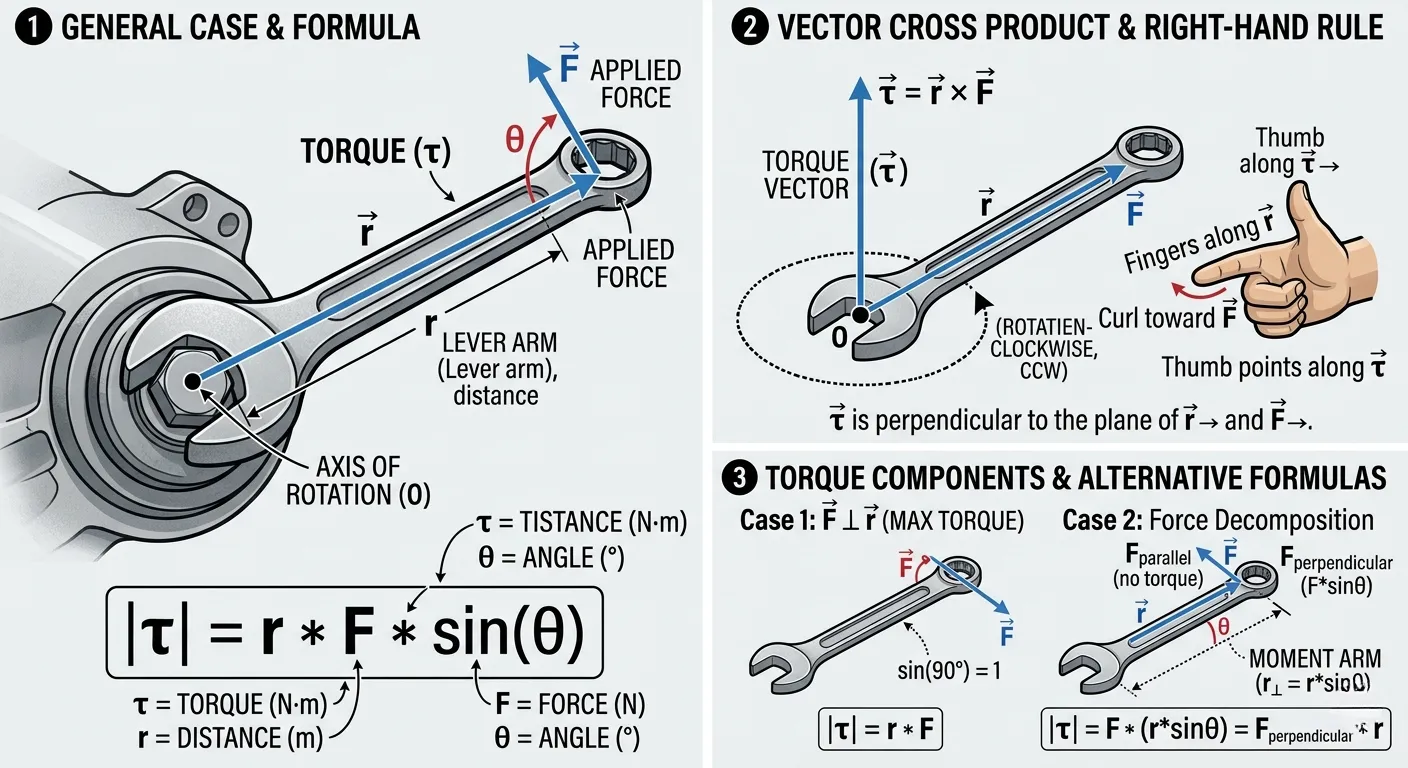
This means:
- More applied force generally produces more torque
- A longer perpendicular lever arm produces more torque for the same force
- The angle of the applied force also affects the resulting torque
This is why using a longer wrench makes tightening easier—it increases the distance, which increases torque.
👉 Step-by-step calculation: How to Calculate Torque
Where Torque is Used in Engineering
Torque is used in almost every mechanical system. Some common applications include:
- Bolt tightening: Ensures proper clamping force
- Motors: Determines rotational strength
- Gear systems: Transfers rotational power
- Pipelines: Maintains safe connections
In Gulf industries, torque is especially critical in:
- Oil & gas flange connections
- Heavy machinery assembly
- Maintenance operations
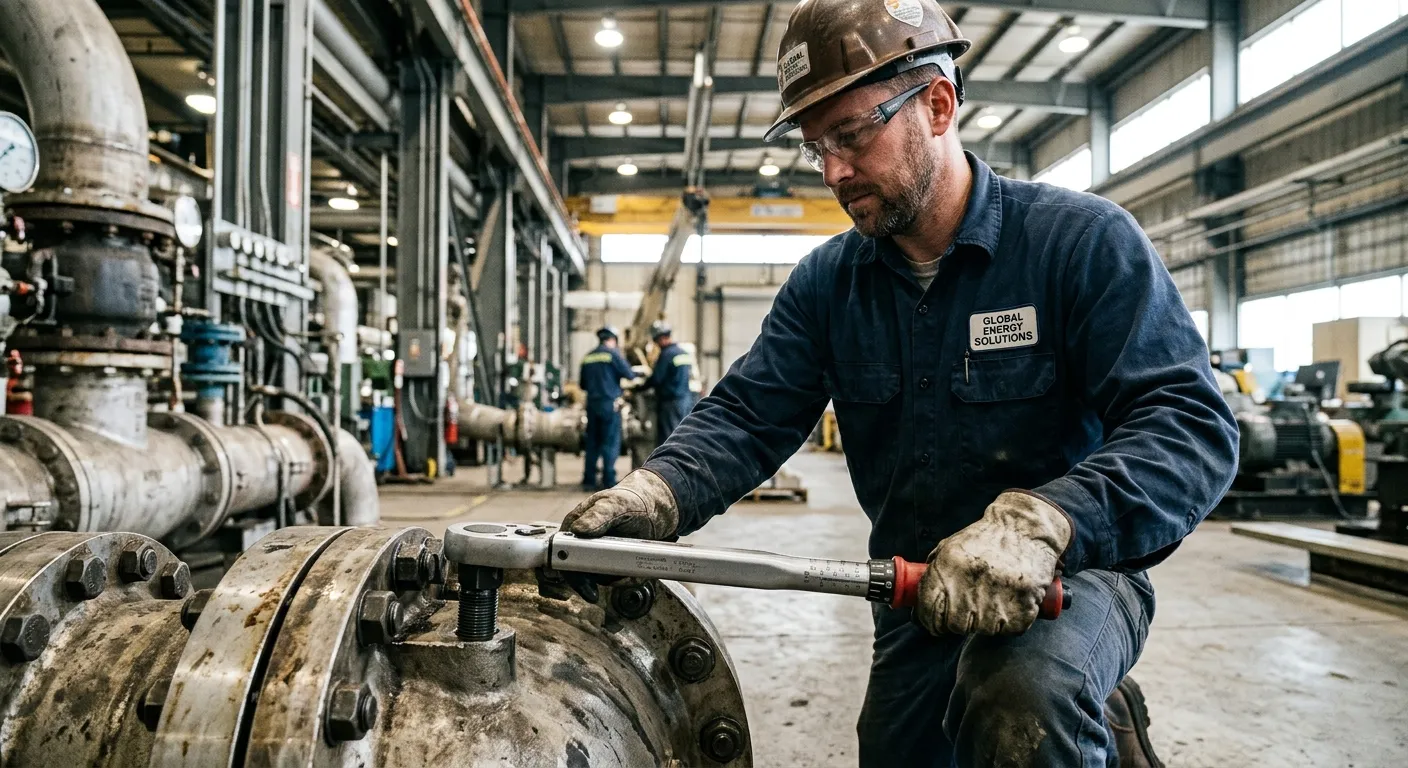
Incorrect torque can cause leaks, failures, or even accidents, which is why precise torque control is required.
Torque vs Force – Key Difference
Many beginners confuse torque with force, but they are not the same.
| Factor | Force | Torque | Use Case |
|---|---|---|---|
| Definition | Push or pull | Rotational force | Linear vs rotational tasks |
| Motion | Straight | Circular | Movement type |
| Application | Pushing objects | Tightening bolts | Mechanical systems |
👉 Detailed comparison: Torque vs Force vs Power
Units of Torque Explained
Torque is measured in different units depending on the system used:
- Newton-meter (N·m) → SI unit
- Pound-foot (lb-ft) → Imperial/US customary unit
- Kilogram-force centimeter (kgf·cm) → Older/practical unit used in some applications
In industrial maintenance, N·m and lb-ft are commonly encountered, depending on equipment standards, manufacturer documentation, and the unit system used for the machine.
👉 Conversion guide: Nm to lb-ft Conversion
Understanding units is important to avoid mistakes in calculations and applications.
Common Torque Mistakes in Real Work
Many technicians make mistakes because they misunderstand torque basics.
- Using the wrong units (N·m vs lb-ft)
- Applying too much torque (over-tightening)
- Ignoring the effective lever arm length
- Not using a suitable calibrated torque wrench when specified
In real maintenance work, I’ve seen failures happen because torque was either too high or too low. In industrial environments, proper torque application is important for safety, performance, and long-term equipment reliability.
👉 Avoid these errors: Common Torque Mistakes
These mistakes can lead to equipment damage or safety risks.
Why Torque is Critical in Maintenance Work
Torque is not just a theory—it directly affects real-world performance.
Correct torque ensures:
- Proper bolt tension
- Safe operation
- Long equipment life
- Reduced maintenance costs
In industries such as oil and gas, incorrect torque on critical connections can contribute to leaks, joint problems, equipment damage, or other reliability and safety issues. The required torque should always follow the applicable engineering specification or manufacturer's procedure.
This is why torque control tools and procedures are strictly followed in professional environments.
👉 See practical values: Bolt Torque Chart (Standard Values)
Related Torque Guides
Frequently Asked Questions (FAQs)
What is torque in engineering?
Torque is the rotational force that causes an object to turn around a pivot point. It is commonly used in mechanical systems like motors and bolt tightening.
What is the formula for torque?
The basic formula for torque is T = F × r, where force is multiplied by the distance from the pivot point.
What units are used to measure torque?
Torque is commonly expressed in Newton-meters (N·m) and pound-feet (lb-ft). Some applications may also use kilogram-force centimeters (kgf·cm).
Why is torque important in maintenance work?
Torque ensures proper tightening of bolts and safe operation of machinery, preventing failures and accidents.
What happens if torque is applied incorrectly?
Incorrect torque can lead to loose connections, equipment damage, or bolt failure, which may cause safety risks.
Final Summary
Understanding what torque is in engineering gives you a strong foundation in mechanical systems. It helps you work more accurately, safely, and efficiently.
Torque is everywhere, from simple tools to complex industrial machinery, and mastering it is essential for any technician or engineer.
👉 Need accurate torque instantly? Use this tool: Torque Calculator (Nm ↔ lb-ft)