
RPM to Belt Speed Formula and Calculation
A motor can be running at the correct RPM while a conveyor, fan, or belt-driven machine still performs poorly. In many industrial facilities, technicians waste valuable troubleshooting time investigating motors and bearings when the real issue is an incorrect RPM-to-belt-speed relationship caused by pulley sizing, belt slip, or worn drive components.
Understanding the RPM to belt speed formula and calculation helps maintenance teams convert rotational speed into actual belt velocity, diagnose performance problems, and verify equipment operation. If you need instant results, use the Belt Speed Calculator to quickly convert RPM and pulley diameter into belt speed.
This guide explains how RPM affects belt speed, how technicians perform calculations in the field, and how RPM measurements are used to troubleshoot real industrial equipment.
What Is RPM in Belt Drive Systems?
RPM stands for Revolutions Per Minute. It measures how many complete rotations a pulley, shaft, motor, or rotating component makes within one minute.
In belt-driven systems, RPM is one of the most important variables affecting belt speed. However, RPM alone does not determine belt velocity. Pulley diameter must also be considered because larger pulleys move more belt per revolution than smaller pulleys.
A typical industrial belt drive system includes:
- Electric motors
- Drive pulleys
- Driven pulleys
- Shafts
- Bearings
- Couplings
- Belts
- Alignment components
All of these components influence how rotational motion is transferred throughout the machine.
Technicians regularly verify RPM during:
- Preventive maintenance inspections
- Conveyor troubleshooting
- Fan performance verification
- HVAC balancing activities
- Equipment commissioning
- Reliability investigations
Many maintenance teams combine RPM analysis with additional engineering calculations available in the Mechanical Calculators Hub when evaluating belt-driven equipment performance.
RPM to Belt Speed Formula
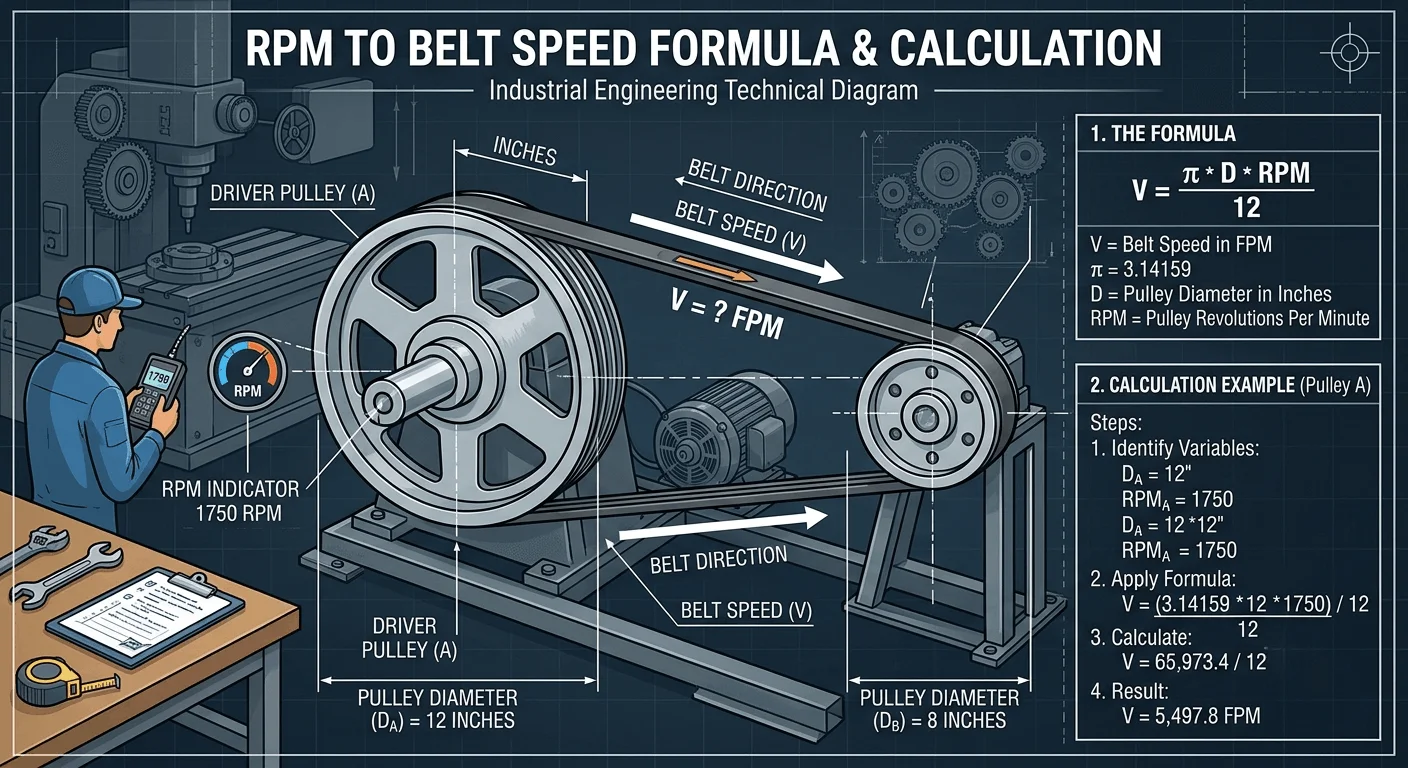
The standard RPM to belt speed calculation uses pulley diameter and rotational speed to determine the linear velocity of the belt.
Where:
- π (Pi) = 3.1416
- Pulley Diameter = Diameter of the pulley in meters
- RPM = Revolutions per minute
- 60 = Converts minutes into seconds
This formula converts rotational motion into linear belt velocity. Increasing RPM increases belt speed, while decreasing RPM reduces belt speed. Likewise, larger pulley diameters produce higher belt speeds at the same RPM.
Technicians often review resources such as How to Calculate Belt Speed Step by Step, Belt Speed Formula Explained, and Pulley Diameter and Belt Speed Relationship when validating RPM calculations.
How to Convert RPM to Belt Speed
Converting RPM to belt speed requires only two inputs:
- Pulley diameter
- Measured RPM
The process is straightforward:
- Measure pulley diameter.
- Measure RPM using a tachometer.
- Convert diameter into meters if necessary.
- Apply the RPM to belt speed formula.
- Compare calculated speed against expected operating conditions.
For example, if a pulley has a diameter of 200 mm and rotates at 1450 RPM:
Belt Speed = (3.1416 × 0.20 × 1450) ÷ 60
Result:
15.18 m/s
This value represents the linear velocity of the belt as it travels around the pulley.
Real RPM to Belt Speed Calculation Examples
Understanding the RPM to belt speed formula becomes much easier when applied to real industrial examples. Maintenance technicians frequently perform these calculations when troubleshooting conveyors, HVAC systems, manufacturing equipment, and rotating machinery.
Consider a motor operating at 1750 RPM with a pulley diameter of 150 mm.
Using the formula:
Belt Speed = (3.1416 × 0.15 × 1750) ÷ 60
Result:
13.74 m/s
Now assume the pulley diameter increases to 250 mm while RPM remains unchanged.
Belt Speed = (3.1416 × 0.25 × 1750) ÷ 60
Result:
22.91 m/s
Although the RPM did not change, belt speed increased significantly because of the larger pulley diameter. This demonstrates why RPM readings alone cannot accurately predict machine performance.
RPM vs Belt Speed Comparison Table
The table below shows how RPM and pulley diameter combine to influence belt speed in common industrial applications.
| RPM | Pulley Diameter | Belt Speed | Typical Application |
|---|---|---|---|
| 950 | 100 mm | 4.97 m/s | Small Conveyors |
| 1450 | 150 mm | 11.39 m/s | Packaging Equipment |
| 1750 | 200 mm | 18.33 m/s | HVAC Systems |
| 1800 | 250 mm | 23.56 m/s | Industrial Conveyors |
To simplify these calculations, engineers often use the Belt Speed Calculator to instantly verify RPM and pulley diameter changes before making maintenance decisions.
How Technicians Measure RPM in the Field
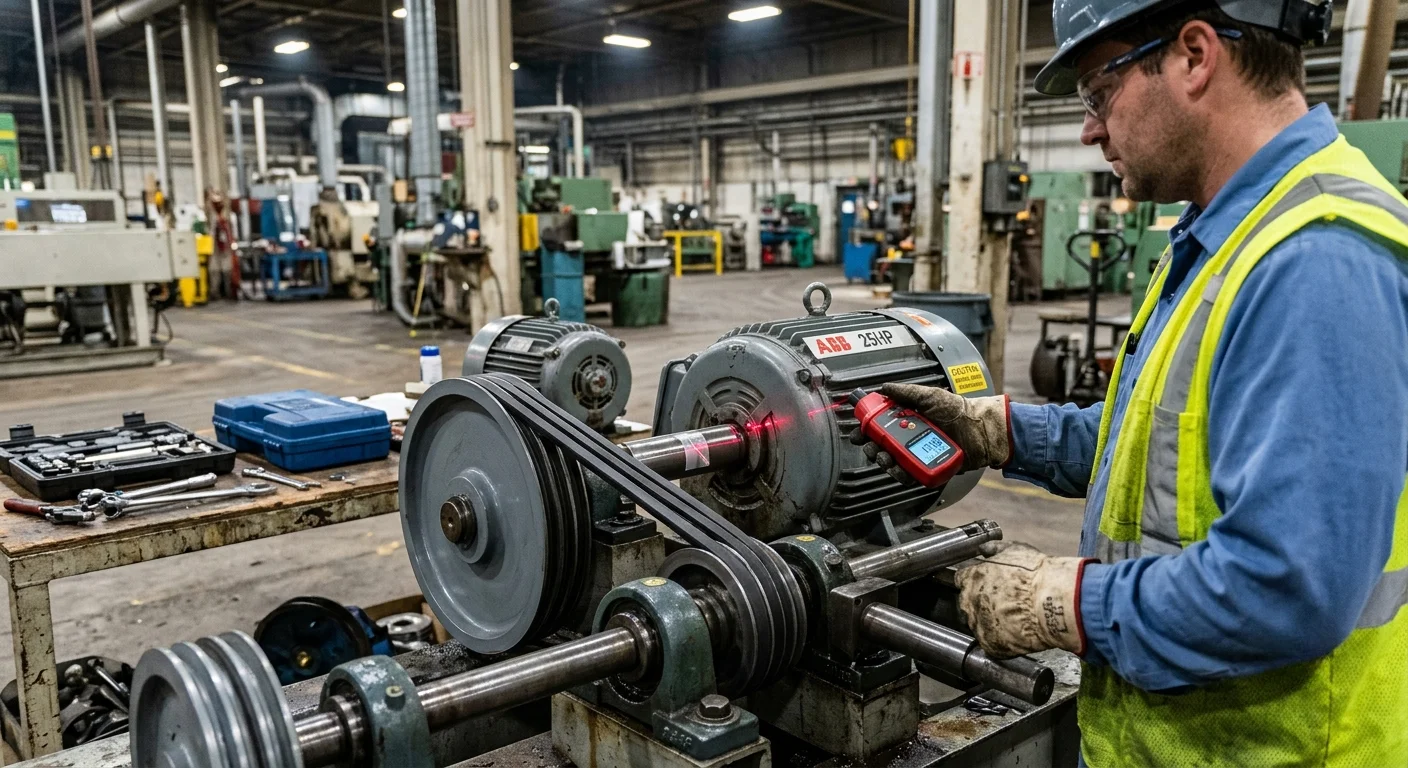
Accurate RPM measurements are essential for reliable belt speed calculations. Most industrial maintenance teams use digital tachometers to verify rotational speed during inspections and troubleshooting activities.
Common RPM measurement tools include:
- Laser tachometers
- Contact tachometers
- Strobe tachometers
- Condition monitoring systems
- Motor control feedback systems
During preventive maintenance, technicians often compare measured RPM against design specifications and historical operating data. Significant RPM deviations may indicate motor issues, drive problems, control system faults, or excessive mechanical loading.
RPM measurements are frequently combined with vibration analysis, alignment inspections, bearing assessments, and lubrication checks to build a complete picture of equipment health.
Common RPM Calculation Mistakes
One of the most common mistakes is assuming that motor nameplate RPM matches actual operating RPM. Real-world conditions such as load changes, voltage variations, and mechanical losses can affect speed.
Another frequent error is measuring the wrong pulley. In belt-driven systems, technicians must verify whether they are measuring the drive pulley, driven pulley, or motor shaft to avoid incorrect calculations.
Incorrect unit conversions can also create substantial errors. Pulley diameter must be converted correctly before applying the RPM to belt speed formula.
Some maintenance teams overlook belt slip entirely. A conveyor may appear to be operating normally while actual belt speed differs significantly from calculated values because of slipping belts, worn pulleys, or alignment issues.
For this reason, RPM calculations should always be verified against real operating conditions whenever production performance or equipment efficiency becomes a concern.
Using RPM Calculations for Troubleshooting
RPM calculations are not only used for determining belt speed. They are also valuable troubleshooting tools that help maintenance teams identify hidden performance issues before equipment failures occur.
When investigating conveyor performance issues, technicians frequently compare their findings with the Conveyor Belt Speed Calculation guide to verify operating speed and production capacity.
Similarly, HVAC technicians use RPM calculations to confirm fan performance. A fan may appear operational, yet reduced RPM or incorrect pulley sizing can significantly reduce airflow and system efficiency.
In manufacturing facilities, RPM-to-belt-speed calculations are commonly used during:
- Conveyor throughput verification
- Equipment commissioning
- Production optimization projects
- Preventive maintenance inspections
- Root cause failure investigations
- Reliability improvement programs
Combining RPM measurements with belt speed calculations often helps engineers identify problems much faster than relying on visual inspections alone.
Continue Learning About RPM and Belt Speed
RPM calculations become even more valuable when combined with related engineering tools and troubleshooting resources.
- Belt Speed Calculator
- Mechanical Calculators Hub
- How to Calculate Belt Speed Step by Step
- Belt Speed Formula Explained
- Conveyor Belt Speed Calculation
- Pulley Diameter and Belt Speed Relationship
Maintenance professionals researching RPM calculations also explore topics such as Belt Speed in ft/min Conversion Guide, What Is a Good Belt Speed, and Common Belt Speed Calculation Mistakes to gain a deeper understanding of belt drive performance.
Real-World Engineering Insight
Across Gulf manufacturing plants, logistics facilities, cement factories, HVAC installations, and processing industries, RPM verification is one of the simplest yet most effective diagnostic techniques available to maintenance teams.
During shutdown maintenance activities, technicians frequently discover situations where equipment appears mechanically healthy, but measured RPM differs from expected operating values. These differences often explain reduced throughput, airflow losses, excessive energy consumption, or inconsistent machine performance.
Experienced maintenance personnel rarely rely on RPM readings alone. Instead, they compare RPM values with pulley dimensions, belt speed calculations, vibration data, lubrication condition, bearing health, and alignment inspections to build a complete picture of machine performance.
One field-tested recommendation is to document RPM readings during equipment commissioning and retain them as maintenance benchmarks. Historical RPM data often helps technicians identify gradual performance degradation long before operators notice production problems.
Frequently Asked Questions
How do you convert RPM to belt speed?
RPM is converted into belt speed using pulley diameter and the formula: Belt Speed = (π × Pulley Diameter × RPM) ÷ 60.
Does pulley diameter affect RPM calculations?
Yes. Pulley diameter directly affects belt speed calculations because larger pulleys move more belt per revolution than smaller pulleys.
What tool is used to measure RPM?
Technicians commonly use digital laser tachometers, contact tachometers, and strobe tachometers to measure RPM accurately.
Can incorrect RPM reduce production output?
Yes. Incorrect RPM values can lead to inaccurate belt speed calculations, reduced conveyor throughput, lower airflow, and poor equipment performance.
Why is my motor RPM correct but belt speed wrong?
Belt slip, pulley wear, incorrect pulley sizing, and alignment issues can all cause actual belt speed to differ from expected values.
How do technicians verify RPM in the field?
Technicians use tachometers, compare readings against design specifications, and verify results through performance measurements and equipment inspections.
Recommended Next Steps
Continue exploring these engineering resources to improve RPM calculations, understand pulley sizing, and troubleshoot belt-driven equipment.