
Belt Speed vs Conveyor Capacity
Belt speed vs conveyor capacity is one of the most important relationships in bulk material handling systems, yet it is often misunderstood during production improvement projects. In many industrial facilities, operators assume that increasing belt speed will automatically increase conveyor output. In reality, higher belt speed does not always translate into higher capacity and can sometimes create new maintenance and reliability problems.
When production targets are missed, the first reaction is often to increase conveyor speed. However, experienced maintenance engineers know that conveyor capacity depends on several factors working together, including belt speed, belt width, material characteristics, loading conditions, and equipment limitations.
Before making changes, engineers typically evaluate conveyor performance using the Belt Speed Calculator and review the existing operating conditions to determine whether speed is actually the limiting factor.
This guide explains how belt speed influences conveyor capacity, when increasing speed improves production, when it creates problems, and what maintenance teams should consider before modifying conveyor operating parameters.
Why Conveyor Capacity Matters
Conveyor capacity directly affects production throughput, material handling efficiency, and plant profitability. Whether moving aggregates, cement, grain, minerals, packaged goods, or industrial products, the conveyor system must deliver material at the required rate without creating bottlenecks.
When conveyor capacity is lower than production demand, several issues may occur:
- Reduced plant output
- Material accumulation at transfer points
- Production delays
- Increased operating costs
- Unnecessary equipment upgrades
- Inefficient use of existing assets
For this reason, engineers often investigate conveyor speed adjustments before considering expensive modifications such as replacing motors, installing larger conveyors, or redesigning material handling systems.
How Belt Speed Affects Conveyor Throughput
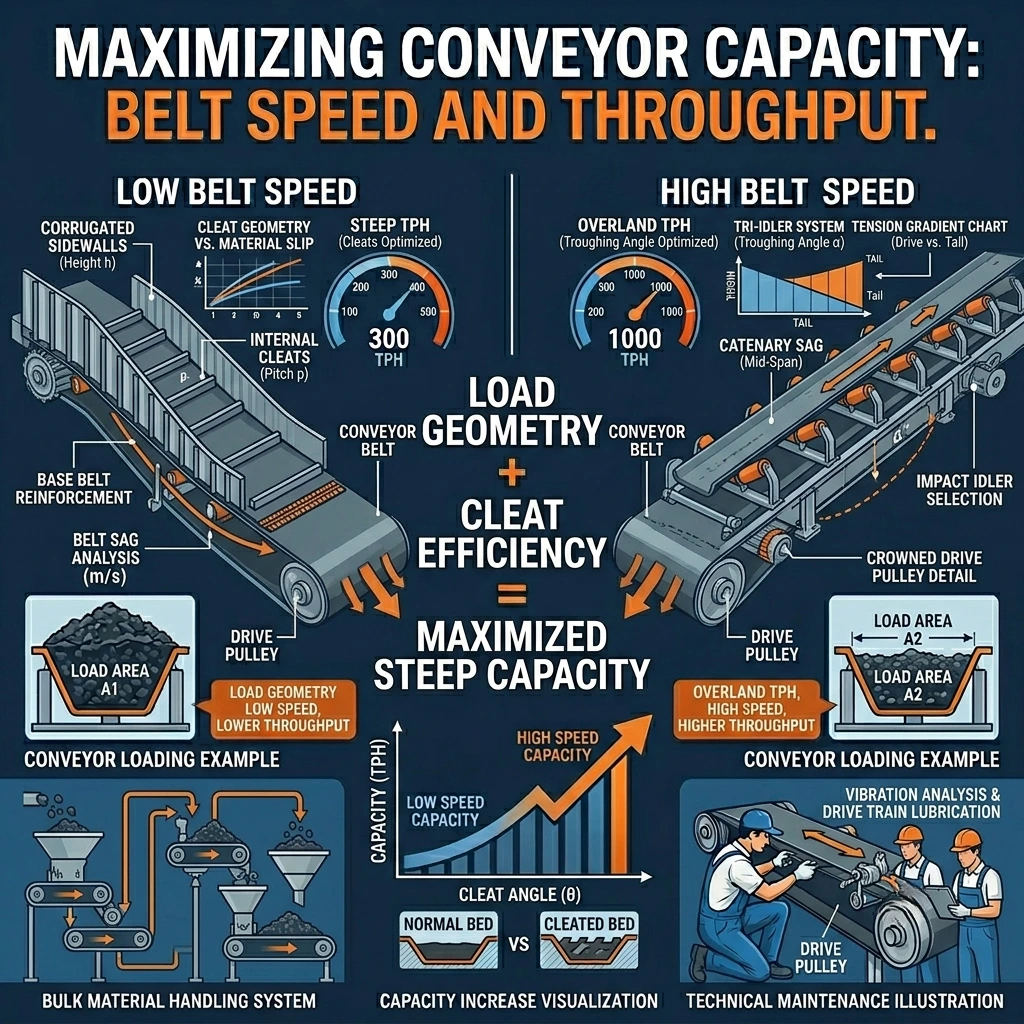
Belt speed determines how quickly material travels along the conveyor. Under normal operating conditions, increasing belt speed allows more material to move through the system over a given period, which increases conveyor throughput.
However, throughput is not determined by speed alone. Conveyor capacity depends on both the amount of material carried on the belt and the speed at which the belt travels.
A lightly loaded conveyor running at high speed may transport less material than a properly loaded conveyor operating at a moderate speed.
This is why experienced engineers evaluate loading conditions together with belt speed calculations when assessing conveyor performance.
Technicians who need to calculate operating speed can use the methods explained in Conveyor Belt Speed Calculation and How to Calculate Belt Speed Step by Step.
In many conveyor applications, increasing speed by 10% does not automatically increase production by 10%. The actual result depends on how efficiently material is loaded, transported, and discharged throughout the system.
Does Increasing Belt Speed Always Increase Capacity?
The short answer is no.
Although higher belt speed can increase conveyor capacity, there is a practical limit where further speed increases provide diminishing returns or create operational problems.
For example, increasing belt speed may lead to:
- Material spillage
- Dust generation
- Poor loading efficiency
- Transfer point losses
- Higher belt wear
- Increased maintenance requirements
When these issues occur, conveyor performance may actually decline despite operating at a higher speed.
Before increasing conveyor speed, maintenance teams should review What Is a Good Belt Speed and verify whether the existing operating speed already falls within the recommended range.
In some facilities, production improvements are achieved more effectively through better loading practices, improved material distribution, or conveyor maintenance rather than increasing belt speed alone.
| Belt Speed | Capacity Impact | Typical Result | Use Case |
|---|---|---|---|
| Low | Reduced Throughput | Lower Production | Controlled Material Handling |
| Moderate | Balanced Capacity | Efficient Operation | Most Industrial Applications |
| High | Potential Capacity Increase | Higher Wear and Risk | Specialized High-Output Systems |
Increasing belt speed can increase conveyor capacity, but only when loading efficiency, belt width, material flow, and conveyor design can support additional throughput. Higher speed does not automatically guarantee higher production output.
Factors That Affect Conveyor Capacity Besides Speed
One of the biggest misconceptions in conveyor engineering is assuming that belt speed alone determines conveyor capacity. In reality, conveyor throughput depends on multiple variables working together.
Even if belt speed increases, capacity may remain unchanged if other system limitations prevent additional material from being transported efficiently.
Important factors affecting conveyor capacity include:
- Belt width
- Material density
- Material size and shape
- Loading efficiency
- Conveyor incline angle
- Transfer point design
- Belt condition
- Pulley and drive performance
For example, a wider conveyor carrying the same material at a moderate speed may transport significantly more material than a narrow conveyor operating at a higher speed.
Engineers also evaluate pulley diameter and RPM because these variables influence belt velocity and overall system performance. The relationship is explained in Pulley Diameter and Belt Speed Relationship and RPM to Belt Speed Formula and Calculation.
Real Conveyor Capacity Example
Consider a bulk material handling conveyor operating in a cement plant.
- Belt Speed = 2.5 m/s
- Belt Width = 800 mm
- Material = Crushed Limestone
- Current Capacity = 400 tons/hour
Production management requests a capacity increase to support higher plant output.
At first glance, increasing belt speed appears to be the easiest solution. Engineers evaluate raising belt speed from 2.5 m/s to 3.0 m/s.
The expected result is higher throughput, but the engineering review identifies additional concerns:
- Transfer points may experience material spillage
- Dust generation may increase
- Belt wear rates may accelerate
- Existing cleaners may become less effective
- Loading chutes may require modification
Instead of relying solely on belt speed, engineers improve loading efficiency and optimize material distribution across the belt width. The result is a measurable capacity increase without creating additional maintenance problems.
This example illustrates why experienced maintenance teams evaluate the entire conveyor system before increasing speed.
When Higher Belt Speed Creates Problems
Although higher belt speed can improve conveyor throughput, there is a point where additional speed creates more problems than benefits.
Common issues associated with excessive belt speed include:
- Material spillage
- Increased dust emissions
- Belt mistracking
- Accelerated pulley wear
- Increased bearing loading
- Higher maintenance costs
- Reduced equipment life
These issues become especially important in dusty industrial environments where material containment and housekeeping are already major challenges.
Facilities experiencing these symptoms should review Common Belt Speed Calculation Mistakes and inspect the system for signs of improper operating conditions.
In many cases, reducing material turbulence and improving conveyor loading produces better results than increasing speed.
Maximum Practical Belt Speed Limits
Every conveyor system has a practical operating limit. The ideal belt speed depends on the material being handled, conveyor design, loading method, environmental conditions, and maintenance strategy.
A speed that works well for packaged products may be unsuitable for abrasive bulk materials such as aggregates, clinker, ore, or coal.
For this reason, engineers rarely increase speed without reviewing equipment limitations and operating recommendations.
Before modifying conveyor speed, maintenance teams should compare current operating conditions with the guidance provided in What Is a Good Belt Speed.
When additional speed is required, engineers often calculate the expected changes using the Belt Speed Calculator and verify whether the conveyor structure, pulleys, bearings, and belt construction can safely support higher operating speeds.
The most reliable conveyor systems operate within a balanced range where throughput, maintenance requirements, safety, and equipment life remain aligned.
If increasing belt speed has not improved production, the issue may lie elsewhere in the conveyor system. Reviewing troubleshooting guides alongside belt speed calculations often helps identify the true cause of reduced conveyor capacity.
Related Calculators and Troubleshooting Guides
Conveyor capacity optimization requires more than increasing belt speed. The engineering resources below will help you calculate belt speed accurately, evaluate conveyor performance, troubleshoot operating problems, and improve long-term system reliability.
- Belt Speed Calculator
- Mechanical Calculators Hub
- Conveyor Belt Speed Calculation
- How to Calculate Belt Speed Step by Step
- RPM to Belt Speed Formula and Calculation
- Pulley Diameter and Belt Speed Relationship
- Common Belt Speed Calculation Mistakes
- What Is a Good Belt Speed
- Conveyor Belt Slip Causes
- Industrial Belt Drive Troubleshooting Guide
- Maximum Recommended Belt Speed
- What Is a Good Belt Speed
Real-World Engineering Insight
During maintenance projects in Gulf manufacturing plants, one of the most common requests from production teams is increasing conveyor output without investing in new equipment. While increasing belt speed appears to be a quick solution, field experience shows that conveyor capacity improvements are rarely achieved through speed changes alone.
In cement plants, aggregate handling systems, and bulk material conveyors, increasing belt speed often exposes weaknesses elsewhere in the system. Transfer chutes may begin spilling material, dust levels may rise, and belt cleaners may struggle to maintain effective performance.
In one industrial application, production management requested a 15% increase in conveyor throughput. Initial discussions focused on increasing belt speed. However, after inspection, engineers discovered that poor loading distribution was limiting capacity. By improving material loading and reducing spillage, throughput increased significantly without modifying belt speed.
Another common issue occurs when operators increase speed without reviewing Original Equipment Manufacturer (OEM) recommendations. OEM stands for Original Equipment Manufacturer. These recommendations define safe operating limits for belts, pulleys, bearings, and conveyor components.
Experienced maintenance engineers therefore evaluate:
- Belt speed
- Material loading efficiency
- Transfer point performance
- Dust generation
- Bearing operating conditions
- Pulley wear
- Long-term maintenance requirements
The most reliable conveyor systems are not necessarily the fastest systems. They are the systems that achieve the required throughput while maintaining safety, reliability, and predictable maintenance costs.
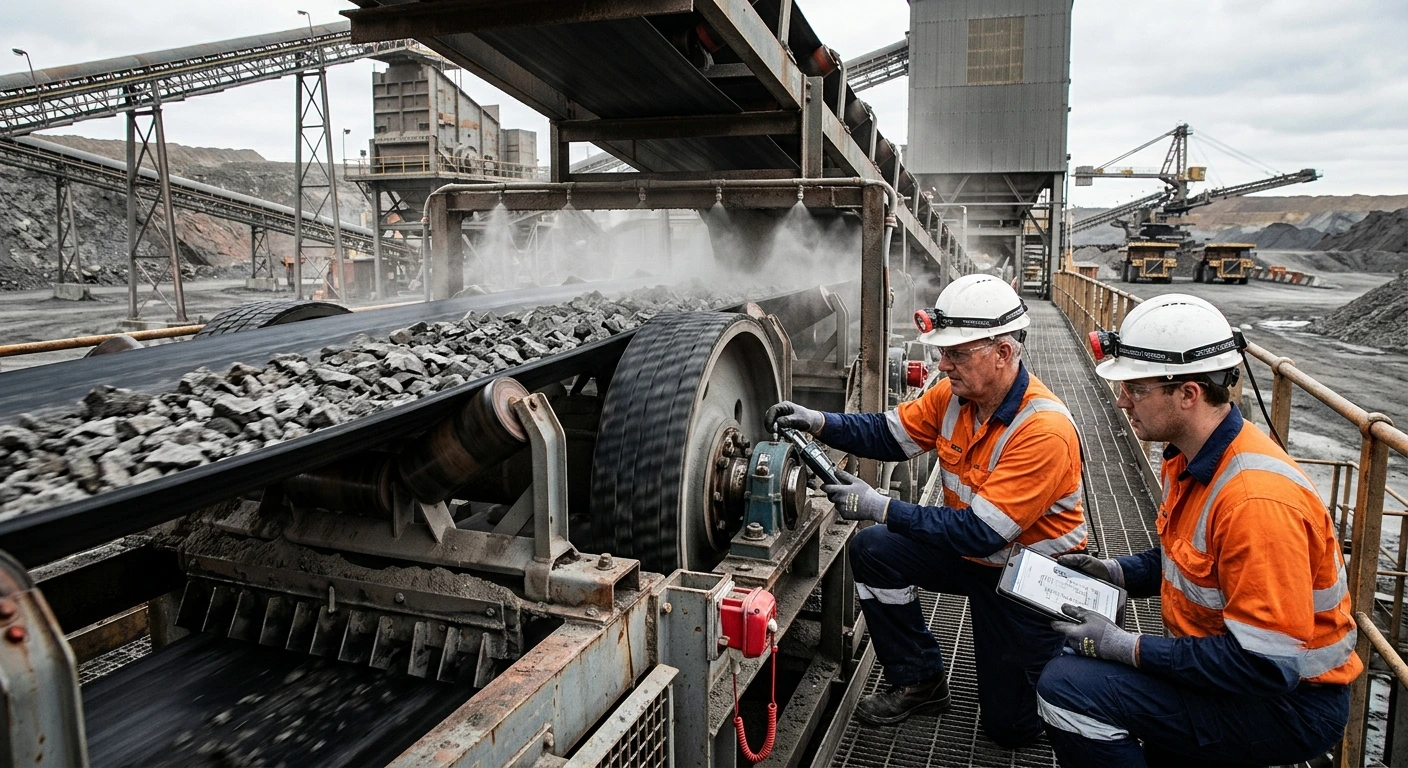
Increasing belt speed can improve conveyor capacity only when the entire conveyor system is capable of handling the additional throughput. Evaluating loading efficiency, conveyor design, belt condition, and operating limits together leads to more reliable production improvements than focusing on belt speed alone.
Frequently Asked Questions
Does increasing belt speed always increase conveyor capacity?
No. Conveyor capacity depends on belt speed, material loading, belt width, material density, and overall conveyor design.
What is the relationship between belt speed and conveyor throughput?
Higher belt speed can increase throughput, but only if the conveyor system can efficiently load, transport, and discharge additional material.
Can higher belt speed create maintenance problems?
Yes. Excessive belt speed may increase dust generation, material spillage, belt wear, bearing loading, and maintenance costs.
How do engineers determine the correct conveyor speed?
Engineers evaluate material characteristics, production requirements, equipment limitations, and recommended operating ranges before selecting conveyor speed.
What limits conveyor capacity besides speed?
Factors such as belt width, material density, loading efficiency, transfer point design, and conveyor condition can significantly influence capacity.
Should OEM recommendations be reviewed before increasing speed?
Yes. OEM recommendations help ensure the conveyor system remains within safe operating limits and maintains long-term reliability.
Recommended Next Steps
Now that you understand how belt speed influences conveyor capacity, continue with these engineering resources to determine safe operating limits, troubleshoot conveyor performance, and calculate belt speed accurately.