
V Belt Size Chart & Calculation Guide (Complete Industrial Guide)
A V belt size chart and calculation guide is essential for selecting the correct belt in pulley systems. Engineers and maintenance technicians use V belt charts to ensure proper fit, efficiency, and performance in industrial environments.
This V belt size chart and calculation guide helps engineers choose the correct belt size for efficient power transmission.
In this guide, you will learn how to read a V belt size chart, how to calculate belt size manually, and how to apply these methods in real industrial environments. For quick results, you can also use our belt length calculator.

What is a V Belt Size Chart?
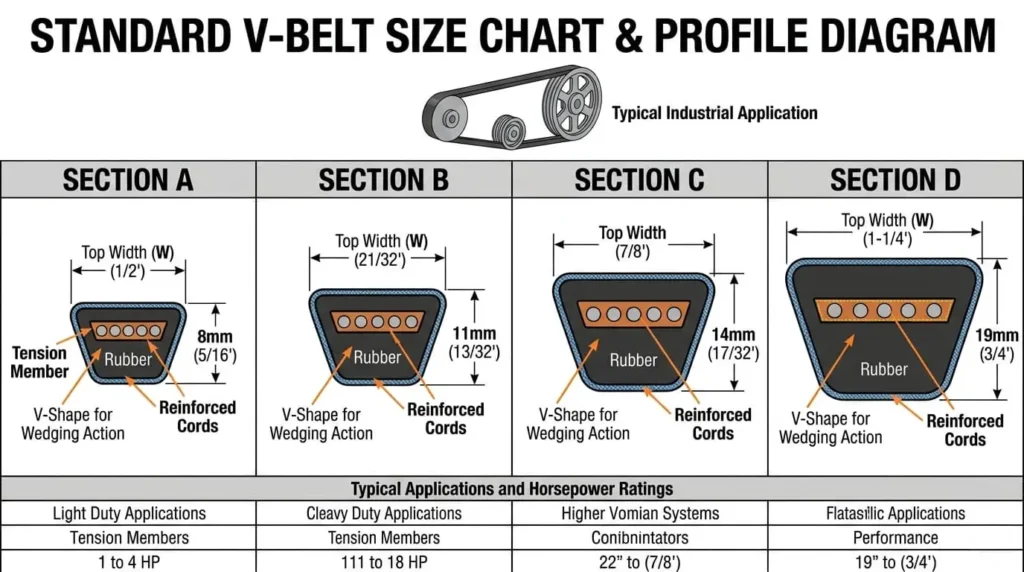
A V belt size chart is a reference table used to identify the correct belt based on its dimensions, including top width, thickness, and length. These charts are commonly used in industrial maintenance to match belts with pulley systems.
- A Section (13 mm width)
- B Section (17 mm width)
- C Section (22 mm width)
- D Section (32 mm width)
To understand the full calculation method, read our belt length manual calculation guide.
.
How to Read a V Belt Size Chart
Understanding this V belt size chart and calculation guide ensures proper belt selection and prevents system failure.
Reading a V belt chart involves understanding belt sections and matching them with pulley sizes and system requirements.
Step 1: Identify Belt Section
Determine the belt type based on pulley groove size.
Step 2: Check Belt Length
Use the chart to find the standard belt length that matches your system.
Step 3: Verify Compatibility
Ensure the belt matches pulley alignment and load requirements.
Accurate belt sizing depends on correct measurement. Learn how in our pulley center distance measurement guide.
Practical Example
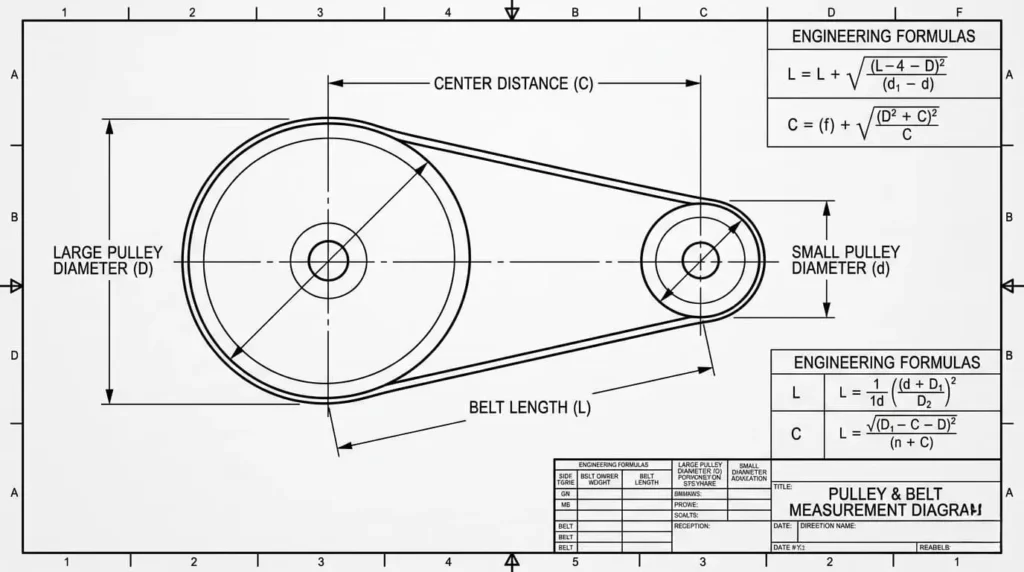
Suppose you have:
- Motor pulley: 150 mm
- Driven pulley: 300 mm
- Center distance: 600 mm
Using the calculation method or chart, you can select the correct V belt size for proper system operation.
To see how belt length is calculated step by step, refer to this practical belt length calculation example.
Common V Belt Selection Mistakes
- Choosing incorrect belt section
- Ignoring load requirements
- Wrong belt length
- Poor alignment
These issues can reduce efficiency and damage equipment over time.
Avoid common sizing errors by reading this belt calculation mistakes guide.
Tips for Selecting the Right V Belt
- Always match the belt section with the pulley groove size
- Ensure proper belt tension for efficient operation
- Consider environmental factors like heat, dust, and load
- To compare belt types, check our V belt vs flat belt guide.
For real-world performance insights, read our belt length formula accuracy guide.
Frequently Asked Questions
What is a V belt size chart used for?
It is used to select the correct belt size based on pulley dimensions and system requirements.
How do I choose the correct V belt size?
You need to consider pulley diameter, center distance, and load requirements.
Can I calculate V belt size manually?
Yes, you can calculate it using standard belt length formulas and measurements.
Why is correct belt size important?
It ensures proper power transmission, reduces wear, and improves system efficiency.