
Open Belt vs Cross Belt: Open Belt vs Cross Belt: Differences, Advantages & Applications
Understanding the difference between open belt and cross belt drives is essential for anyone working with pulley systems. Whether you're a beginner technician or an experienced engineer, choosing the right belt arrangement affects performance, efficiency, and belt life.
In this guide, you’ll learn the key differences, working principles, real-world applications, and how belt length calculation varies in both systems.
To calculate accurate belt length for both systems, you can use our belt length calculator.
Quick Comparison: Open Belt vs Cross Belt
| Feature | Open Belt | Cross Belt |
|---|---|---|
| Rotation Direction | Same direction | Opposite direction |
| Belt Contact | Less contact | More contact |
| Wear | Lower | Higher due to twisting |
| Efficiency | Moderate | Higher grip |
| Application | General systems | Specific directional needs |
What is an Open Belt Drive?
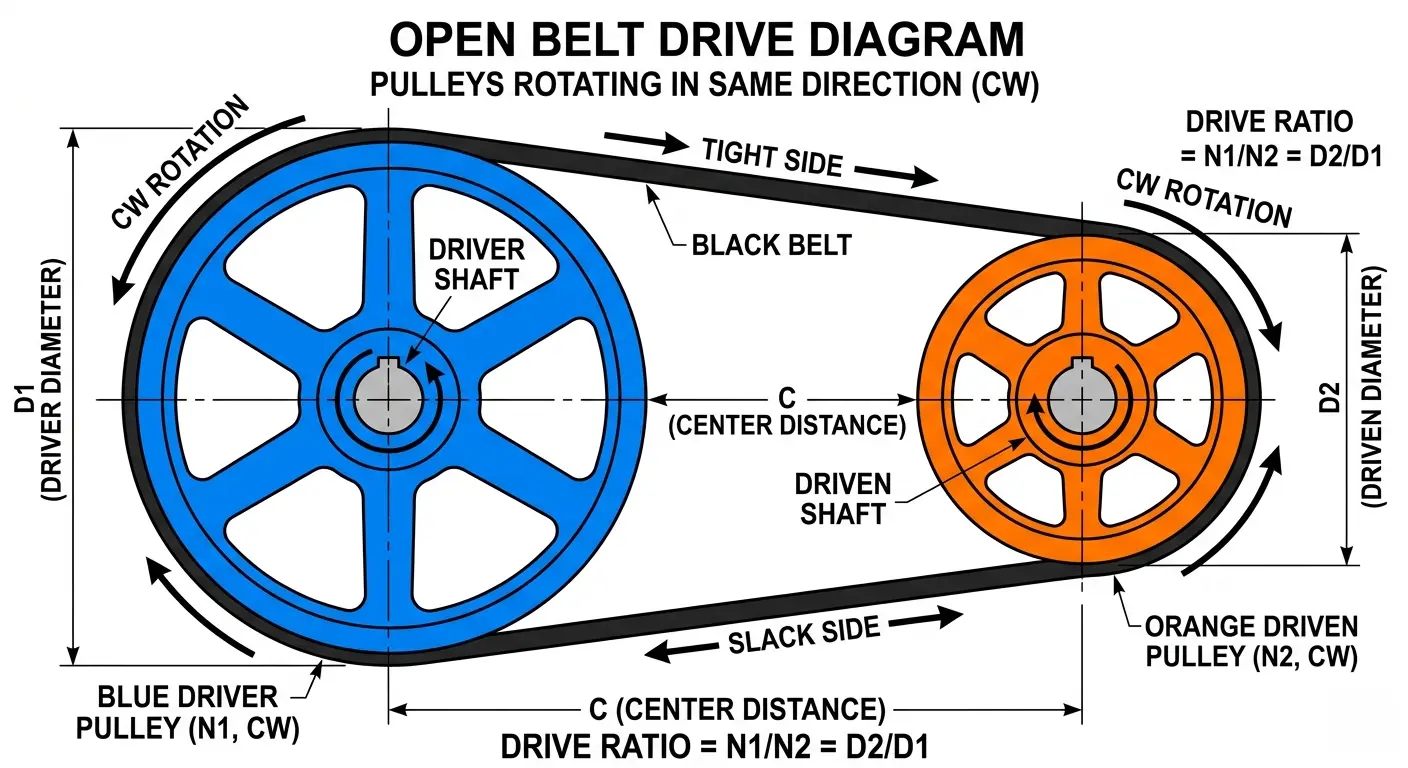
An open belt drive is a system where both pulleys rotate in the same direction. This setup is commonly used in applications where direction consistency is required.
It is simple, reliable, and widely used in industrial machines.
For a deeper understanding of belt calculation, read our belt length manual calculation guide.
What is a Cross Belt Drive?
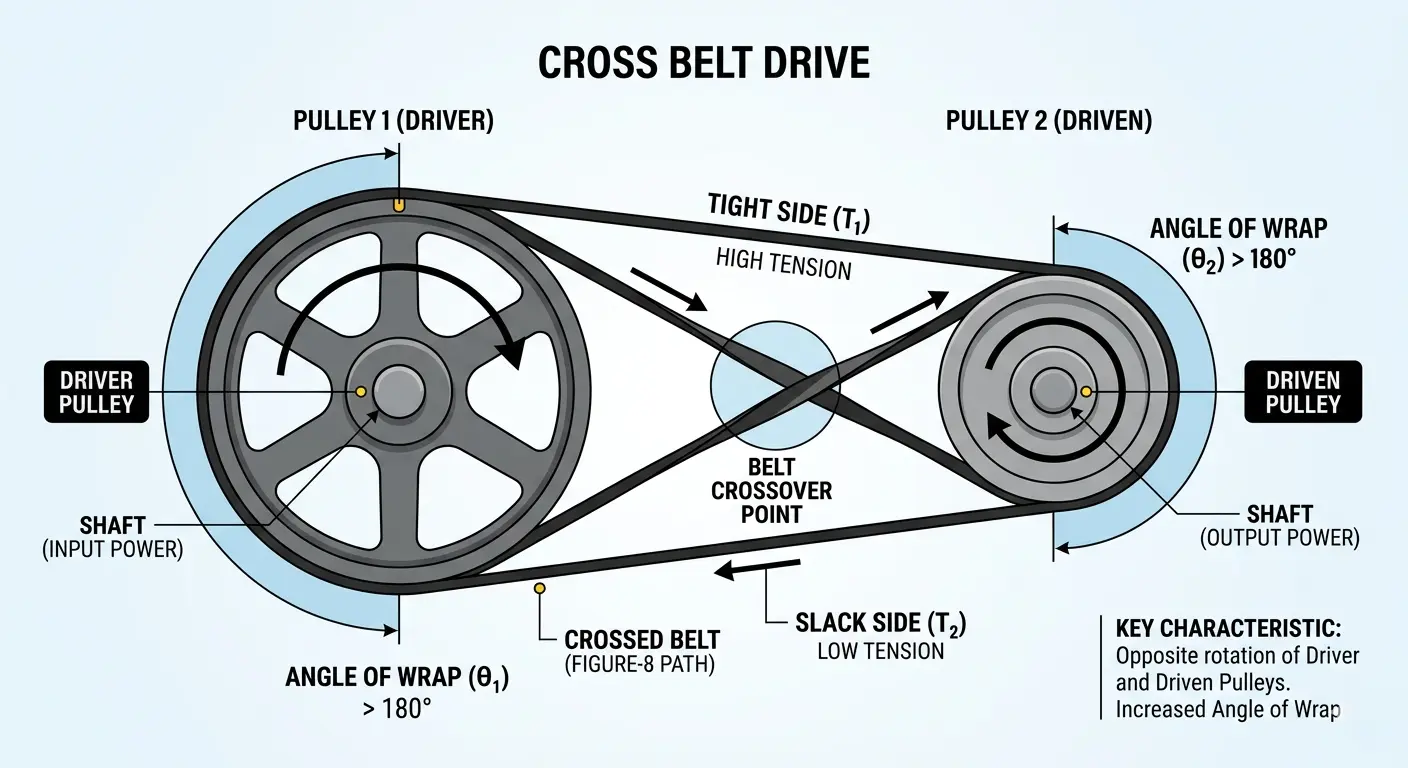
In a cross belt drive, the belt is crossed between pulleys, causing them to rotate in opposite directions. This arrangement provides better grip but increases belt wear.
You can also see how these calculations apply in real scenarios in this belt length calculation example.
Key Differences Explained
The main difference lies in direction, belt contact, and wear. Cross belt drives offer better grip but at the cost of increased stress on the belt.
Working Principle
Both systems transmit power through friction between the belt and pulleys. However, the belt path differs, affecting performance and lifespan.
Accurate results depend on proper measurement. Learn the correct method in our pulley center distance measurement guide.
Real-World Applications
- Open belt: Pumps, fans, conveyors
- Cross belt: Machines requiring reverse motion
Small variations can occur in real systems. Learn more in our belt length formula accuracy guide.
Belt Length Calculation Difference
The same formula is generally used for both systems, but in cross belt drives, belt path changes slightly due to crossing.
When to Use Open vs Cross Belt
- Use open belt for same direction rotation
- Use cross belt when opposite rotation is needed
For proper belt selection, refer to this V belt size and calculation guide.
Common Mistakes
Choosing the wrong belt type can lead to efficiency loss and increased wear.
Read more in our belt calculation mistakes guide
FAQs
What is the main difference between open and cross belt?
Open belts rotate in the same direction, while cross belts rotate in opposite directions.
Which belt drive is more efficient?
Cross belt drives provide better grip but may increase wear.
Can the same formula be used for both?
Yes, but slight adjustments may be needed in cross belt systems.
Conclusion
Both open and cross belt drives have their own advantages. The right choice depends on application, direction, and performance requirements.