
V Belt vs Flat Belt: Key Differences, Applications & Calculation Guide
V belt vs flat belt is an important comparison when selecting the right belt drive system for industrial applications. Each type has its own advantages, limitations, and impact on performance.
In this guide, you’ll learn the differences between V belts and flat belts, their applications, and how belt length calculation varies between them.
What is a V Belt?
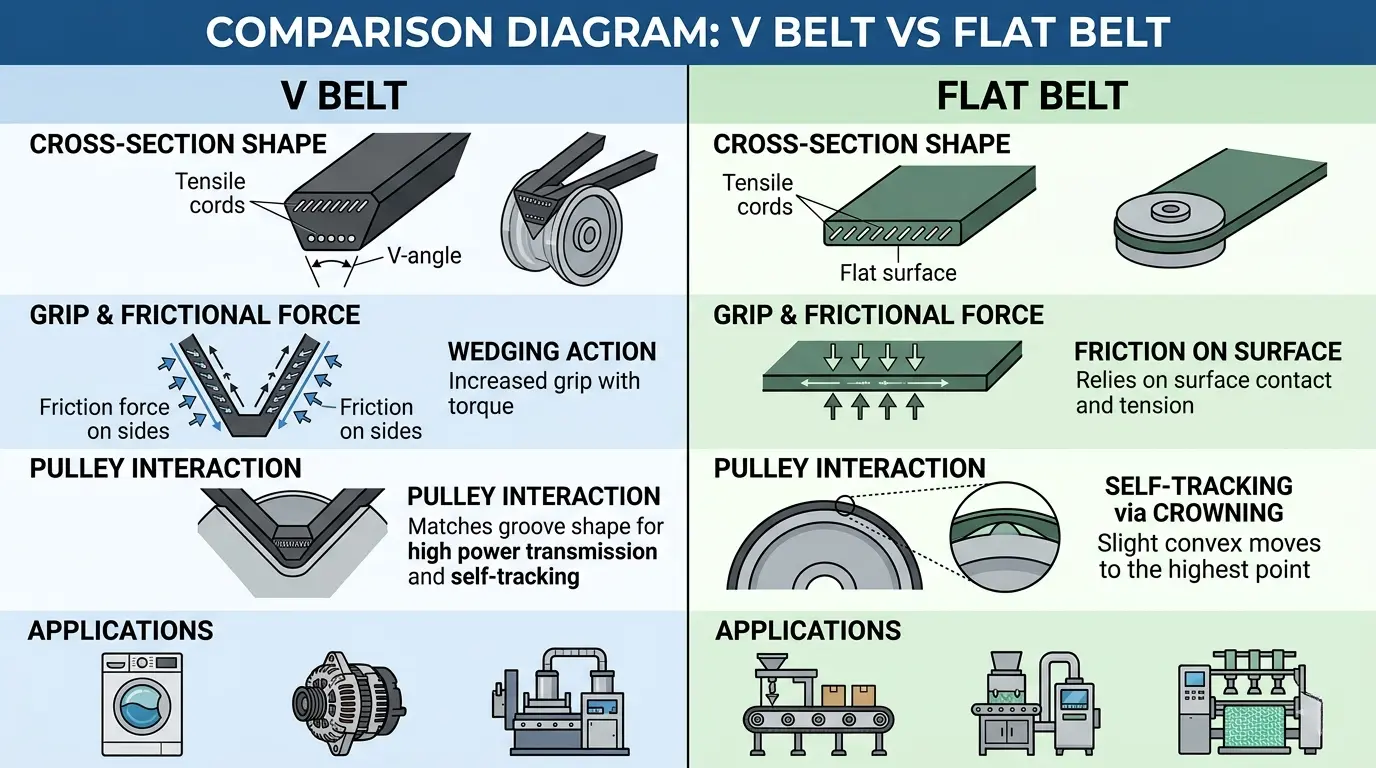
A V belt is designed with a trapezoidal cross-section that fits into pulley grooves. This design provides better grip and reduces slippage.
V belts are commonly used in industrial machines, HVAC systems, and heavy-duty applications.
What is a Flat Belt?
A flat belt has a rectangular cross-section and runs on flat pulleys. It is typically used in light-duty applications and long-distance power transmission.
Key Differences Between V Belt and Flat Belt
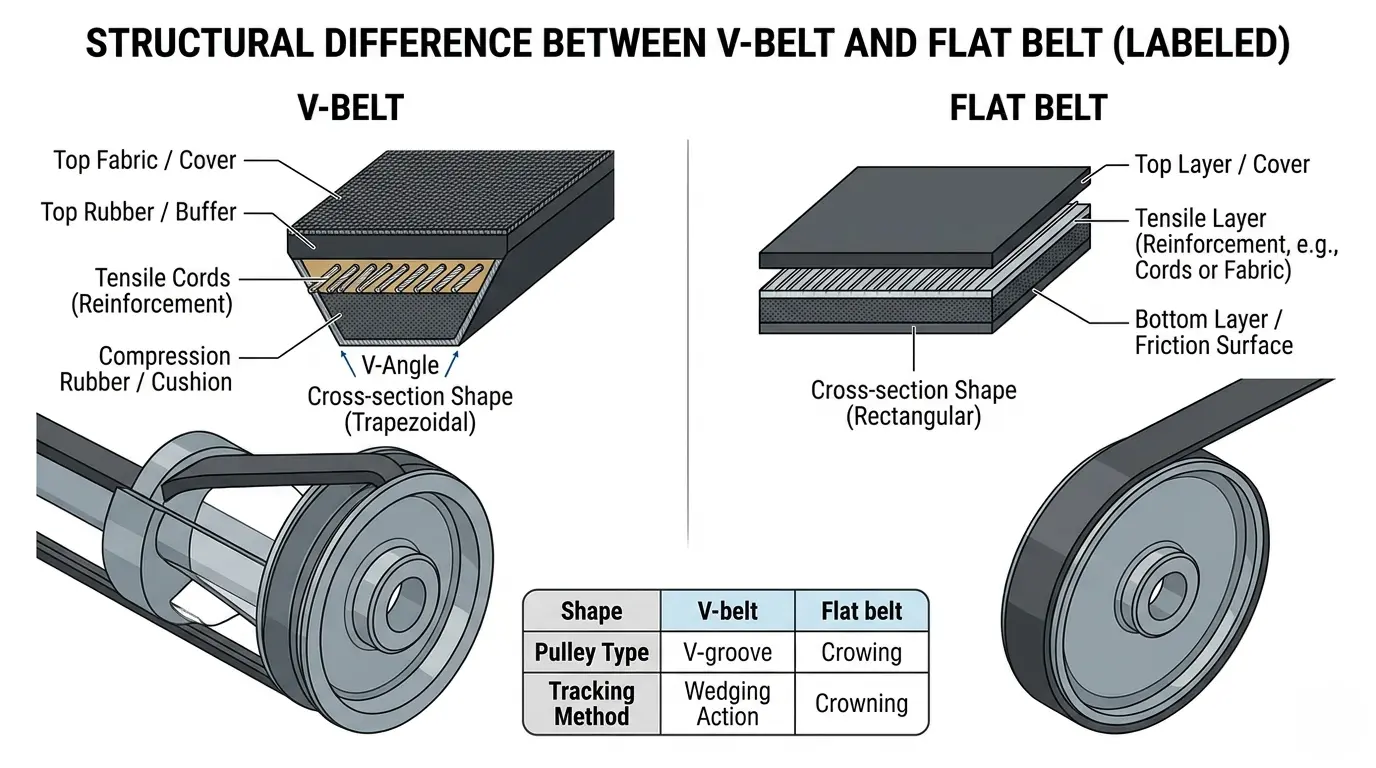
| Feature | V Belt | Flat Belt |
|---|---|---|
| Shape | Trapezoidal | Flat |
| Grip | High | Lower |
| Efficiency | Moderate | High for long distances |
| Slip | Low | Higher |
| Application | Heavy-duty systems | Light-duty systems |
Applications of V Belt vs Flat Belt
- V Belt: Industrial machines, compressors, pumps
- Flat Belt: Conveyors, light machinery, long-distance drives
Belt Length Calculation Difference
The basic formula remains the same for both systems, but performance and tension behavior may vary depending on belt type.
Use our belt length calculator for quick results.
Learn manual calculation in our belt length manual calculation guide.
See a real example in this belt length calculation example.
Which One Should You Choose?
- Choose V belt for high load and better grip
- Choose flat belt for long-distance and smooth operation
Common Mistakes
- Selecting wrong belt type
- Ignoring load requirements
- Incorrect calculation
Read more in our belt calculation mistakes guide.
Impact on Belt Length Accuracy
Different belt types can slightly affect belt length calculation accuracy due to tension and grip differences.
Learn more in our belt length formula accuracy guide.
FAQs
What is the difference between V belt and flat belt?
V belts provide better grip, while flat belts are suitable for long-distance power transmission.
Which belt is more efficient?
Flat belts are more efficient over long distances, while V belts perform better under load.
Can the same formula be used for both?
Yes, but performance differences should be considered.
Which belt lasts longer?
It depends on application, load, and maintenance conditions.
Conclusion
Understanding the difference between V belt vs flat belt helps in selecting the right system for your application.
Choosing the correct belt improves efficiency, reduces wear, and ensures reliable performance.