
How to Reduce Belt Speed
How to reduce belt speed is a common question during conveyor troubleshooting, especially when excessive speed causes material spillage, poor product handling, increased belt wear, or unnecessary downtime. In many industrial plants, the first reaction is to replace the motor, but experienced maintenance engineers know that belt speed can often be reduced safely through proper engineering adjustments without making major equipment changes.
Reducing belt speed is not simply about slowing the conveyor. The objective is to achieve stable material flow, improve equipment reliability, and maintain production efficiency while operating within the conveyor's recommended design limits.
Before modifying any drive components, maintenance teams usually calculate the existing operating speed using the Belt Speed Calculator. This confirms whether excessive belt speed is actually causing the problem or whether another issue is affecting conveyor performance.
This guide explains the most effective methods for reducing belt speed, when speed reduction is appropriate, and the engineering checks that should always be completed before changing pulley sizes or motor speed.
Why You May Need to Reduce Belt Speed
Higher belt speed is not always beneficial. While faster conveyors can increase throughput in some applications, operating above the recommended speed often creates reliability and maintenance problems that outweigh any production gains.
Maintenance engineers commonly reduce belt speed to:
- Minimize material spillage.
- Reduce dust generation.
- Improve product handling.
- Extend belt service life.
- Reduce bearing and pulley wear.
- Improve conveyor stability.
- Synchronize conveyor speed with upstream and downstream equipment.
Before making any adjustments, engineers should compare the current operating conditions with the guidance provided in Maximum Recommended Belt Speed and What Is a Good Belt Speed.
Common Causes of Excessive Belt Speed
Before reducing conveyor speed, it is important to identify why the belt is operating too fast. Changing pulleys or adjusting motor speed without understanding the root cause may only hide the real problem.
Common causes include:
- Incorrect pulley diameter selection.
- Motor replacement with a higher RPM model.
- Improper Variable Frequency Drive (VFD) settings.
- Incorrect gearbox ratio.
- Design modifications made during previous maintenance.
- Calculation errors during equipment upgrades.
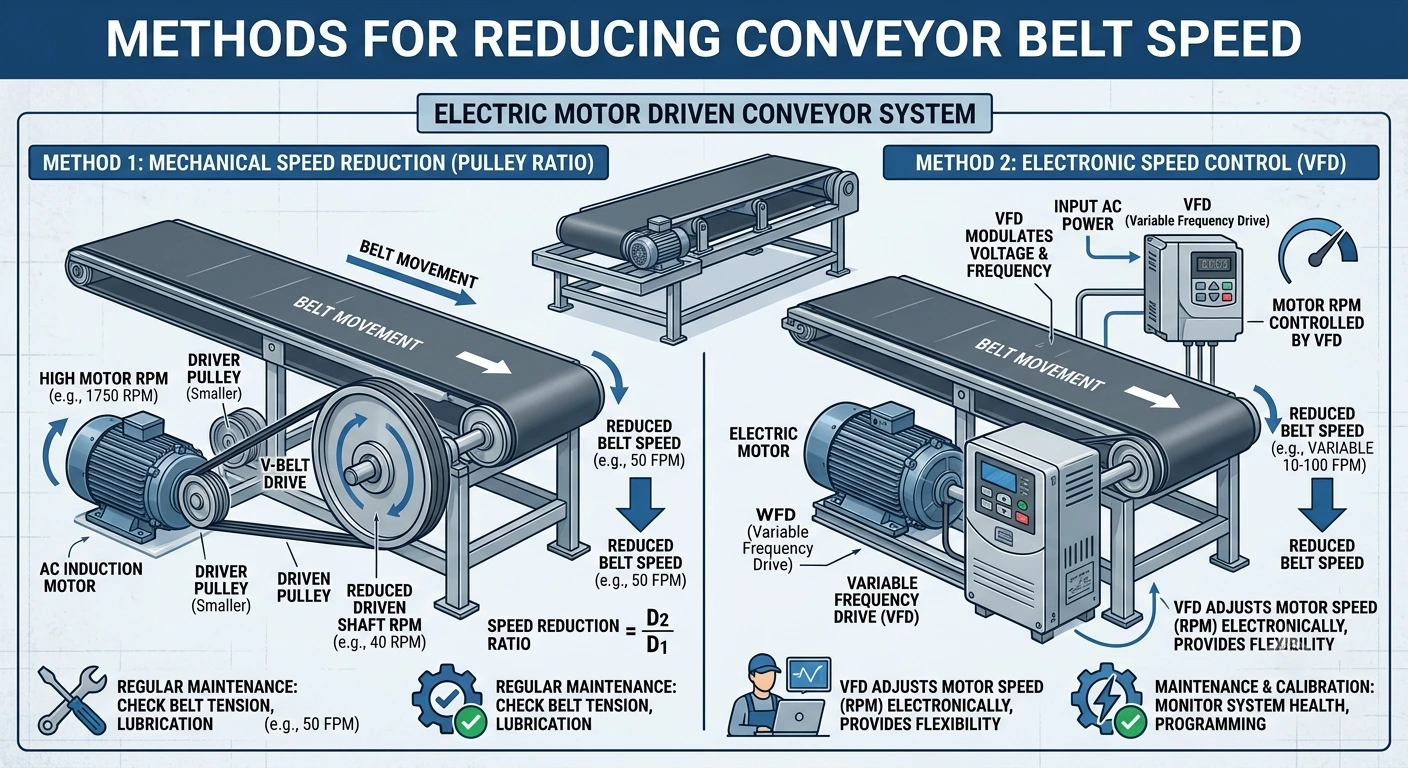
Variable Frequency Drive (VFD) is an electronic controller that adjusts motor speed by changing the supplied electrical frequency. In many industrial systems, a VFD provides a simple method for reducing belt speed without replacing mechanical components.
If the conveyor speed was recently modified, reviewing the calculations in Conveyor Belt Speed Calculation and Common Belt Speed Calculation Mistakes can help identify incorrect assumptions before further changes are made.
Methods to Reduce Belt Speed Safely
Several engineering methods can be used to reduce belt speed. The best solution depends on the conveyor design, production requirements, and available equipment.
The most common methods include:
- Install a smaller driver pulley.
- Install a larger driven pulley.
- Reduce motor speed using a VFD.
- Change the gearbox reduction ratio.
- Replace the drive arrangement where necessary.
Each option has advantages and limitations. For example, pulley modifications provide a permanent mechanical solution, while a VFD offers greater flexibility when different operating speeds are required.
Engineers should also evaluate how speed reduction affects conveyor capacity. Lower belt speed may improve reliability but can reduce material throughput if the conveyor was already operating within its optimal range.
| Method | Speed Reduction | Advantages | Best Application |
|---|---|---|---|
| Smaller Driver Pulley | High | Simple mechanical solution | Permanent speed reduction |
| Larger Driven Pulley | High | Maintains motor configuration | Pulley system upgrades |
| Variable Frequency Drive (VFD) | Adjustable | Flexible speed control | Processes requiring variable speed |
| Gearbox Ratio Change | Medium to High | Long-term reliability | Major equipment modifications |
Pulley Changes vs Variable Frequency Drive (VFD)
Two of the most common methods for reducing belt speed are changing pulley sizes and adjusting motor speed using a Variable Frequency Drive (VFD). Both methods are effective, but the right choice depends on how the conveyor is used and whether speed changes need to be permanent or adjustable.
Changing pulley diameters provides a permanent mechanical solution. A smaller driver pulley or a larger driven pulley reduces belt speed without requiring electronic controls. This method is commonly used in conveyors that operate at a fixed production rate.
A Variable Frequency Drive (VFD), on the other hand, allows operators to adjust motor speed by changing the electrical frequency supplied to the motor. This makes it ideal for production lines where different operating speeds are required during normal operation.
Before modifying pulley sizes, engineers should understand how pulley diameter affects conveyor speed. The relationship is explained in Pulley Diameter and Belt Speed Relationship.
Regardless of the method selected, engineers should always recalculate the final belt speed before returning the conveyor to service.
Real Industrial Example
During a maintenance shutdown at an aggregate processing plant, operators reported excessive material spillage from one of the transfer points. Production believed the conveyor was overloaded and requested a larger motor to increase control.
After inspecting the system, the maintenance team discovered that a previous modification had increased conveyor speed by installing a smaller driven pulley. Although production capacity had improved slightly, material was no longer settling properly on the belt before reaching the transfer chute.
Instead of replacing the motor, engineers restored the original pulley ratio and recalculated the operating speed using the Belt Speed Calculator. The conveyor returned to its recommended operating range, material spillage decreased significantly, and belt tracking became more stable.
This example demonstrates why identifying the root cause is more important than simply replacing components whenever conveyor problems appear.
Common Mistakes When Reducing Belt Speed
Reducing conveyor speed without proper planning can create new operational issues. The following mistakes are frequently observed during maintenance inspections:
- Changing pulley sizes without recalculating belt speed.
- Ignoring OEM (Original Equipment Manufacturer) recommendations.
- Reducing speed below the production requirement.
- Changing motor frequency without verifying conveyor loading.
- Overlooking belt tracking after pulley replacement.
- Assuming belt speed is the only cause of material handling problems.
Many of these mistakes can be avoided by reviewing Common Belt Speed Calculation Mistakes before making mechanical or electrical modifications.
Although reducing belt speed can solve many conveyor problems, engineers should first determine whether excessive speed is the true cause of the observed symptoms. A complete system inspection often prevents unnecessary modifications.
When Reducing Belt Speed Is Not the Right Solution
Reducing belt speed is not always the correct engineering decision. In some cases, the conveyor is operating at the proper speed, but another fault is causing poor performance.
Before reducing speed, maintenance engineers should inspect the conveyor for:
- Belt slip.
- Misaligned pulleys.
- Worn bearings.
- Damaged belt cleaners.
- Improper loading.
- Transfer chute restrictions.
- Incorrect belt tension.
If one of these problems is responsible for the observed symptoms, reducing belt speed may temporarily hide the issue without solving the actual root cause.
Engineers should also compare the conveyor's operating conditions with Belt Speed vs Conveyor Capacity to determine whether production limitations are related to speed or another part of the material handling system.
Real-World Engineering Insight
During conveyor optimization projects in Gulf industries, reducing belt speed is often viewed as a quick fix for material spillage or poor product handling. However, field experience shows that simply slowing the conveyor rarely solves the problem unless the underlying cause has been identified.
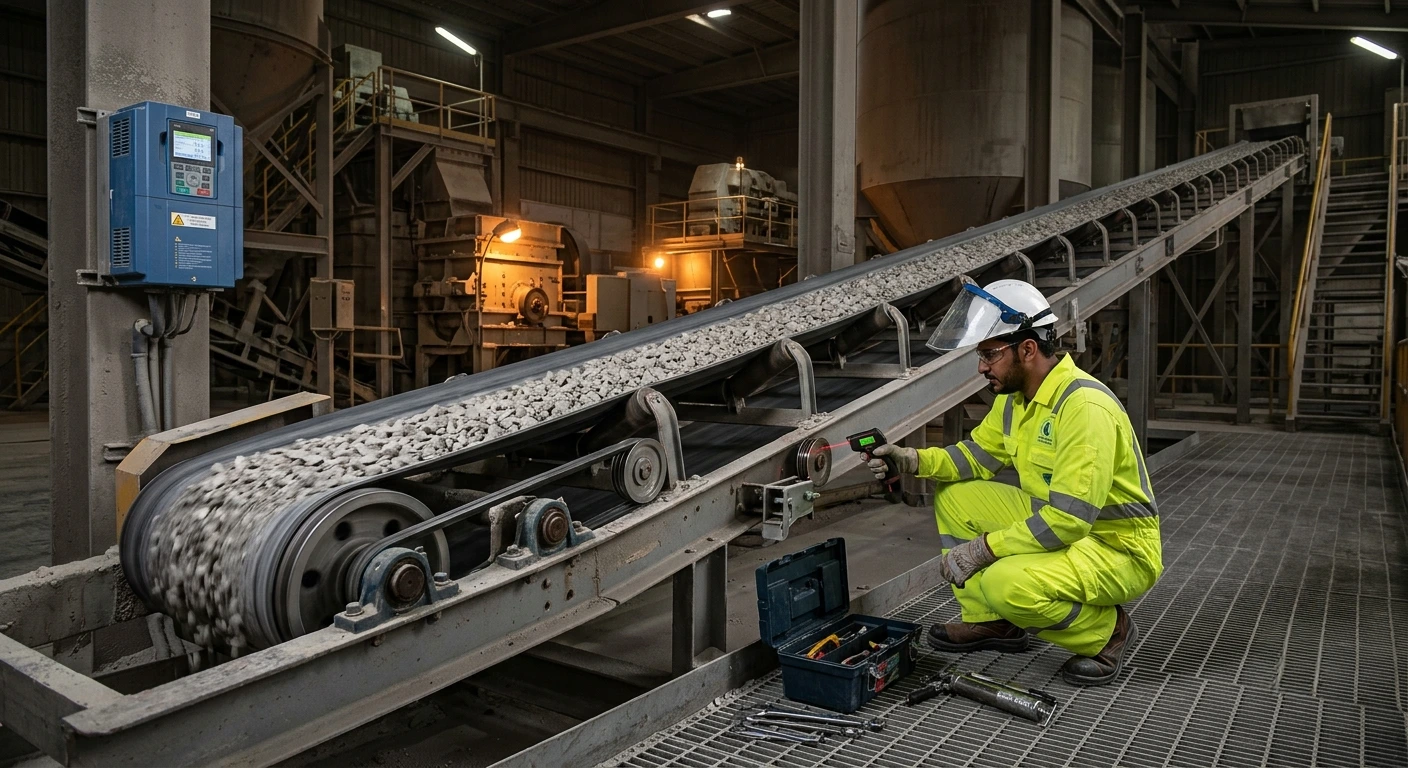
In one cement manufacturing plant, operators complained that clinker was spilling from the discharge point whenever production increased. Several attempts were made to reduce conveyor speed using the Variable Frequency Drive (VFD), but the improvement was only temporary.
After a detailed shutdown inspection, engineers found that the discharge chute had excessive wear and the belt cleaners were no longer maintaining proper contact with the belt surface. Once these components were repaired and the conveyor was returned to its calculated operating speed, the material flow stabilized without requiring a permanent speed reduction.
Similar situations occur in aggregate plants, mining operations, and bulk material handling systems where belt speed is often blamed for problems that are actually caused by poor loading conditions, worn components, or incorrect maintenance practices.
Experienced maintenance engineers therefore treat belt speed adjustment as the final step of the troubleshooting process rather than the first. By verifying calculations, inspecting mechanical components, and reviewing OEM recommendations, they ensure that any speed reduction improves long-term reliability instead of simply masking another fault.
Reducing belt speed successfully requires balancing production requirements with equipment reliability. The following frequently asked questions address the most common concerns engineers face before modifying conveyor speed.
Frequently Asked Questions
What is the easiest way to reduce belt speed?
The easiest method depends on the conveyor design. Common options include installing a smaller driver pulley, a larger driven pulley, reducing motor speed with a Variable Frequency Drive (VFD), or changing the gearbox ratio.
Can I reduce belt speed without changing the motor?
Yes. In many conveyor systems, belt speed can be reduced by changing pulley diameters or adjusting the motor speed through a VFD without replacing the existing motor.
Will reducing belt speed decrease conveyor capacity?
It can. Lower belt speed may reduce material throughput, so engineers should evaluate production requirements before making permanent speed changes.
Should I reduce belt speed if material is spilling from the conveyor?
Not always. Material spillage may be caused by transfer chute design, poor loading, belt misalignment, or worn belt cleaners rather than excessive belt speed.
How do engineers verify that the new belt speed is correct?
Engineers calculate the expected belt speed, inspect the conveyor after modification, and confirm actual operating speed using appropriate measuring instruments before returning the system to full production.
Is a Variable Frequency Drive better than changing pulley sizes?
Neither method is universally better. A VFD is ideal for applications requiring adjustable speeds, while pulley changes provide a permanent mechanical solution for conveyors operating at a fixed production rate.
Conclusion
Reducing belt speed is an effective solution when excessive conveyor speed is the true cause of production or maintenance problems. However, successful maintenance decisions are based on accurate calculations, thorough inspections, and a complete understanding of the conveyor system rather than assumptions.
The most reliable conveyor systems are not always the slowest, they are the ones operating at the speed best suited to their design, material characteristics, and production requirements. Engineering decisions should always prioritize long-term reliability over short-term adjustments.
Before changing pulley sizes, gearbox ratios, or motor speed, calculate the existing operating speed with the Belt Speed Calculator and compare your conveyor with the guidance in Maximum Recommended Belt Speed and Belt Speed vs Conveyor Capacity. A systematic engineering approach will help improve reliability, reduce maintenance costs, and maintain safe production over the long term.
Recommended Next Steps
Now that you understand when and how to reduce belt speed safely, continue with these engineering resources to troubleshoot conveyor problems, identify calculation errors, and optimize conveyor reliability.