
Pulley Alignment Problems in Industrial Belt Drive Systems
Pulley Alignment Problems quietly damage industrial belt drive systems long before technicians notice visible belt failure or severe vibration. In many industrial plants, small alignment errors slowly create RPM instability, airflow reduction, overheating, bearing stress, and repeated shutdown problems that continue returning even after belts are replaced.
This commonly happens during emergency maintenance situations where production restart becomes the main priority instead of verifying long-term pulley alignment stability.
As a result, the new belt fails again within a short period. Before changing components, maintenance teams often verify shaft speed and pulley performance using the Pulley RPM Calculator to identify abnormal RPM loss caused by misalignment.Understanding pulley alignment problems helps technicians improve equipment reliability, reduce maintenance cost, and increase belt drive efficiency in HVAC systems, conveyors, pumps, compressors, and workshop machinery.
What Causes Pulley Alignment Problems
Pulley alignment problems occur when the driver pulley and driven pulley are not positioned correctly on the same operating plane. This causes the V belt to track improperly, creating uneven load distribution and excessive side force.
The most common causes include:
- Improper motor installation
- Loose motor base bolts
- Incorrect shaft positioning
- Bent pulley flanges
- Bearing wear
- Improper belt tension
- Foundation vibration
- Thermal expansion movement
In industrial plants, alignment issues often develop slowly after maintenance activities, especially when motors are removed during shutdown work.
In several Gulf industrial facilities, technicians discovered severe bearing overheating and repeated belt failure weeks after maintenance shutdowns because small pulley alignment errors were ignored during motor reinstallation.
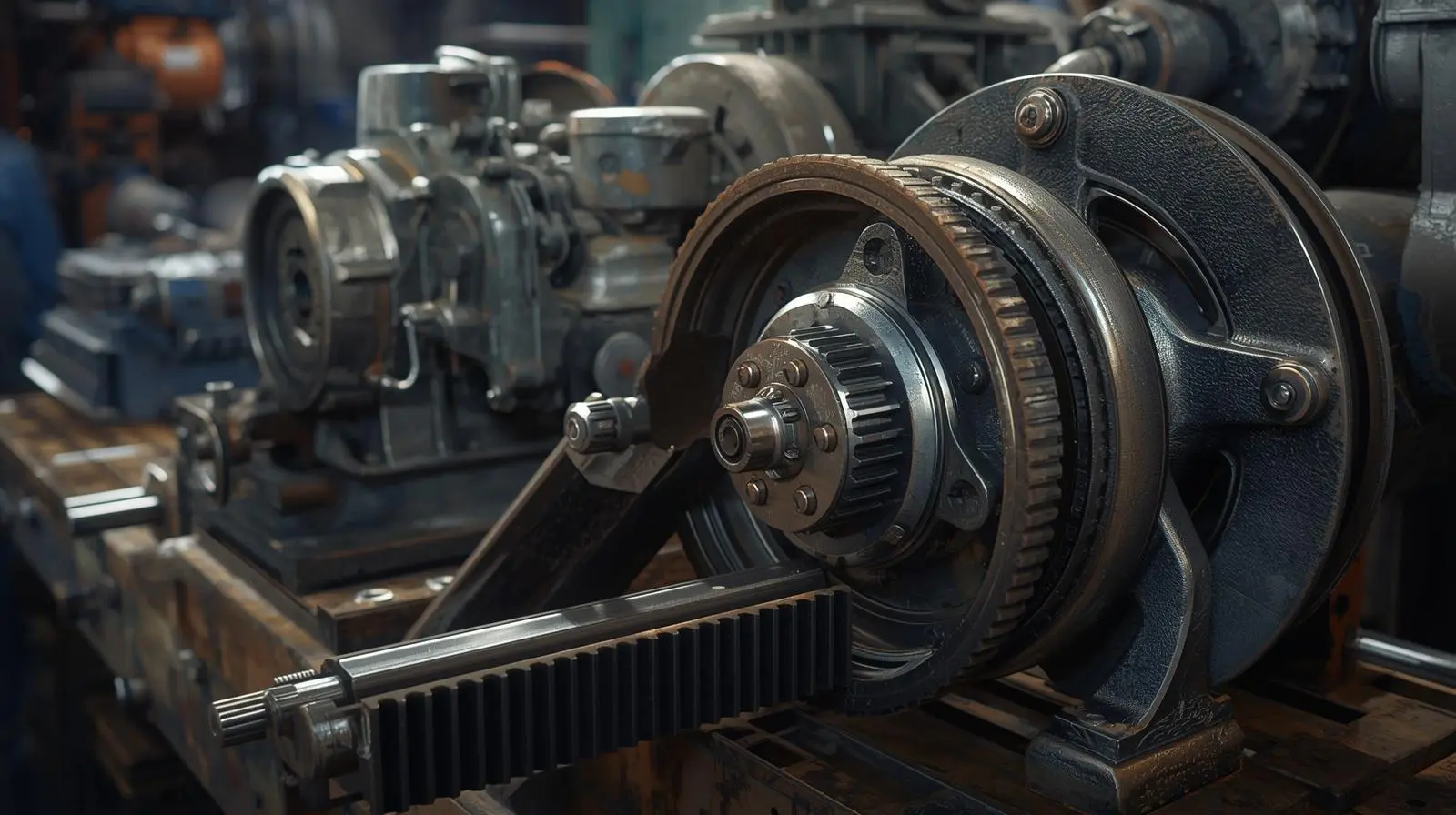
Types of Pulley Misalignment
Technicians normally face four major types of pulley misalignment in industrial systems.
- Angular misalignment
- Parallel misalignment
- Axial misalignment
- Combined misalignment
Angular misalignment occurs when pulley faces are not parallel. Parallel misalignment occurs when pulleys are offset horizontally or vertically.
Combined misalignment is the most damaging because it creates excessive belt wear and vibration simultaneously.
These conditions are closely connected to belt slip and RPM loss because improper alignment reduces power transfer efficiency between shafts.
How Pulley Misalignment Affects Equipment Performance
Even small pulley alignment errors can create major operational problems inside industrial systems.
Common performance issues include:
- Premature belt wear
- Excessive vibration
- Noise during operation
- Motor overheating
- Reduced blower airflow
- Bearing damage
- RPM instability
- Energy loss
In HVAC systems, misalignment reduces airflow efficiency. In conveyors, it creates belt tracking problems. In pumps, it increases bearing load and shaft stress.
Even small alignment errors can gradually reduce cooling performance, increase conveyor instability, overload motor bearings, and create unexpected downtime across connected industrial systems.
Technicians frequently compare actual RPM using How to Calculate Belt RPM to identify alignment-related speed losses.
Pulley Alignment Inspection Reference Table
| Alignment Condition | Common Cause | Operational Effect | Industrial Example | Recommended Action |
|---|---|---|---|---|
| Angular misalignment | Incorrect motor positioning | Edge belt wear | HVAC blower system | Realign pulley faces |
| Parallel misalignment | Offset shafts | Belt vibration | Conveyor drive system | Correct shaft position |
| Loose pulley | Worn keyway | RPM fluctuation | Cooling tower fan | Tighten or replace pulley |
| Combined misalignment | Poor installation | Severe belt damage | Industrial exhaust fan | Complete alignment inspection |
How Technicians Check Pulley Alignment
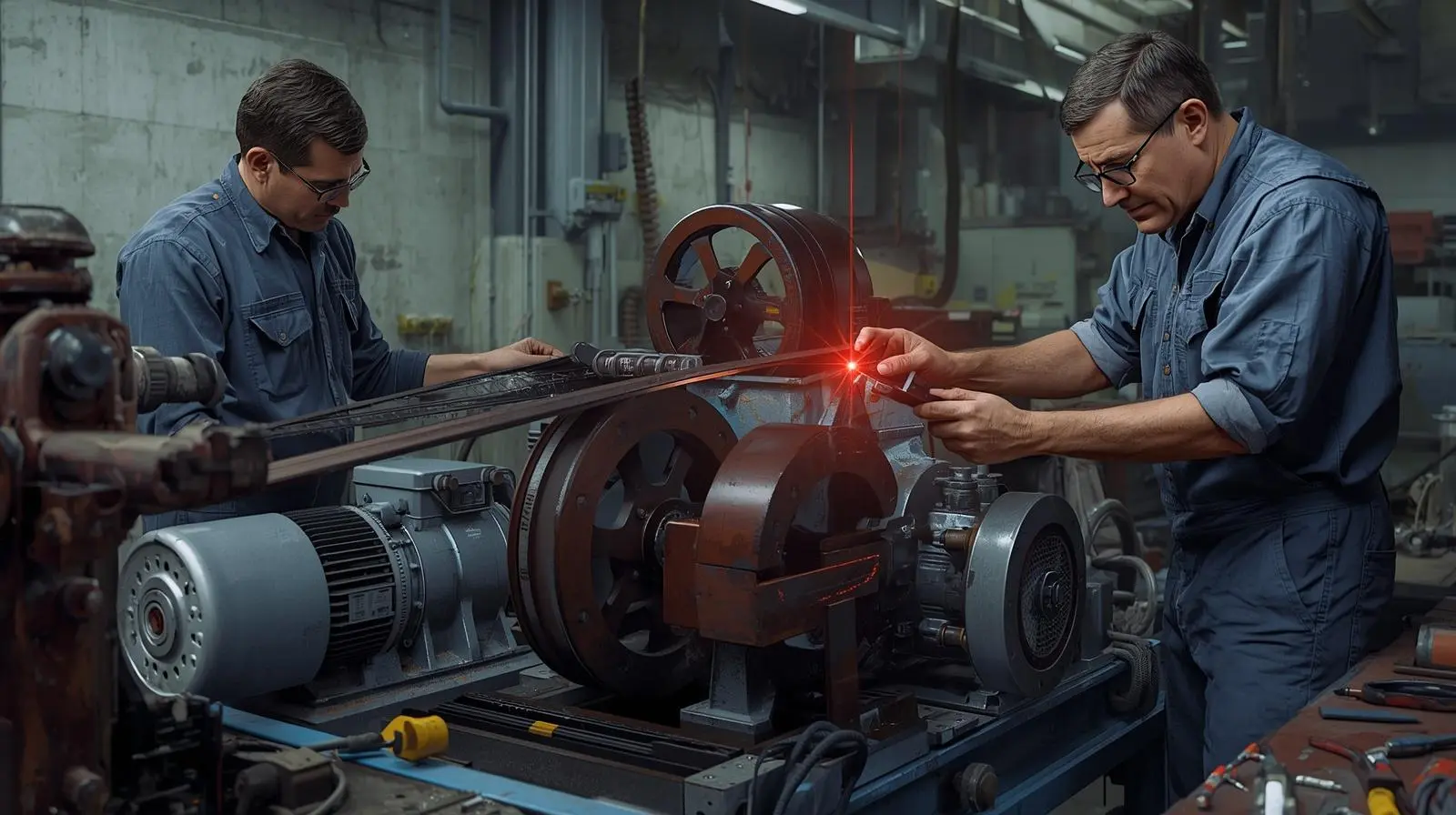
Experienced technicians use multiple methods to verify pulley alignment accuracy.
Common inspection techniques include:
- Straight edge alignment check
- Laser alignment tools
- Visual belt tracking inspection
- Dial indicator measurement
- Vibration monitoring
- Thermal inspection
Laser alignment systems provide higher precision, especially in critical industrial equipment operating continuously under load.
In many Gulf facilities, technicians still use straight edge methods for routine HVAC and conveyor maintenance because they are simple and cost-effective.
Signs That Pulley Alignment Is Incorrect
Technicians can often identify pulley alignment problems before major failure occurs.
Typical warning signs include:
- Belt wearing from one side
- Excessive pulley dust
- Unusual squealing sound
- Belt tracking instability
- Increased motor amperage
- High bearing temperature
- Visible belt vibration
These conditions are frequently related to pulley systems in HVAC, belt tension adjustment guide, shaft speed calculation basics, and industrial fan troubleshooting.
How to Prevent Pulley Alignment Problems
Preventive maintenance is the best method for reducing pulley alignment failures.
Ignoring early alignment symptoms often creates larger mechanical problems later because vibration and unstable belt tracking continue damaging shafts, bearings, pulleys, and motor assemblies during operation.
Recommended maintenance practices include:
- Check alignment during every shutdown
- Inspect belt wear patterns regularly
- Verify motor base tightness
- Monitor vibration levels
- Inspect shaft condition
- Replace damaged pulleys immediately
- Maintain proper belt tension
Correct pulley sizing also plays an important role in alignment stability. Technicians often use the Motor Pulley Sizing Guide to ensure compatible pulley dimensions.
For deeper understanding, technicians should also learn industrial shaft balancing guide, cooling tower vibration troubleshooting, belt drive maintenance checklist, blower airflow balancing, and bearing temperature analysis.
Real World Engineering Insight
In Gulf industrial environments, pulley alignment problems increase significantly because HVAC systems, cooling towers, and exhaust fans operate continuously under high ambient temperatures.
One common issue I’ve seen during plant shutdown work is technicians replacing belts without checking shaft alignment after motor removal. The system runs normally for a few days, but vibration and belt wear return quickly.
In one industrial AHU system, repeated belt failures continued for months. After inspection using laser alignment tools, we discovered the motor base had shifted slightly due to loose mounting bolts. Once alignment was corrected and the base secured, belt life improved dramatically.
Situations like this are extremely common in Gulf industrial environments where high ambient temperatures, dust contamination, and continuous equipment loading accelerate vibration-related wear across belt drive systems.
Experienced technicians understand that proper pulley alignment is not just about reducing belt wear. It directly affects RPM stability, bearing life, energy efficiency, airflow performance, and long-term equipment reliability.
Before replacing belts, bearings, or pulleys, maintenance teams should verify pulley alignment accuracy and RPM stability using the Pulley RPM Calculator. Early troubleshooting helps prevent hidden vibration problems, airflow instability, excessive bearing stress, and costly industrial downtime.
Frequently Asked Questions
What causes pulley alignment problems?
Improper installation, loose motor bases, worn bearings, and incorrect shaft positioning commonly cause pulley alignment problems.
How do technicians check pulley alignment?
Technicians use straight edges, laser alignment tools, vibration analysis, and visual inspection methods.
Can pulley misalignment damage bearings?
Yes. Misalignment creates additional side load on bearings and shafts, reducing component lifespan.
Why does pulley misalignment cause belt wear?
Misalignment forces the belt to track unevenly, creating excessive friction and edge wear.
What industries commonly face pulley alignment problems?
HVAC systems, conveyors, cooling towers, pumps, compressors, and industrial exhaust fans commonly experience alignment issues.