
Torque in Physics (Simple Explanation) – Practical Real-World Guide
Torque in Physics (Simple Explanation) is one of the most important concepts for understanding how machines move, rotate, and perform work. In real maintenance work, technicians don’t always think in terms of physics formulas, but they deal with torque every single day — whether tightening bolts, operating motors, or handling rotating equipment.
If you’ve ever used a wrench, pushed a lever, or adjusted machine parts, you’ve already applied torque. This article breaks it down in the simplest way so even beginners and technicians can clearly understand how torque works in physics and real industrial environments.
👉 Need quick torque conversion during work: Torque Calculator (Nm ↔ lb-ft)
What is Torque in Physics (Simple Explanation)?
Torque in Physics (Simple Explanation) helps you understand how force and distance combine to create rotational movement in real systems.
In physics, torque is the force that causes an object to rotate around a point or axis. Simply put, torque is the turning effect of a force.
In real maintenance work, technicians often face situations where a bolt won’t move easily. The reason is not just force — it’s torque, which depends on both force and distance.
The basic idea:
- Force = push or pull
- Distance = length of lever
- Torque = force × distance
👉 Learn detailed concept: What is Torque in Engineering
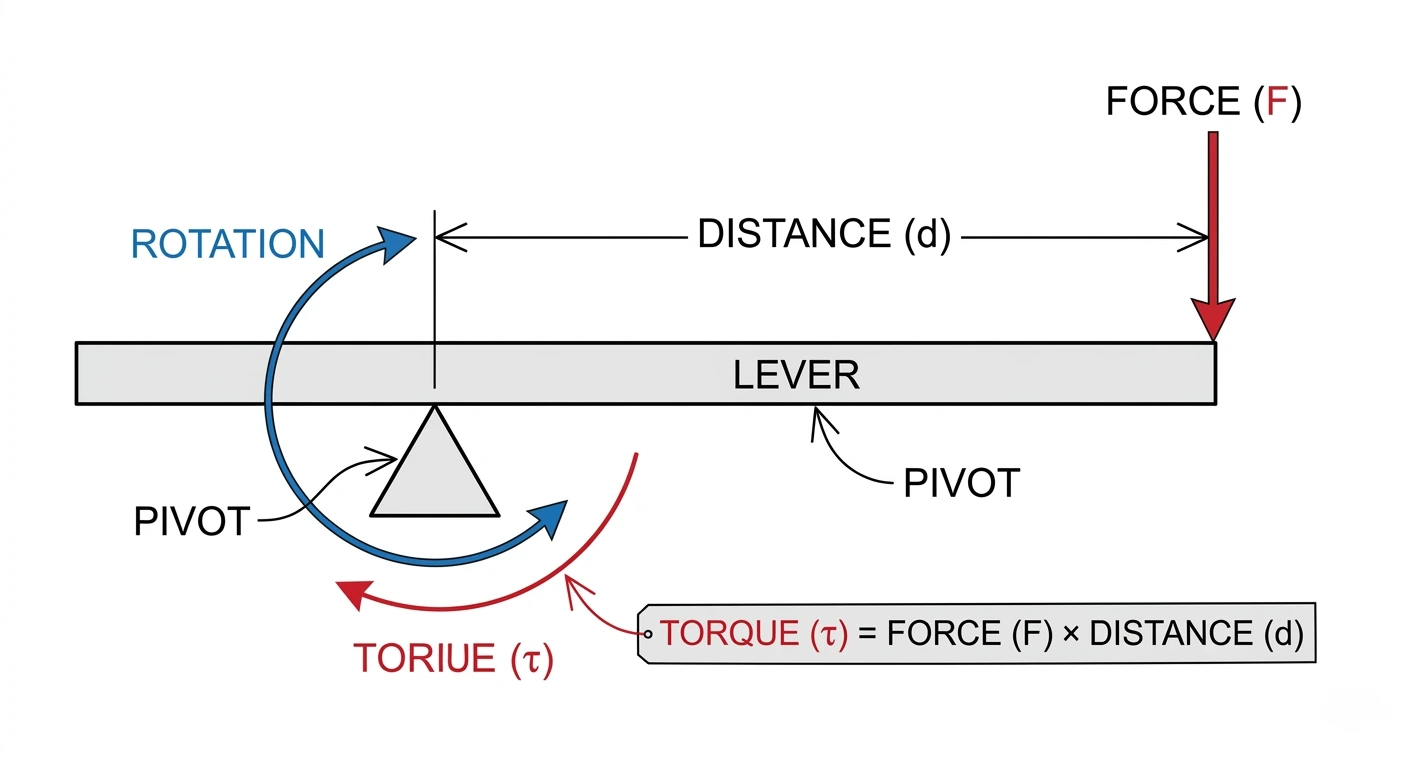
Simple diagram showing torque using a lever and force.
How Torque Works (Step-by-Step Practical Understanding)
In real maintenance work, torque is applied every time a technician uses a tool like a wrench or spanner.
- Step 1: Apply force to the tool
- Step 2: Distance from pivot creates leverage
- Step 3: Object rotates (bolt tightens or loosens)
Technicians often face problems when they apply force without considering leverage. A longer wrench produces more torque even with less effort.
👉 Related concept: Torque Formula Explained
👉 Learn calculation method: How to Calculate Torque
A common mistake I’ve seen is using excessive force instead of increasing lever length.
Real Industrial Example (Gulf Maintenance Work)
In Gulf industries, torque plays a vital role in daily operations, especially in oil & gas plants, factories, and maintenance workshops.
In real maintenance work:
- Bolts require specific torque values
- Motors depend on torque for load handling
- Machines fail when torque is incorrect
Technicians often face situations where equipment fails despite proper installation. The hidden issue is usually incorrect torque application.
👉 Practical understanding: How Torque Affects Machine Performance
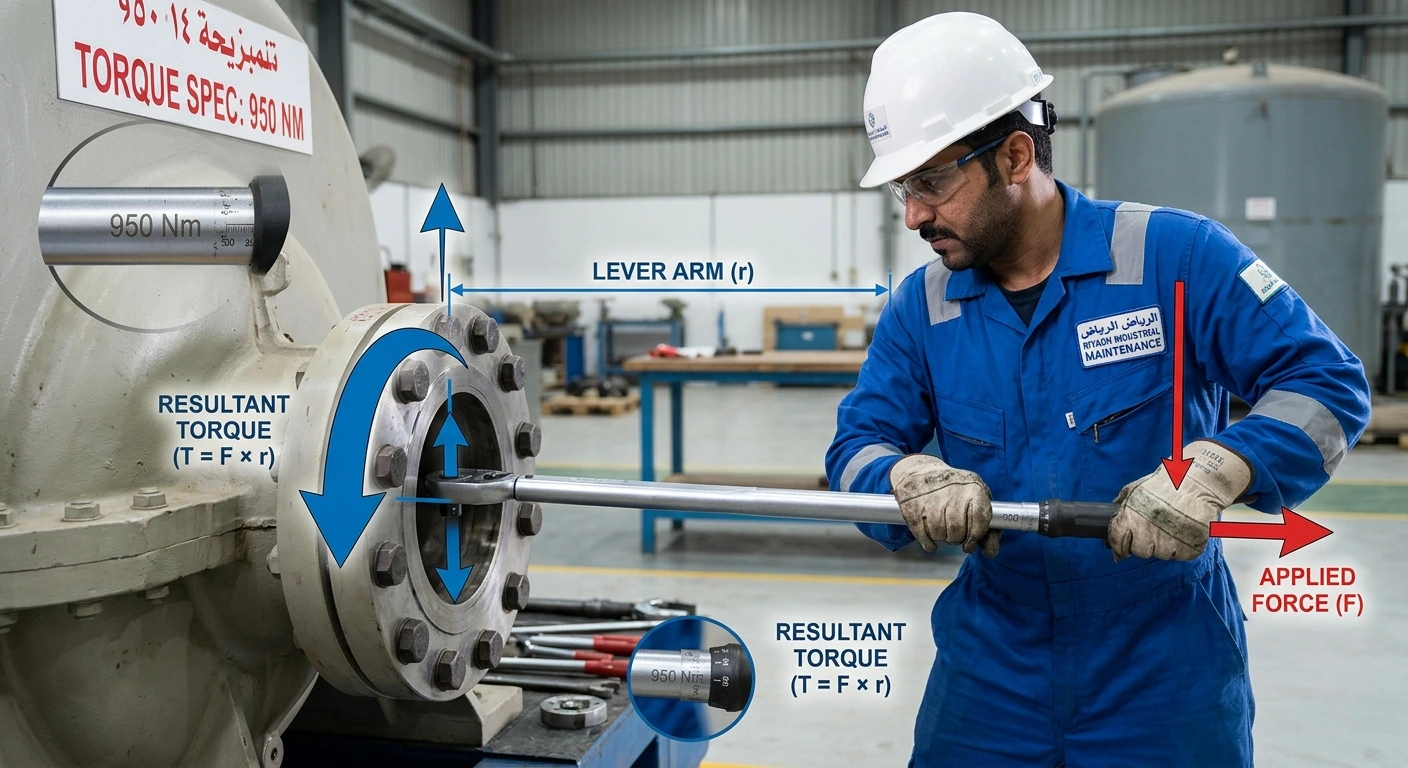
Real-world application of torque in industrial maintenance work.
Where Torque is Used in Real Life (Practical Use Cases)
Torque is used in almost every mechanical system. In real maintenance work, it is essential for:
- Bolt tightening and fastening
- Motor and gearbox operation
- Rotating machinery
- Vehicle maintenance
👉 Reference chart: Torque Conversion Chart
👉 Troubleshooting guide: Common Torque Problems and Solutions
Technicians often face issues when torque is not properly calculated or applied, leading to system failure.
Common Mistakes in Understanding Torque
A common mistake I’ve seen is confusing torque with force. These are not the same.
- Using force instead of torque calculation
- Ignoring lever length
- Wrong unit conversion
👉 Calibration importance: Torque Wrench Calibration Guide
Technicians often face repeated problems because they do not verify torque values properly.
Torque in Physics vs Practical Maintenance (Comparison Table)
| Aspect | Physics View | Practical View | Use Case |
|---|---|---|---|
| Definition | Force × Distance | Turning force | Bolt tightening |
| Focus | Formula | Application | Machine operation |
| Importance | Conceptual | Performance | Maintenance work |
Decision Guide: When Torque Matters Most
In real maintenance work, torque becomes critical in the following situations:
- Heavy load handling
- Precision fastening
- Rotating equipment operation
Technicians often face confusion when machines fail without visible damage. The root cause is often incorrect torque application.
👉 Deep concept: Torque and Power Relationship
In real maintenance work, I have seen many technicians struggle with basic torque concepts because they focus only on force and ignore leverage. In Gulf industries, improper understanding of torque leads to incorrect bolt tightening and machine inefficiency.
Final Summary
Torque in Physics (Simple Explanation) helps you understand the real reason behind machine movement and performance. It’s not just a formula — it’s a practical concept used daily in maintenance work.
In real maintenance work, understanding torque properly helps prevent failures, improves efficiency, and ensures safe operation of machines.
👉 Need accurate results for real work? Use Torque Calculator Tool
Frequently Asked Questions (FAQs)
What is torque in simple words?
Torque is the turning force that causes an object to rotate.
What is the formula for torque?
Torque equals force multiplied by distance from the pivot point.
Where is torque used in real life?
Torque is used in tools, machines, motors, and vehicle systems.
Is torque different from force?
Yes, torque includes both force and distance, while force is only a push or pull.
Why is torque important in machines?
Torque allows machines to handle load and perform rotational work.