
Pulley Systems in HVAC and Their Role in Airflow Control
Pulley Systems in HVAC are widely used to control airflow, fan speed, static pressure, and energy efficiency in industrial and commercial ventilation systems. In real maintenance work, technicians frequently adjust pulley sizes to solve airflow imbalance, overheating issues, and motor overload conditions without replacing the entire HVAC unit.
Many HVAC performance problems are directly connected to incorrect pulley ratio selection, improper belt tension, RPM loss, shaft misalignment, or worn V belt assemblies. Before making adjustments, maintenance teams often verify fan RPM using the Pulley RPM Calculator to ensure the blower system operates within the designed airflow range. Engineers also compare pulley speed behavior using the How to Calculate Pulley RPM guide to verify whether pulley ratio changes are affecting blower airflow and motor load correctly.
Understanding how pulley systems work inside HVAC equipment helps technicians improve cooling efficiency, reduce power consumption, and prevent costly shutdowns in industrial plants, malls, hospitals, and commercial buildings.
What Are Pulley Systems in HVAC
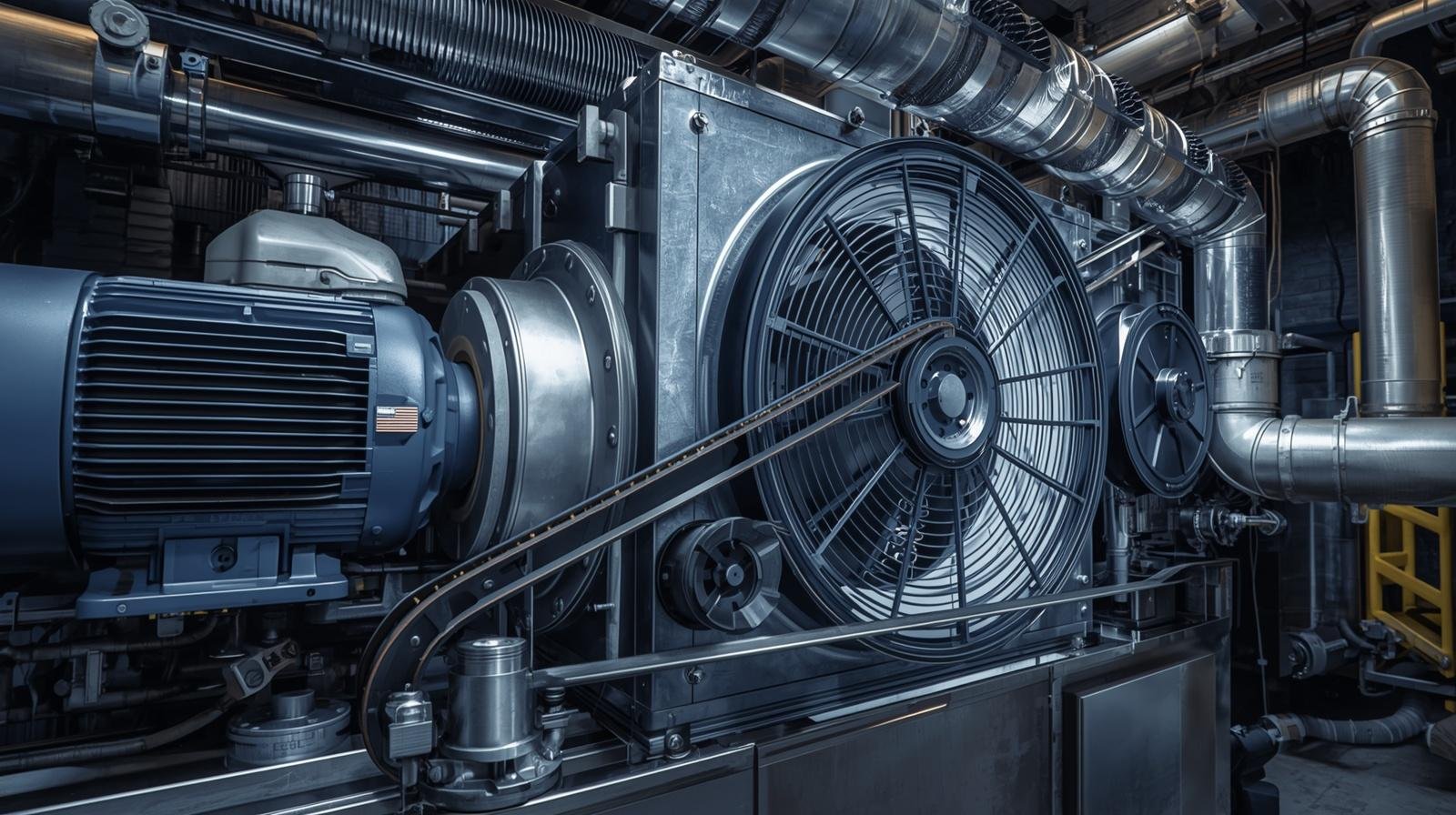
HVAC pulley systems are mechanical power transmission assemblies used to transfer rotational motion from the electric motor to the blower fan shaft using pulleys and V belts. These systems help regulate airflow by controlling blower RPM.
A typical HVAC belt drive system includes:
- Electric motor
- Driver pulley
- Driven pulley
- V belt
- Blower shaft
- Bearings
- Fan assembly
The motor pulley rotates the blower pulley through the belt drive. Changing pulley diameter directly changes blower RPM and airflow volume.
In large industrial HVAC systems, pulley drives are preferred because technicians can easily adjust speed without replacing the motor.
How HVAC Pulley Systems Control Airflow
Airflow inside HVAC systems depends heavily on blower speed. The faster the blower rotates, the more air moves through the duct system.
Technicians control airflow by adjusting pulley ratios between the motor shaft and blower shaft.
For example:
- Smaller driver pulley = lower blower RPM
- Larger driver pulley = higher blower RPM
- Larger driven pulley = reduced airflow
- Smaller driven pulley = increased airflow
This speed relationship is closely connected to Pulley Ratio Explained because pulley diameter directly affects RPM transfer. HVAC technicians also use the Fan Speed vs Airflow guide to understand how blower RPM changes influence cooling performance and static pressure behavior.
In Gulf facilities, HVAC technicians commonly adjust blower speed during seasonal cooling demand changes.
Common HVAC Pulley Configurations
Different HVAC applications use different pulley configurations depending on airflow requirements, duct pressure, and motor capacity.
HVAC Pulley Speed Reference Table
| Motor RPM | Driver Pulley | Driven Pulley | Blower RPM | HVAC Application |
|---|---|---|---|---|
| 1440 RPM | 100 mm | 200 mm | 720 RPM | Low airflow ventilation |
| 1440 RPM | 150 mm | 150 mm | 1440 RPM | Standard AHU operation |
| 1750 RPM | 200 mm | 100 mm | 3500 RPM | High airflow exhaust fan |
Common HVAC Pulley Problems
HVAC pulley systems experience continuous operation, especially in Gulf countries where cooling systems run most of the year. Because of this, technicians regularly encounter belt and pulley failures.
The most common problems include:
- Belt slip reducing airflow
- Pulley misalignment causing vibration
- Worn pulley grooves
- Overheated motor bearings
- Incorrect pulley sizing
- Loose belt tension
- Dust contamination inside AHU sections
These issues are often connected to Belt Slip and RPM Loss, Pulley Alignment Problems, Pulley Wear Symptoms, industrial fan balancing guide, and HVAC blower vibration troubleshooting.
How Technicians Troubleshoot HVAC Pulley Systems
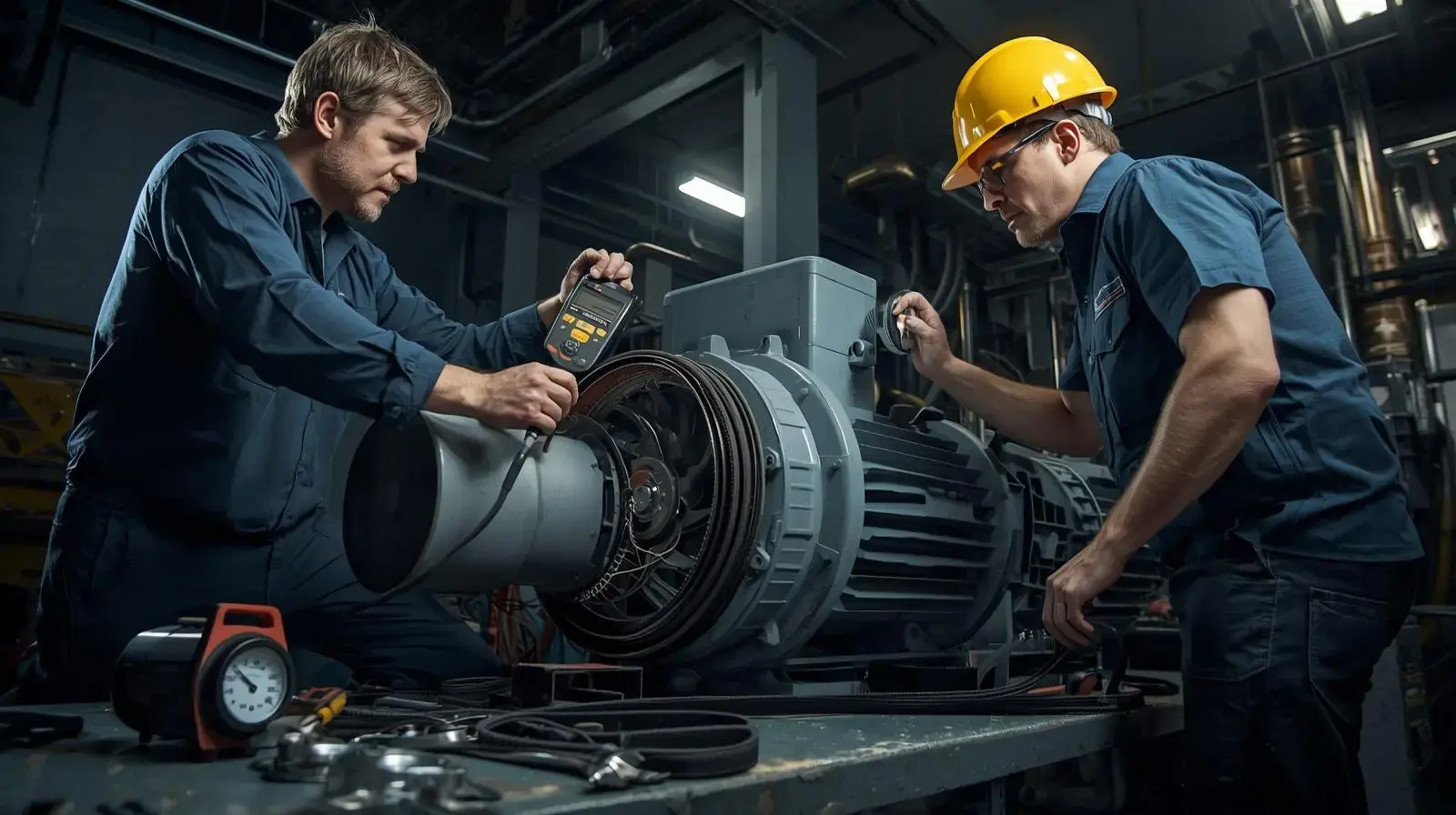
Experienced technicians never change pulleys randomly. They first measure actual blower RPM, motor amperage, airflow pressure, and vibration conditions.
Common troubleshooting steps include:
- Measure motor RPM using tachometer
- Inspect belt condition
- Check pulley groove wear
- Verify shaft alignment
- Inspect bearing temperature
- Measure airflow performance
- Check motor current draw
In many facilities, technicians use How to Calculate Belt RPM to compare theoretical and actual blower speed. Maintenance engineers also verify airflow related speed changes using the Belt Drive RPM Calculation method because blower RPM instability often affects cooling efficiency and airflow balance.
For deeper understanding, technicians should also study Belt Tension Calculation, Belt Speed Calculation Formula, belt tension adjustment guide, shaft speed calculation basics, HVAC airflow balancing procedure, blower vibration troubleshooting, and industrial ventilation optimization.
Why Correct Pulley Sizing Matters in HVAC
Incorrect pulley sizing can damage the entire HVAC system. Overspeeding the blower increases airflow but may overload the motor and increase vibration. Underspeeding reduces cooling performance and creates poor ventilation.
Technicians must carefully balance:
- Motor horsepower
- Pulley diameter
- Belt type
- Static pressure
- Fan RPM
- Airflow requirements
In real industrial work, technicians often replace pulleys to solve airflow issues instead of replacing complete fan systems.
Correct pulley sizing is closely related to Motor Pulley Sizing Guide because improper diameter selection directly affects blower performance. HVAC engineers also use the Pulley Diameter vs RPM guide to verify how pulley size changes impact blower airflow and motor loading.
Real World Engineering Insight
In Gulf industrial facilities, HVAC pulley systems operate continuously under high ambient temperatures and dusty conditions. One common issue I’ve seen during shutdown maintenance is technicians increasing blower speed without checking motor load.
In one factory AHU system, the maintenance team installed a larger driver pulley to improve airflow. Initially, cooling performance improved, but after several weeks, the motor began overheating because amperage exceeded design limits.
After analyzing the system, we corrected pulley sizing, installed a properly matched V belt, and verified blower RPM using tachometer measurements. This stabilized airflow while reducing motor stress.
During troubleshooting, maintenance teams also verified pulley ratio calculations using the Pulley Speed Ratio Formula because incorrect RPM transfer was one of the main causes of unstable HVAC airflow.
Experienced HVAC technicians understand that airflow optimization is not just about increasing RPM. Proper balance between pulley ratio, motor capacity, airflow resistance, and system load is critical for long-term reliability.
Frequently Asked Questions
What is the purpose of pulley systems in HVAC?
Pulley systems control blower speed and airflow inside HVAC equipment.
How does pulley size affect airflow?
Changing pulley diameter changes blower RPM, which directly affects airflow volume.
What causes HVAC belt slip?
Loose belt tension, worn pulleys, misalignment, and contamination commonly cause belt slip.
Why do HVAC pulley systems vibrate?
Vibration is usually caused by misalignment, worn bearings, improper belt tension, or damaged pulleys.
Can pulley size improve cooling performance?
Yes. Proper pulley sizing helps optimize airflow and cooling efficiency.
Use Pulley RPM Tools for HVAC Airflow Optimization
For accurate HVAC airflow troubleshooting and pulley RPM verification, technicians can use the Pulley RPM Calculator to calculate blower speed, diagnose RPM loss, and optimize airflow performance in industrial ventilation systems. Engineers also use the How to Calculate Belt RPM resource to troubleshoot airflow instability and pulley related HVAC problems more effectively.