
Belt Speed Calculator
Calculate belt speed instantly using pulley diameter, RPM, and optional belt slip compensation. This free Belt Speed Calculator supports millimeters (mm) and inches (in), automatically converts results to m/s, ft/min, and km/h, and is ideal for conveyors, HVAC systems, pumps, fans, compressors, and other industrial belt-driven equipment.
- Pulley RPM Calculator – Calculate driven pulley speed before determining belt velocity.
- Pulley Speed Ratio Formula – Learn how pulley sizes affect RPM and belt speed.
- Conveyor Belt Speed Calculation – Understand conveyor speed calculations using practical examples.
Inputs
Enter your pulley diameter and rotational speed. Results update live.
Use the effective pulley diameter (pitch diameter for V-belts). Outside diameter measurements may produce slight calculation errors.
Advanced — Belt Slip Compensation
Results Live
All values update instantly as you type. No calculate button needed.
Why Engineers Use This Calculator
- ✓ Calculates belt speed using the standard engineering formula.
- ✓ Supports both Metric (m/s) and Imperial (ft/min) units.
- ✓ Suitable for conveyor systems, fans, pumps, compressors, and other belt-driven machinery.
- ✓ Helps maintenance engineers verify operating speed before troubleshooting or equipment modifications.
- ✓ Free to use with instant calculation results.
Next Step
Now that you've calculated your belt speed, the next step is to verify whether it falls within the recommended operating range, check pulley RPM, and ensure the pulley diameter has been measured correctly.
Key Takeaways
- Belt speed depends on pulley diameter and rotational speed (RPM).
- Increasing pulley diameter or RPM increases belt speed.
- Actual belt speed may be lower because of belt slip.
- Always verify pulley measurements before changing operating speed.
- Use the calculator to compare theoretical and measured belt speed.
What is Belt Speed?
Belt speed is the linear velocity at which a drive belt or conveyor belt travels around its pulleys. It is one of the most critical operating parameters in industrial machinery, it determines throughput on conveyors, airflow in HVAC blowers, surface speed on machine tools, and tension behaviour on V-belt and flat-belt drives. Knowing the correct belt speed is essential for sizing motors, selecting belts, preventing premature wear, and diagnosing vibration or slip issues.
In Short: Belt speed is the linear speed at which a belt travels around a pulley. It is calculated using pulley diameter and RPM and is commonly measured in meters per second (m/s) or feet per minute (ft/min).
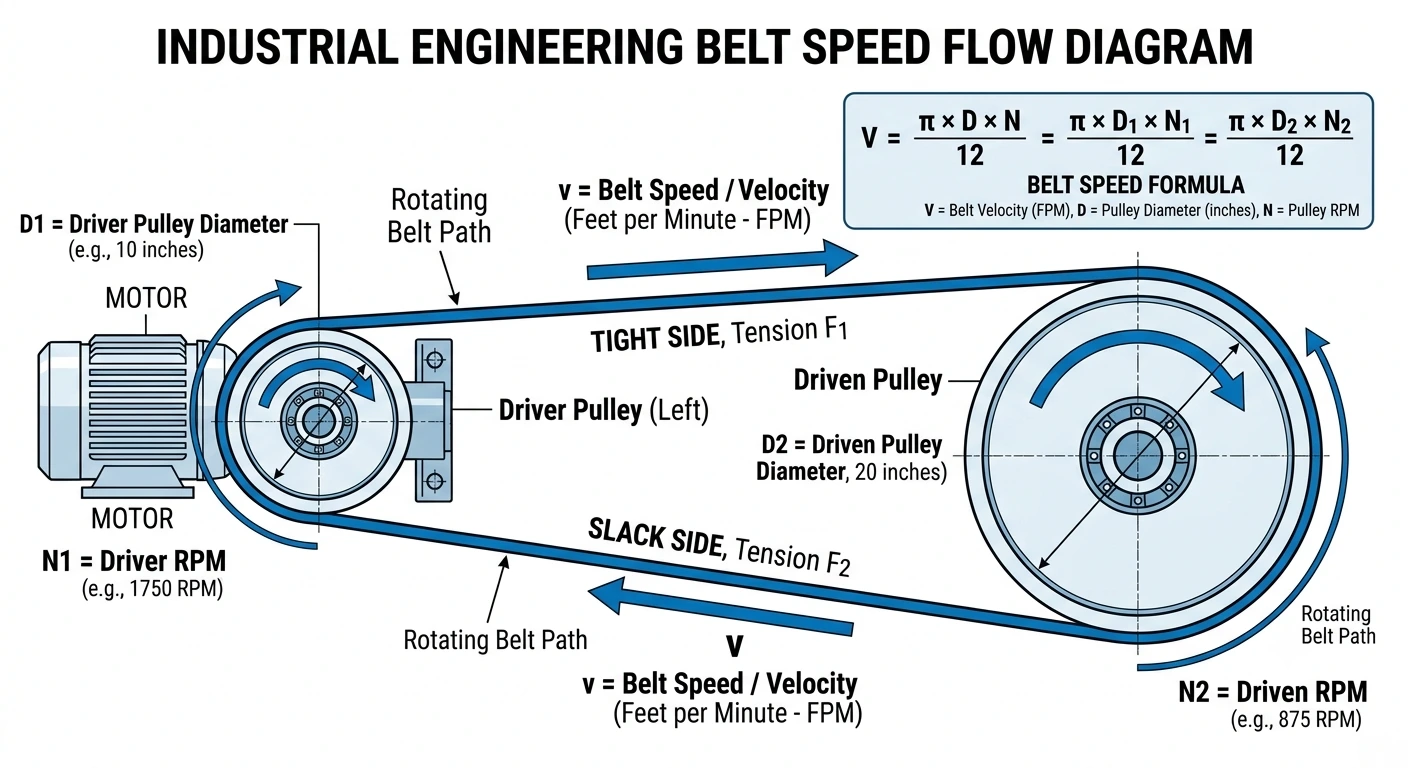
In belt-driven systems, belt speed is controlled primarily by pulley diameter and rotational speed (RPM). Increasing either the pulley diameter or RPM increases belt velocity, which directly affects conveyor throughput, HVAC airflow, machine productivity, and overall system efficiency.
Because belt speed influences production output, airflow performance, energy consumption, and component life, it is one of the first values maintenance engineers verify during troubleshooting and performance optimization.
Belt Speed Formula
The belt speed formula calculates the linear velocity of a belt as it travels around a pulley. Maintenance engineers, HVAC technicians, and conveyor operators use this formula to determine conveyor throughput, airflow performance, and overall belt-drive efficiency.
Where:
- π = 3.1416
- Pulley Diameter = Effective pulley diameter in meters
- RPM = Revolutions per minute
- Belt Speed = Linear belt velocity in meters per second (m/s)
Worked Example: Belt Speed Calculation
A conveyor drive uses a 200 mm pulley rotating at 1450 RPM.
- Pulley Diameter = 0.2 m
- RPM = 1450
Result: The belt travels approximately 15.18 meters every second. This speed is commonly found in HVAC blower systems, industrial fans, and medium-speed conveyor applications.
Belt Speed Unit Conversions
- Feet per minute: ft/min = m/s × 196.85
- Kilometers per hour: km/h = m/s × 3.6
- Effective belt speed: m/s × (1 − slip%)
Related Calculations: Pulley RPM Calculator • Pulley Speed Ratio Formula • Conveyor Belt Speed Calculation
Common Industrial Belt Speed Reference
The following table shows typical belt speed ranges used across common industrial applications. Actual operating speed depends on equipment design, pulley size, belt type, material characteristics, and manufacturer recommendations.
| Application | Typical Belt Speed | Common Equipment |
|---|---|---|
| Conveyors | 0.5–6 m/s | Package handling, mining, aggregate, cement |
| HVAC Systems | 10–30 m/s | Fans, blowers, air handling units |
| Pumps | 8–25 m/s | Industrial water and process pumps |
| Compressors | 10–35 m/s | Belt-driven air compressors |
| General Machinery | 5–20 m/s | Machine tools, agricultural and production equipment |
Industrial Applications
Conveyor Systems
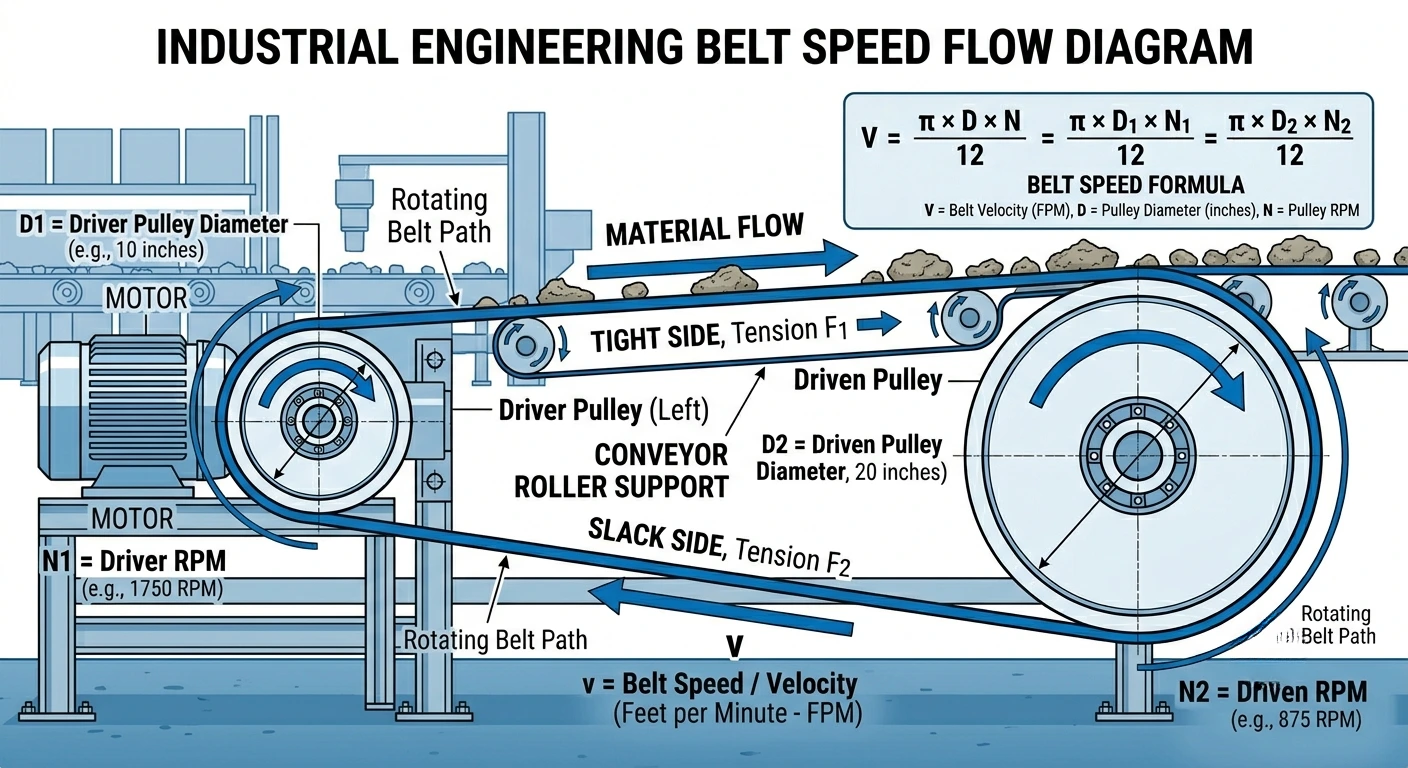
Industrial conveyor systems use belt speed to control material movement, production output, and conveyor efficiency. In manufacturing plants, mining facilities, warehouses, packaging lines, and cement industries, even small belt speed changes can significantly affect throughput, product flow, and operational performance.
Maintenance technicians frequently calculate belt speed during conveyor troubleshooting, pulley replacement, motor upgrades, and production optimization projects. Incorrect belt speed can cause material spillage, belt mistracking, bottlenecks, and reduced productivity.
HVAC Systems
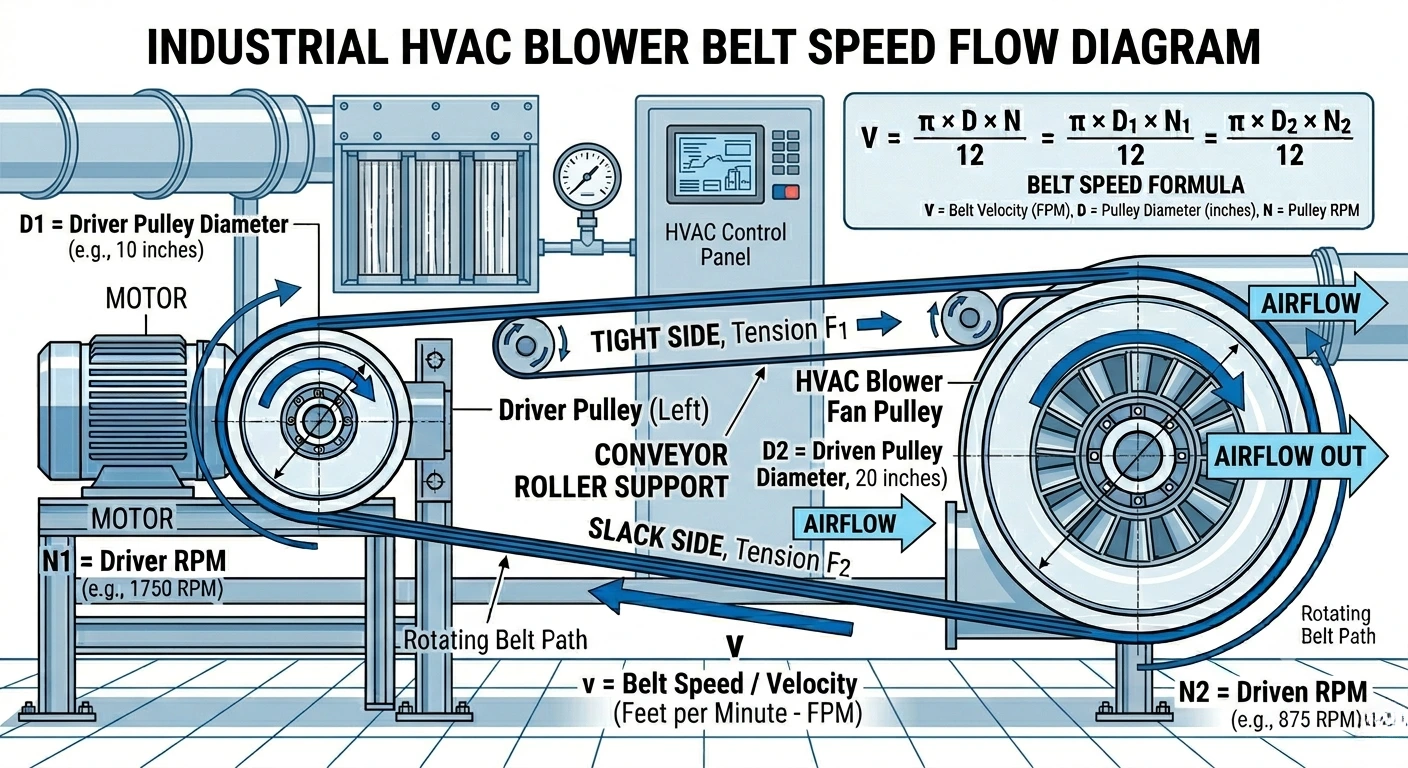
In HVAC systems, belt speed directly affects blower airflow, cooling efficiency, ventilation stability, and motor performance. Air handling units, cooling towers, industrial exhaust fans, and commercial ventilation systems rely on proper belt speed to maintain design airflow requirements.
A small change in pulley diameter or fan RPM can significantly affect airflow performance, energy consumption, static pressure, and occupant comfort. HVAC maintenance teams commonly inspect belt speed when troubleshooting airflow imbalance, overheating problems, and unstable fan operation.
Machine Tools
Machine tools such as lathes, milling machines, grinders, and drill presses frequently use belt-driven systems to transfer power and control spindle speed. Correct belt speed helps maintain proper cutting conditions, surface finish quality, and tool life.
Excessive belt speed may increase vibration and heat generation, while insufficient speed can reduce machining efficiency and production rates.
Process & Manufacturing Equipment
Many industrial pumps, compressors, mixers, agitators, and processing machines rely on belt drives to transfer power between rotating components. Belt speed directly influences impeller tip speed, fluid movement, mixing performance, and overall equipment efficiency.
Engineers often verify belt speed during equipment commissioning, preventive maintenance inspections, and energy optimization projects to ensure machinery operates within its intended design range.
Cooling Towers
Cooling tower fan drives commonly use V-belt systems to transfer power from electric motors to large fan assemblies. Belt speed directly affects airflow, cooling efficiency, vibration levels, and energy consumption. Routine verification of pulley RPM and belt speed helps prevent overheating, excessive belt wear, and airflow reduction.
Common Belt Speed Problems
Belt Slip
Belt slip occurs when the actual belt speed becomes lower than the calculated belt speed. Common causes include insufficient belt tension, worn sheaves, contamination from oil or grease, and excessive loading conditions.
Typical symptoms include reduced efficiency, squealing noise, excessive heat generation, and lower-than-expected equipment performance.
Excessive Vibration
Excessive vibration can develop when belt speed matches a natural frequency within the machine structure or when pulleys become unbalanced. Misalignment and worn bearings can further amplify vibration levels.
Persistent vibration accelerates bearing wear, reduces belt life, and increases maintenance costs.
Premature Belt Wear
Operating above the recommended belt speed range increases heat generation and friction within the drive system. Over time this can cause belt glazing, cracking, edge wear, and reduced service life.
Routine inspection of belt condition and operating speed helps prevent unexpected failures.
Belt Mistracking
Conveyor belts may drift to one side when pulley diameters are inconsistent, alignment is poor, or belt tension is uneven. Mistracking can cause edge damage, material spillage, and conveyor downtime.
Correct pulley alignment and tension adjustment are essential for maintaining stable belt tracking.
Reduced Throughput
When actual belt speed falls below design values, conveyor output and process performance decrease. Common causes include motor overload, belt slip, incorrect pulley selection, and RPM loss under load.
Excessive Energy Consumption
Incorrect belt speed can increase motor loading and energy consumption. Overspeed conditions often waste electricity without providing additional production benefits, while underspeed conditions reduce process efficiency. Routine belt speed verification helps optimize equipment performance and reduce operating costs.
Verifying RPM, pulley diameter, and actual belt speed helps identify the root cause of throughput reduction.
Troubleshooting Checklist
Use the following maintenance workflow when actual belt speed does not match calculated values or when conveyor, HVAC, or other belt-driven equipment performance begins to decline.
-
Step 1 – Verify Actual RPM
Use a tachometer to confirm the motor or driven shaft RPM under normal operating load conditions. -
Step 2 – Measure Pulley Diameter
Measure the effective (pitch) pulley diameter accurately. Incorrect diameter measurements are a common cause of belt speed calculation errors. -
Step 3 – Inspect Belt Tension
Check belt tension using a tension gauge or the manufacturer's recommended deflection method. Insufficient tension often causes belt slip and reduced efficiency. -
Step 4 – Check Pulley and Shaft Alignment
Inspect pulley and shaft alignment with a straightedge or laser alignment tool. Misalignment increases belt wear, vibration, and energy loss. -
Step 5 – Inspect Pulley and Belt Condition
Look for worn pulley grooves, glazing, cracks, contamination, or belt damage that could affect performance. -
Step 6 – Compare Calculated and Actual Belt Speed
Measure the actual belt speed and compare it with the calculated value. Significant differences usually indicate belt slip or other mechanical problems. -
Step 7 – Monitor Temperature and Vibration
Use thermal imaging and vibration monitoring tools to identify developing faults before they lead to equipment failure.
Technician Tips
- Always measure pulley diameter at the pitch line for V-belts — not the outside edge.
- Replace matched-set V-belts together; mixing old and new causes uneven load sharing.
- Re-tension new belts after the first 24–48 hours of operation.
- Avoid belt dressings on synchronous (timing) belts — they trap debris.
- Document baseline belt speed at commissioning for future trend analysis.
- Always compare calculated belt speed with field measurements during preventive maintenance inspections.
- Record baseline belt speed after commissioning so future inspections can quickly identify performance changes.
Frequently Asked Questions
How do you calculate belt speed?
What is the belt speed formula?
Does pulley size affect belt speed?
Why is actual belt speed lower than calculated speed?
What causes belt slip?
How do technicians measure belt speed?
What is a good belt speed for industrial equipment?
Does belt tension affect belt speed?
Can belt speed be measured directly?
How does pulley diameter affect belt speed?
What causes conveyor belt speed fluctuations?
What is the difference between belt speed and pulley RPM?
Can increasing pulley diameter increase belt speed?
Engineering References
The calculation method and engineering guidance presented on this page are based on commonly accepted industrial power transmission principles and manufacturer recommendations.
- ANSI/RMA IP-20 – Belt Drive Design Standards
- ISO 4184 – Classical and Narrow V-Belts
- SKF Power Transmission Handbook
- Gates Industrial Belt Drive Design Manual
Related Engineering Guides
Continue learning with these engineering guides to better understand belt speed calculations, troubleshooting, pulley selection, and conveyor performance.
Learn the Basics
- How to Calculate Belt Speed Step by Step – Learn the complete calculation process using pulley diameter and RPM.
- Belt Speed Formula Explained – Understand the engineering formula and unit conversions.
- RPM to Belt Speed Formula and Calculation – Convert RPM into belt speed with practical examples.
Optimize Belt Performance
- What Is a Good Belt Speed? – Compare your results with common industrial operating ranges.
- Common Belt Speed Calculation Mistakes – Avoid common errors during calculations.
Pulley Selection & Measurement
- How to Measure Pulley Diameter Correctly – Learn the correct measurement method.
- How to Calculate Pulley Ratio – Understand how pulley size affects RPM and belt speed.
Troubleshooting
- Belt Speed Troubleshooting Guide – Diagnose belt slip, pulley wear, vibration, alignment issues, and reduced conveyor performance.