
What Is a Good Belt Speed
What is a good belt speed is one of the most important questions in industrial maintenance because an incorrect belt speed can quietly reduce production output, increase component wear, and create performance problems long before a machine actually fails. Many technicians focus on motors, bearings, or alignment issues while overlooking the fact that the equipment is simply operating outside its recommended belt speed range.
In real industrial environments, there is no single belt speed that works for every application. A conveyor transporting bulk material, a packaging line, and a Heating, Ventilation and Air Conditioning (HVAC) fan system can all require very different operating speeds. Understanding what constitutes a good belt speed helps maintenance teams improve reliability, reduce downtime, and make better troubleshooting decisions.
This guide explains how engineers determine suitable belt speed ranges, why speed matters, how technicians verify belt performance in the field, and what warning signs indicate that belt speed may be too high or too low. If you need to verify actual belt velocity, the Belt Speed Calculator can help you quickly evaluate operating conditions.
What Is a Good Belt Speed?
A good belt speed is a speed that allows equipment to operate efficiently, safely, and reliably without creating unnecessary wear, excessive vibration, product handling problems, or energy losses.
The ideal speed depends on several factors:
- Equipment type
- Pulley size
- Motor speed
- Material being handled
- Production requirements
- Environmental conditions
- Maintenance condition of the system
For example, a mining conveyor handling abrasive material may require a different belt speed than a packaging conveyor transporting lightweight products. Similarly, an HVAC fan drive may operate efficiently at a speed that would be unsuitable for a material handling system.
This is why experienced maintenance engineers rarely ask whether a speed is simply “good” or “bad.” Instead, they evaluate whether the speed is appropriate for the application, operating environment, and equipment design.
Why Belt Speed Matters
Belt speed directly influences equipment performance, throughput, energy consumption, and component life. Even a small deviation from the recommended operating range can create noticeable effects across an entire production process.
When belt speed is too low, equipment may fail to meet production targets. Conveyors move less material, fans deliver less airflow, and manufacturing systems may operate below their intended capacity.
When belt speed is too high, different problems emerge. Excessive speed can increase belt wear, generate heat, accelerate pulley degradation, and place additional loads on shafts, bearings, and couplings.
Maintenance teams investigating performance issues often review resources such as How to Calculate Belt Speed Step by Step, Belt Speed Formula Explained, and RPM to Belt Speed Formula and Calculation to verify whether operating speeds remain within acceptable limits.
In many facilities, maintaining the correct belt speed is one of the simplest ways to improve equipment reliability without major capital investment.
Recommended Belt Speed Ranges
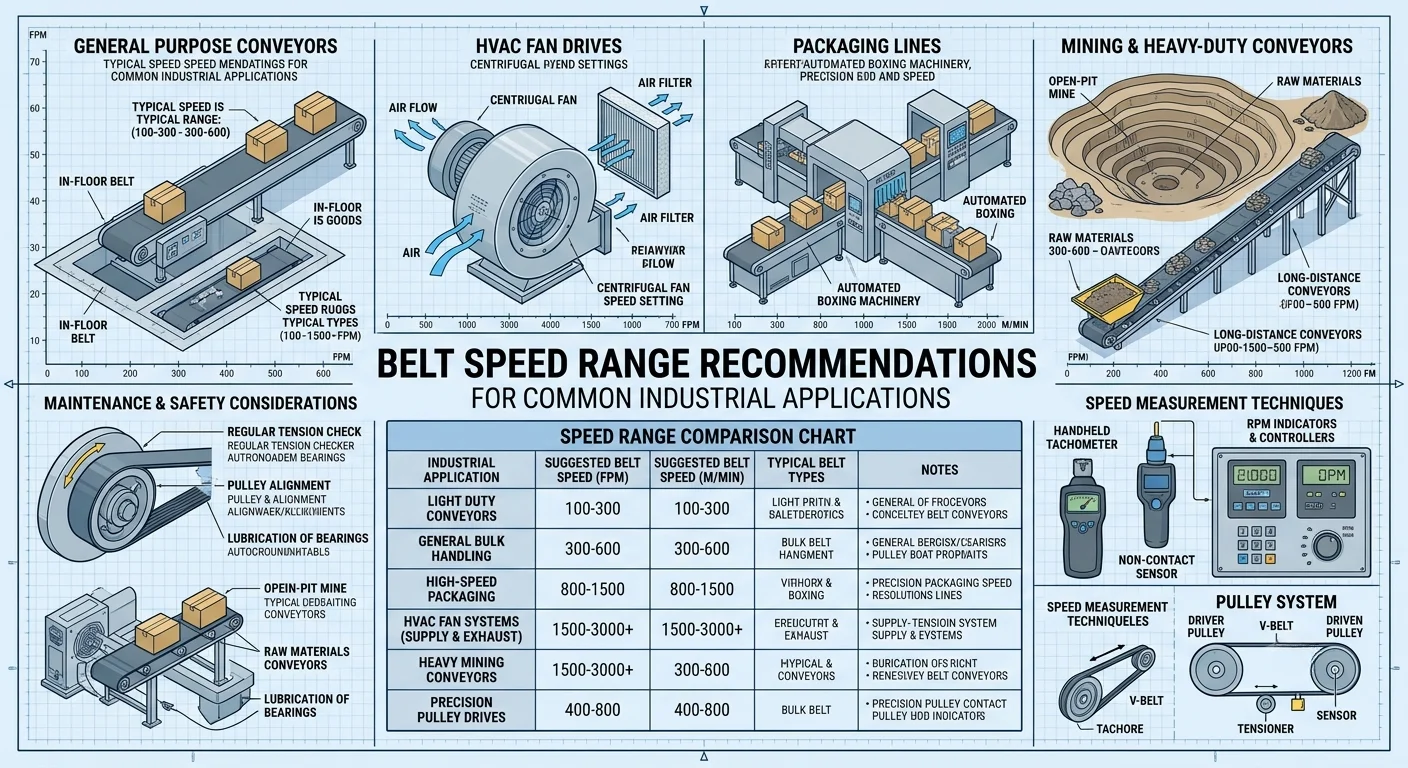
Although exact values vary by application, most industrial equipment operates within established belt speed ranges recommended by the Original Equipment Manufacturer (OEM). These recommendations are based on years of engineering testing, field experience, and reliability data.
The following table provides general guidance for common industrial applications.
| Application | Typical Belt Speed | Use Case | Notes |
|---|---|---|---|
| Packaging Conveyors | 2–6 m/s | Product Transport | Prioritizes smooth handling |
| Material Handling Conveyors | 3–8 m/s | General Industrial Use | Balanced performance |
| HVAC Fan Drives | 10–25 m/s | Airflow Systems | Depends on fan design |
| Mining Conveyors | 4–10 m/s | Bulk Material Transfer | Higher wear considerations |
These values should be treated as general guidelines. Always compare operating conditions against OEM (Original Equipment Manufacturer) recommendations and actual process requirements before making speed adjustments.
There is no universal belt speed that works for every application. A good belt speed is the speed that allows the equipment to achieve its intended output while maintaining reliability, minimizing wear, and meeting safety requirements. This is why maintenance engineers evaluate belt speed together with load, pulley diameter, RPM, and operating environment rather than relying on a single recommended value.
Good Belt Speed for Conveyors
For conveyor systems, a good belt speed is the speed that delivers the required production rate without creating excessive spillage, product damage, premature wear, or maintenance problems.
Many technicians assume that increasing belt speed automatically improves productivity. In reality, faster is not always better. Excessive conveyor speed can reduce material control, increase dust generation, accelerate belt wear, and place additional stress on pulleys, shafts, bearings, and support structures.
Material type plays a major role when selecting conveyor speed. Lightweight packaged products often tolerate higher speeds than abrasive bulk materials such as clinker, limestone, aggregate, or mining products.
Maintenance teams frequently compare actual operating speed with values calculated using the Belt Speed Calculator and guidance from the Conveyor Belt Speed Calculation article when evaluating conveyor performance.
A good conveyor belt speed is therefore the speed that meets production requirements while maintaining reliability, safety, and acceptable maintenance costs.
Good Belt Speed for HVAC and Fans
Heating, Ventilation and Air Conditioning (HVAC) systems use belt drives to transfer power from motors to fan assemblies. In these applications, belt speed directly affects airflow, energy consumption, noise levels, and equipment reliability.
Unlike conveyors, HVAC systems are typically optimized around airflow requirements rather than material throughput. Operating below the recommended speed may reduce cooling performance and ventilation effectiveness, while excessive speed can increase vibration, noise, and bearing loads.
When troubleshooting HVAC systems, technicians often verify:
- Motor RPM
- Pulley diameter
- Belt condition
- Alignment condition
- Fan performance
- Vibration levels
Resources such as Pulley Diameter and Belt Speed Relationship and RPM to Belt Speed Formula and Calculation help maintenance teams determine whether speed-related issues are affecting system performance.
Signs Your Belt Speed Is Too High or Too Low
Experienced maintenance technicians rarely rely on calculations alone. They also look for operational symptoms that indicate belt speed may be outside the recommended range.
Common signs of excessive belt speed include:
- Premature belt wear
- Excessive vibration
- Noise increases
- Pulley overheating
- Bearing temperature rise
- Material spillage on conveyors
Common signs of insufficient belt speed include:
- Reduced production output
- Poor conveyor throughput
- Insufficient airflow
- Low process efficiency
- Material accumulation
- Unexpected bottlenecks
Many facilities initially investigate motors, couplings, bearings, or control systems when these symptoms appear. However, field experience shows that verifying belt speed early often identifies the root cause much faster.
This is especially true after shutdown maintenance activities where pulley replacements, belt changes, or alignment adjustments have been performed.
How Technicians Verify Belt Speed
Determining whether belt speed is actually “good” requires measurement and verification rather than assumptions. Experienced technicians compare calculated values, measured operating conditions, and Original Equipment Manufacturer (OEM) recommendations before making decisions.
Typical verification methods include:
- Laser tachometers
- Contact tachometers
- Pulley diameter measurements
- RPM verification
- Visual inspections
- Vibration analysis
- Production performance reviews
A common troubleshooting process involves measuring motor RPM, confirming pulley dimensions, calculating belt speed, and comparing the results against expected operating conditions.
Maintenance teams often use references such as Belt Speed Formula Explained and Belt Speed ft/min Conversion Guide when validating speed measurements and interpreting OEM recommendations.
The most effective technicians do not rely on a single measurement. They combine speed verification with alignment inspections, lubrication reviews, vibration analysis, bearing assessments, and operational observations to build a complete picture of equipment health.
Related Calculators and Troubleshooting Guides
Determining a good belt speed is only one part of maintaining a reliable belt drive system. Engineers and technicians typically evaluate belt speed together with pulley dimensions, RPM, alignment condition, vibration levels, and equipment performance data before making maintenance decisions.
- Belt Speed Calculator
- Mechanical Calculators Hub
- How to Calculate Belt Speed Step by Step
- Belt Speed Formula Explained
- Conveyor Belt Speed Calculation
- Pulley Diameter and Belt Speed Relationship
- RPM to Belt Speed Formula and Calculation
- Belt Speed ft/min Conversion Guide
Engineers optimizing belt-driven systems often continue their research into Common Belt Speed Calculation Mistakes to identify errors that frequently affect troubleshooting results and maintenance decisions.
Real-World Engineering Insight
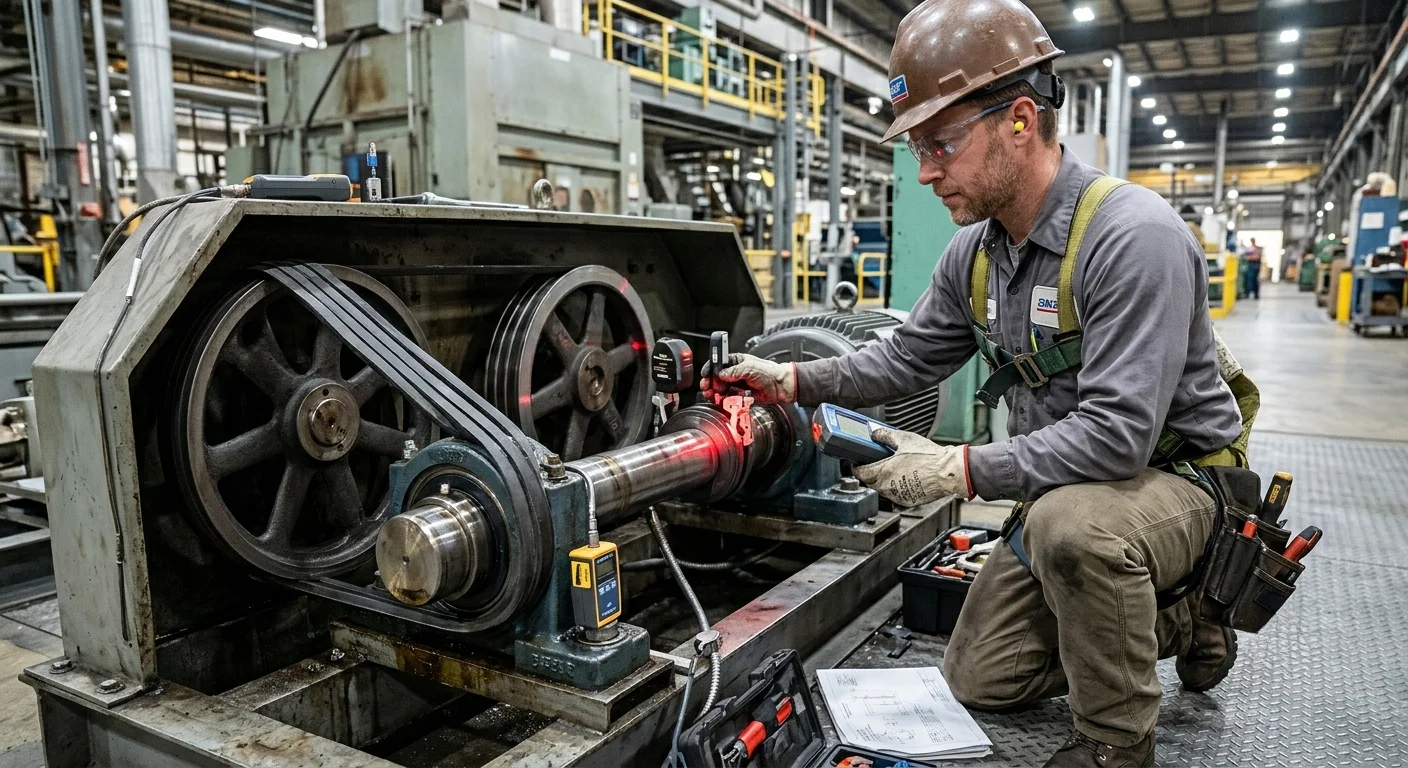
During my experience working with maintenance teams across Gulf manufacturing plants, cement facilities, logistics centers, and HVAC installations, one recurring issue appears repeatedly: equipment is often operating at an acceptable RPM while actual belt speed falls outside the recommended operating range.
High ambient temperatures, airborne dust, and continuous production schedules can gradually affect belt performance without creating immediate alarms. Belts may stretch, pulleys may wear, and alignment conditions may deteriorate over time, causing actual belt speed to drift away from the original design value.
During shutdown maintenance, experienced technicians rarely assume that existing speed settings remain correct. They verify pulley diameters, measure RPM, inspect belts for wear, review vibration trends, check lubrication records, and compare current operating conditions against Original Equipment Manufacturer (OEM) recommendations.
One practical lesson learned from field troubleshooting is that a “good” belt speed is not always the fastest possible speed. The most reliable systems are usually those operating within a balanced range that delivers production targets while minimizing stress on belts, bearings, shafts, couplings, and rotating equipment.
In many cases, reducing belt speed slightly can improve reliability, decrease maintenance costs, and extend component life without significantly affecting production output.
Frequently Asked Questions
What is considered a good belt speed?
A good belt speed is one that allows equipment to meet production requirements while maintaining reliability, efficiency, and acceptable wear rates. The ideal value depends on the specific application and operating conditions.
Can belt speed affect equipment reliability?
Yes. Excessive belt speed can increase wear, vibration, and heat generation, while insufficient speed may reduce throughput, airflow, and overall process efficiency.
How do technicians measure actual belt speed?
Technicians commonly use laser tachometers, contact tachometers, RPM measurements, pulley dimension checks, and belt speed calculations to verify operating conditions.
What happens if belt speed is too high?
High belt speed can lead to premature belt wear, increased vibration, bearing stress, material spillage, excessive noise, and reduced component life.
What happens if belt speed is too low?
Low belt speed may reduce production output, limit airflow, decrease process efficiency, and create bottlenecks in material handling systems.
Does the same belt speed work for every application?
No. Conveyor systems, HVAC drives, mining equipment, and packaging lines often require different operating speeds based on their design and performance requirements.
Recommended Next Steps
Now that you understand what a good belt speed looks like, continue with these engineering resources to calculate belt speed accurately, troubleshoot performance issues, and optimize industrial belt-driven equipment.