
Static vs Dynamic Torque Explained (Simple + Practical Guide)
Static vs dynamic torque is a fundamental concept that every technician and engineer must understand when working with motors, bolts, and rotating equipment. In real maintenance work, confusion between static and dynamic torque often leads to incorrect troubleshooting and poor system performance.
Technicians often face situations where a machine fails to start even though it runs smoothly once in motion. In Gulf industries such as oil & gas, HVAC, and manufacturing plants, understanding this difference is critical for motor selection, startup performance, and load handling.
This guide explains static vs dynamic torque in a practical and beginner-friendly way with real industrial insights.
👉 Need quick torque calculation? Use Torque Calculator (Nm to lb ft)
Static vs Dynamic Torque Explained in Simple Terms
Static vs dynamic torque explained shows that static torque is required to start movement from rest, while dynamic torque maintains motion during operation.
- Static torque: Initial force to start movement
- Dynamic torque: Force required during continuous operation
👉 Related: Torque vs RPM Explained
In real maintenance work, static torque is usually higher than dynamic torque due to friction and resistance at startup.
A common mistake I’ve seen is assuming both values are the same, which leads to wrong motor sizing.
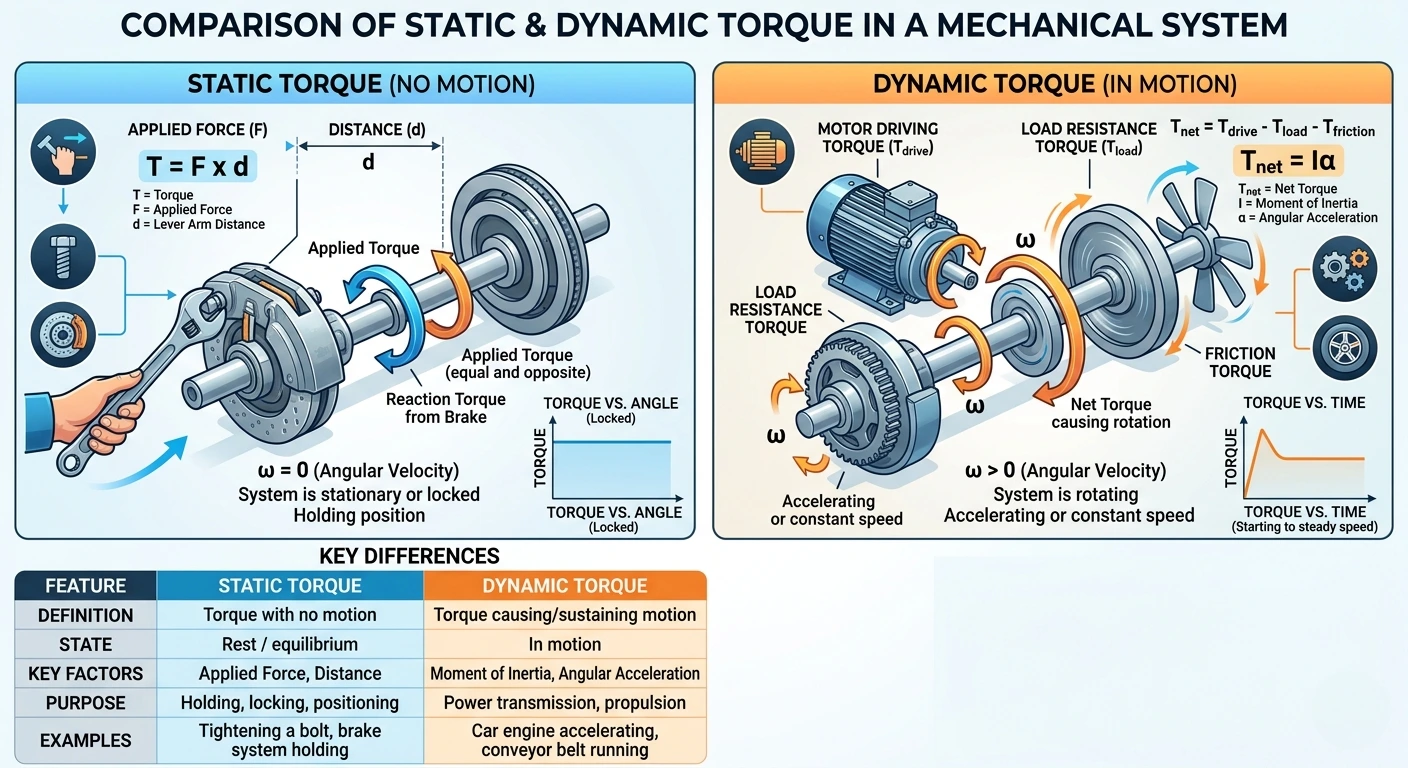
Figure: Static torque vs dynamic torque in mechanical systems.
How Static Torque Works in Real Maintenance Work
Static torque is the force required to overcome initial resistance when starting a system.
In real maintenance work, this is seen in:
- Motor startup
- Breaking tight bolts
- Overcoming friction in bearings
👉 Learn practical examples: Torque Calculation Examples Real Life
Technicians often face high startup loads in compressors and conveyors, where static torque plays a critical role.
A common mistake I’ve seen is underestimating startup torque, which causes motor stalling.
How Dynamic Torque Works in Operation
Dynamic torque is the torque required to keep a system moving once it has started.
In real maintenance work, dynamic torque is usually lower because friction reduces after motion begins.
Examples include:
- Running motors
- Rotating shafts
- Continuous conveyor systems
👉 Related: Motor Torque Calculation Explained
Technicians often face situations where systems run smoothly after startup but struggle initially—this is due to static vs dynamic torque difference.
Static vs Dynamic Torque in Industrial Applications
In Gulf industries, both types of torque are critical:
- Compressors → high static torque
- Fans → low static torque, steady dynamic torque
- Conveyors → moderate static and dynamic torque
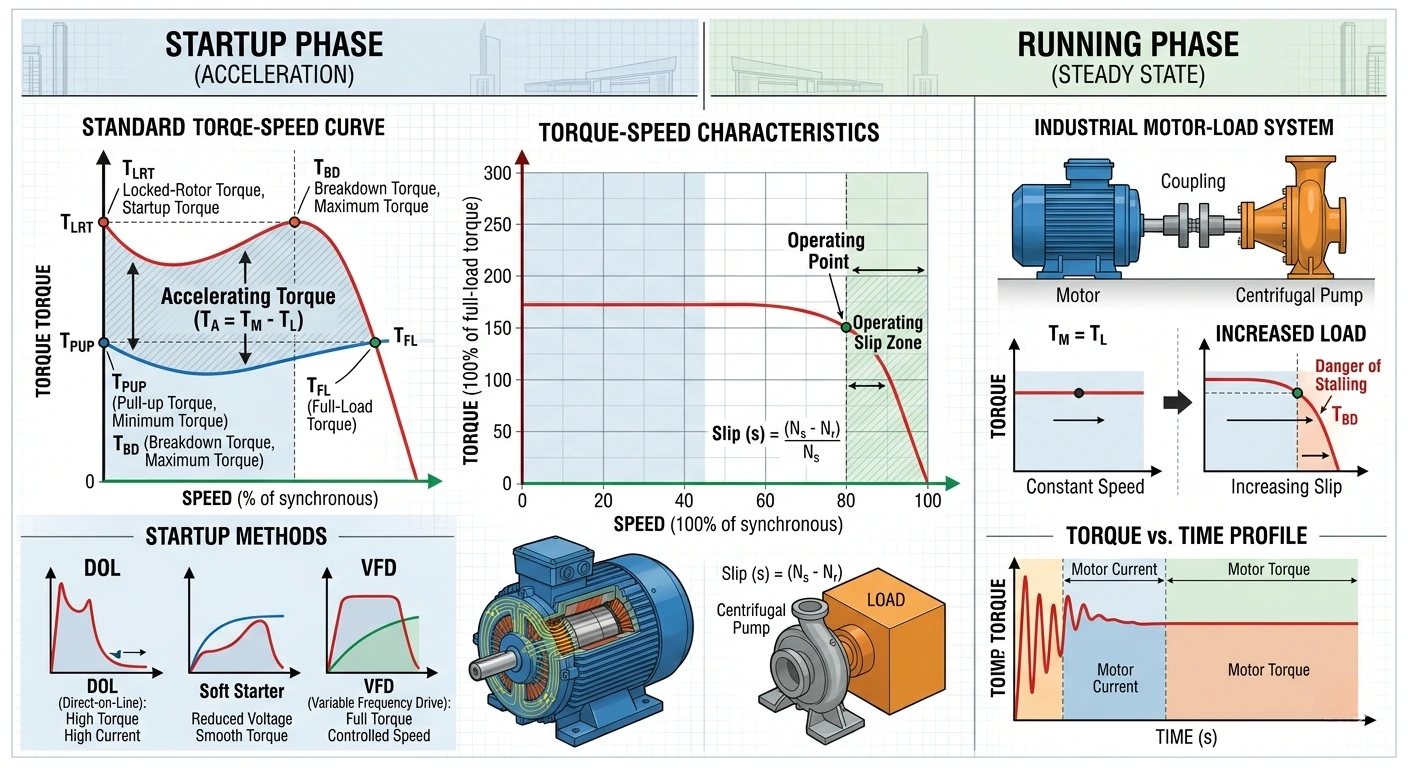
Figure: Static and dynamic torque in industrial machinery.
👉 For reference values: Bolt Torque Chart (Standard Values)
In real maintenance work, understanding both helps prevent overload and improves efficiency.
Static vs Dynamic Torque Comparison Table
| Parameter | Static Torque | Dynamic Torque | Use Case |
|---|---|---|---|
| Function | Start motion | Maintain motion | Startup vs running |
| Value | Higher | Lower | Load handling |
| Application | Compressors | Fans | Industrial systems |
Common Static vs Dynamic Torque Mistakes
Technicians often make these mistakes:
- Ignoring startup torque requirements
- Using same torque value for all conditions
- Not considering friction
- Improper motor selection
👉 Avoid errors: Common Torque Problems and Solutions
In real maintenance work, these mistakes lead to system failure and inefficiency.
When to Focus on Static vs Dynamic Torque
In real maintenance work:
- Focus on static torque → startup conditions
- Focus on dynamic torque → running performance
👉 Understand power connection: Torque and Power Relationship
Technicians often face confusion during troubleshooting because they don’t differentiate between these two conditions.
In real maintenance work, I have seen many systems fail during startup because static torque requirements were ignored. In Gulf industries, especially in heavy equipment and compressors, incorrect understanding of static vs dynamic torque leads to motor overload and downtime. That’s why technicians must always evaluate both startup and running conditions.
Final Summary
Static vs dynamic torque is a critical concept for understanding machine behavior in real-world applications. In real maintenance work, static torque determines startup success, while dynamic torque ensures smooth operation.
Understanding both helps technicians select the right equipment, avoid failures, and improve system performance.
👉 Calculate torque accurately for real work: Torque Calculator Tool
Frequently Asked Questions (FAQs)
What is static torque?
Static torque is the torque required to start movement from rest.
What is dynamic torque?
Dynamic torque is the torque required to maintain motion.
Why is static torque higher?
Because it must overcome initial friction and resistance.
Where is static torque important?
It is important in motor startup and heavy load systems.
Where is dynamic torque used?
It is used in continuous running systems like conveyors and fans.