
Pulley Ratio Explained: How It Controls Speed and Torque in Real Machines
Pulley Ratio Explained is an important concept for understanding how pulley sizes affect speed and power transmission in belt-driven systems. An incorrect pulley ratio can cause a fan, pump, conveyor, or other driven machine to operate at an unintended speed.
Instead of guessing, you can quickly verify system speed using the Pulley RPM Calculator. This helps ensure your pulley selection delivers the correct output RPM before making physical changes.
What is Pulley Ratio in Simple Terms
Pulley ratio is the relationship between the diameter of the driver pulley connected to the motor shaft and the driven pulley connected to the output shaft. This ratio determines how speed and torque are transferred through the belt.
In simple terms:
- Small driver + large driven pulley = lower driven speed and higher theoretical torque at the driven shaft
- Large driver + small driven pulley = higher driven speed and lower theoretical torque at the driven shaft
These relationships describe the ideal mechanical effect of changing the pulley ratio. Actual transmitted torque can be affected by motor power, belt slip, belt condition, transmission losses, and equipment limitations.
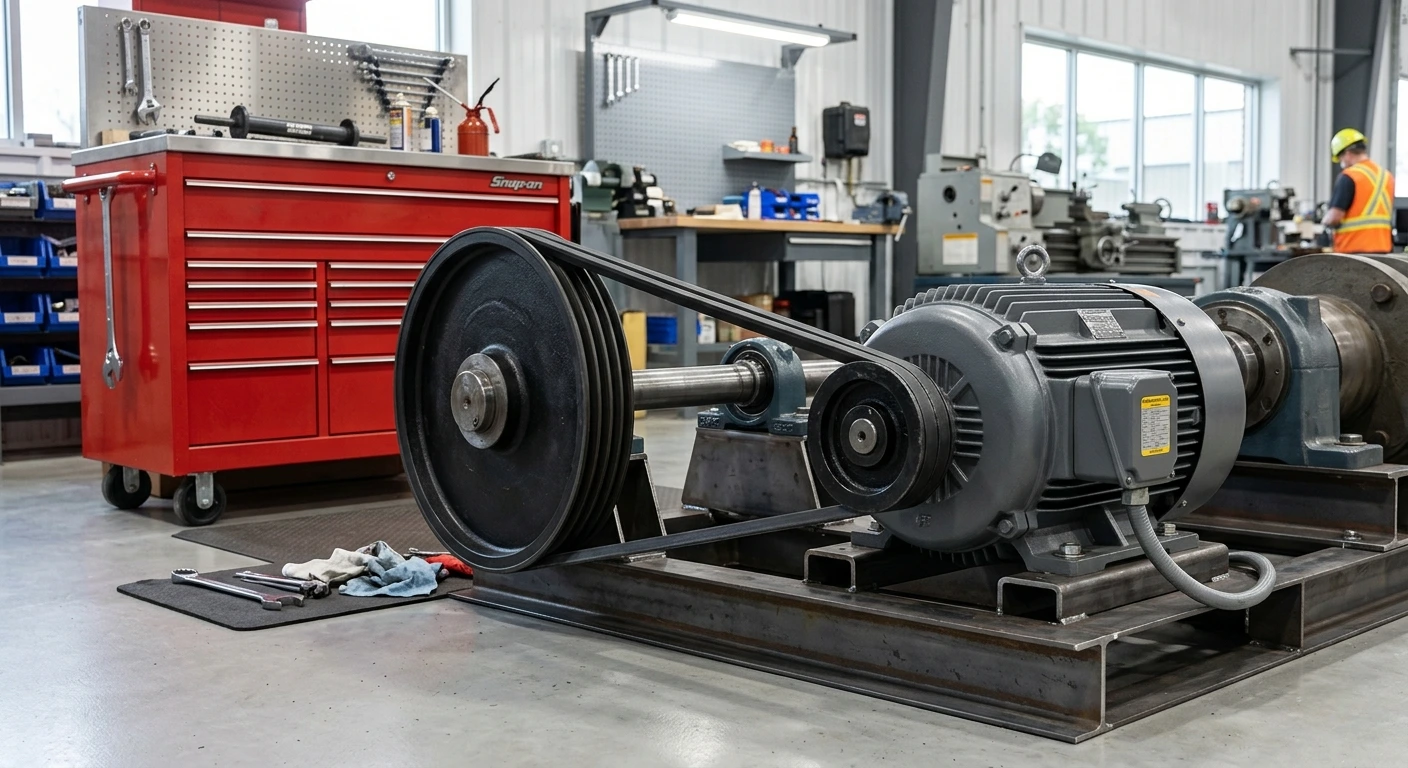
How Pulley Ratio Affects RPM and Machine Performance
When a motor rotates, it transfers motion through the belt to the driven pulley. The change in pulley diameter directly changes RPM. This is why pulley ratio plays a key role in system performance.
The relationship is defined by:
Driver RPM × Driver Diameter = Driven RPM × Driven Diameter
Technicians often use this formula along with real measurements to avoid mistakes. For step-by-step calculation, you can also follow how to calculate belt RPM to get accurate results in field conditions.
Practical Example from Real Maintenance Work
Let’s take a real example:
- Motor speed = 1440 RPM
- Driver pulley = 100 mm
- Driven pulley = 200 mm
Using the formula:
Driven RPM = (1440 × 100) ÷ 200 = 720 RPM
This setup reduces the theoretical driven speed to 720 RPM. In an HVAC application, the resulting fan speed must be checked against the equipment's required operating conditions rather than assuming that a lower speed will automatically improve efficiency.
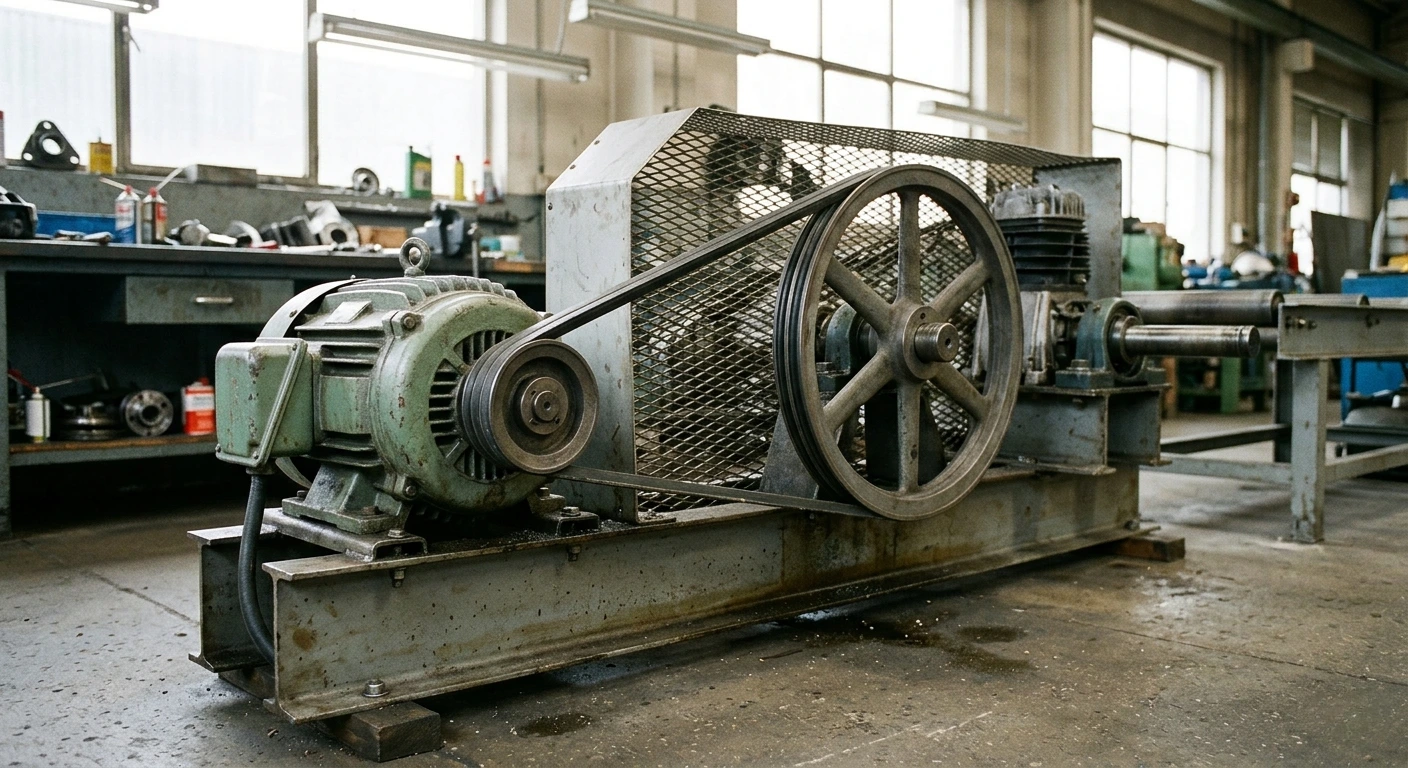
Quick Pulley Ratio Reference Table
| Driver Pulley | Driven Pulley | Diameter Ratio (Driven ÷ Driver) | Use Case |
|---|---|---|---|
| 100 mm | 200 mm | 2:1 | Reduce fan speed |
| 150 mm | 150 mm | 1:1 | Same speed transfer |
| 200 mm | 100 mm | 1:2 | Increase machine speed |
Where Pulley Ratio is Used in Industry
Pulley systems are widely used in many industrial applications, including:
- HVAC systems to control airflow
- Water pumps to adjust pressure and flow rate
- Conveyor systems to regulate production speed
- Workshop machines like drills and lathes
In many cases, technicians also need to check torque impact when changing speed. For that, you can use the Torque Calculator to understand load behavior after RPM changes.
Common Mistakes That Affect Pulley Ratio
In real maintenance environments, these mistakes are very common:
- Using nominal pulley size instead of actual measured diameter
- Ignoring belt slip under load
- Wrong pulley replacement without recalculation
- Misalignment causing uneven belt wear
A common maintenance mistake is focusing only on motor speed without considering pulley ratio, which can lead to incorrect driven speed and unexpected machine performance.
Troubleshooting Pulley Ratio Problems
If your system is not performing correctly, follow this checklist:
- Measure actual pulley diameters
- Check belt tension and condition
- Inspect pulley wear and grooves
- Verify shaft alignment
- Recalculate RPM after any adjustment
To calculate correct belt size along with RPM, you can also use the Belt Length Calculator to avoid installation issues.
For related maintenance topics, see our pulley alignment problems guide and belt slip and RPM loss guide.
Real-World Engineering Insight
During planned maintenance and troubleshooting, checking the pulley ratio can be an efficient way to identify whether incorrect driven speed is contributing to a machine performance problem.
A common HVAC troubleshooting scenario is reduced cooling or airflow even when the motor appears to be operating normally. Checking the pulley sizes and calculating the expected fan speed can help determine whether the driven equipment is operating below its intended RPM.
Where the equipment design permits pulley adjustment, correcting the pulley ratio can restore the required operating speed without necessarily replacing the motor. The final pulley selection should always remain within the equipment manufacturer's specifications.
Technicians should always think in terms of system balance:
- Motor speed
- Pulley size
- Belt condition
- Load requirement
Even a small pulley change can completely transform system performance.
Frequently Asked Questions
What is pulley ratio?
Pulley ratio describes the relationship between the driver and driven pulley diameters and helps determine how the driven shaft speed changes.
How does pulley ratio affect speed?
With driver speed held constant, a larger driven pulley reduces driven RPM, while a smaller driven pulley increases driven RPM.
Can pulley ratio change torque?
Yes. In an ideal belt drive, reducing driven speed through a larger driven pulley increases the theoretical torque available at the driven shaft. Actual torque depends on motor power, belt condition, transmission losses, and other system limitations.
Why is actual RPM different from calculated RPM?
Actual RPM can differ from the theoretical calculation because of belt slip, pulley wear, measurement errors, alignment problems, and other operating conditions.
Is pulley ratio important in maintenance work?
Yes. Pulley ratio affects driven speed and can therefore influence airflow, production speed, load, efficiency, and overall equipment performance.