
Belt Slip and RPM Loss in Industrial Belt Drive Systems
Belt Slip and RPM Loss silently reduces machine performance long before technicians notice visible mechanical damage. In many industrial plants, small RPM losses slowly create airflow reduction, conveyor instability, overheating, vibration problems, and unexpected production downtime without obvious warning signs.
When a belt-driven machine operates below its expected speed, technicians should verify the mechanical power-transfer system before replacing major components. Belt slip, incorrect tension, worn pulleys, misalignment, contamination, and excessive load can all contribute to reduced or unstable driven speed. Before replacing components, technicians can verify system speed using the Pulley RPM Calculator and compare the theoretical result with the actual measured RPM.
Understanding belt slip and RPM loss helps maintenance teams improve equipment efficiency, reduce energy waste, and prevent unnecessary machine failures in industrial plants.
What is Belt Slip and RPM Loss
Belt slip occurs when the drive belt loses proper grip between the driver pulley and driven pulley. Instead of transferring full rotational motion, the belt partially slides across the pulley surface, reducing actual output RPM.
RPM loss refers to the difference between calculated rotational speed and actual operating speed. This difference directly affects airflow, conveyor performance, cooling efficiency, and production output.
In industrial systems, belt slip is commonly caused by:
- Loose belt tension
- Worn pulley grooves
- Improper pulley alignment
- Oil contamination on belts
- Overloaded equipment
- Incorrect pulley sizing
This issue is closely connected with Belt Drive RPM Calculation because technicians must compare expected RPM with actual measured RPM to identify losses.
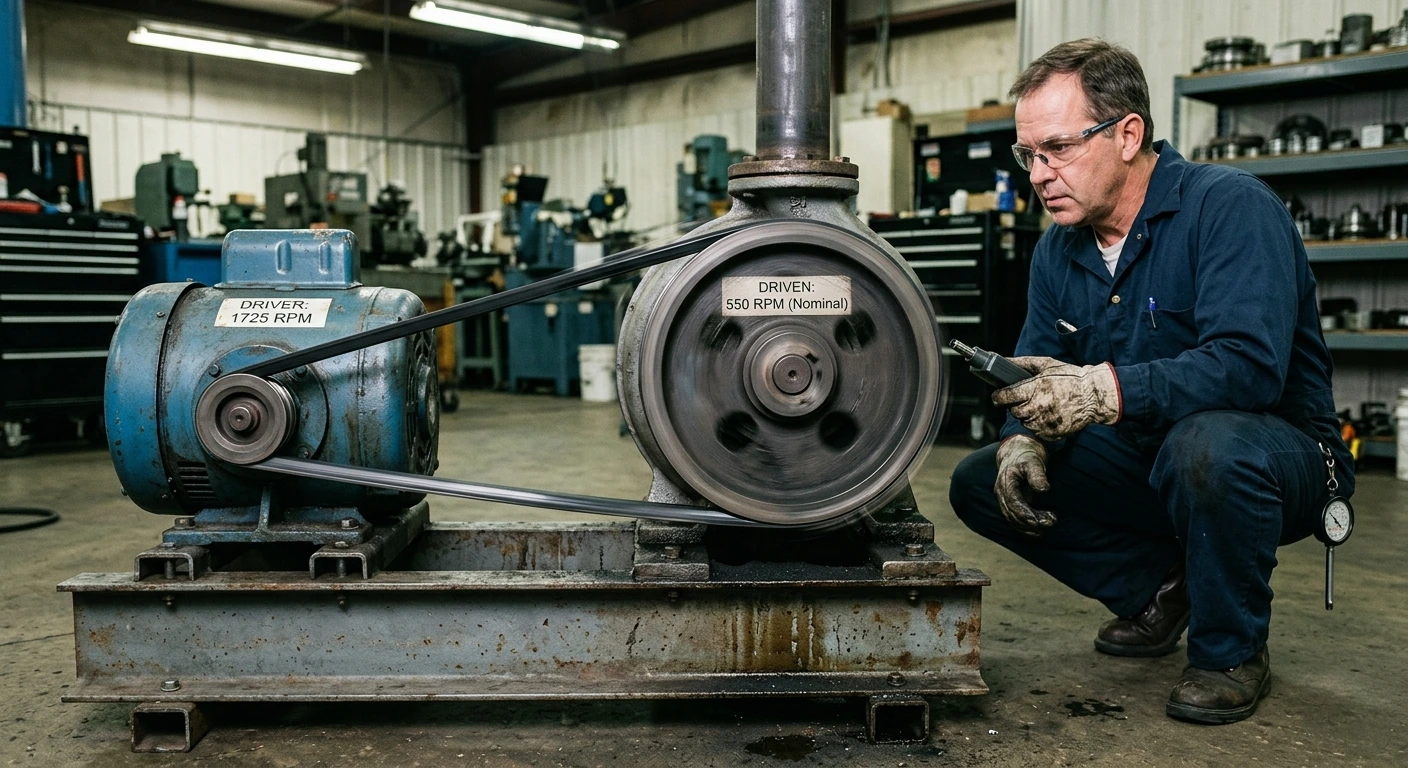
How Belt Slip Reduces RPM in Belt Drive Systems
In a properly operating belt drive system, rotational motion transfers smoothly from the motor shaft to the driven equipment through the V-belt. When belt grip decreases, the driven pulley rotates slower than expected.
For example, suppose the expected driven speed is 1440 RPM based on the pulley ratio, but the measured driven shaft speed is only 1320 RPM:
- Expected driven RPM = 1440 RPM
- Measured driven RPM = 1320 RPM
- RPM difference = 120 RPM
The 120 RPM difference indicates that the actual system is operating below its theoretical speed. Belt slip is one possible cause, but technicians should also check pulley diameter, belt condition, tension, alignment, load, and other mechanical conditions before identifying the root cause.
Even a small RPM reduction can significantly affect industrial systems. In HVAC equipment, airflow drops immediately. In conveyors, production speed decreases. In pumps, fluid circulation becomes unstable.
If reduced RPM continues for a long period, the underlying belt-drive problem can contribute to heat generation, vibration, inefficient power transmission, and accelerated component wear. Early measurement and troubleshooting can help prevent a minor belt-drive problem from developing into a larger equipment issue.
Technicians often verify these conditions using How to Calculate Belt RPM during troubleshooting activities.
Main Causes of Belt Slip in Industrial Equipment
In Gulf industrial plants, belt slip problems usually appear during high-load operation, dusty environments, or after improper maintenance work.
The most common causes include:
- Loose belt tension reducing friction
- Worn V-belt surfaces
- Damaged pulley grooves
- Misaligned motor and driven shaft
- Incorrect pulley ratio selection
- Excessive load on the driven equipment
- Improper belt profile selection
Reusing a worn belt after replacing pulleys can also create traction and fit problems. A belt with excessive wear, glazing, or damage may not transmit power effectively and should be evaluated against the belt manufacturer's replacement criteria.
Another dangerous mistake is increasing motor power without solving the real slipping issue. In many industrial systems, technicians unknowingly overload bearings and shafts while the actual root cause remains poor belt grip and unstable pulley traction.
Signs and Symptoms of RPM Loss
Technicians can often identify belt slip through machine behavior before using measurement tools.
Common symptoms include:
- Reduced airflow in HVAC systems
- Slow conveyor movement
- Burning rubber smell
- High motor temperature
- Belt vibration during operation
- Noise near pulley assembly
- Reduced cooling tower performance
In severe cases, excessive slip creates heat buildup that damages both the belt and pulley surface.
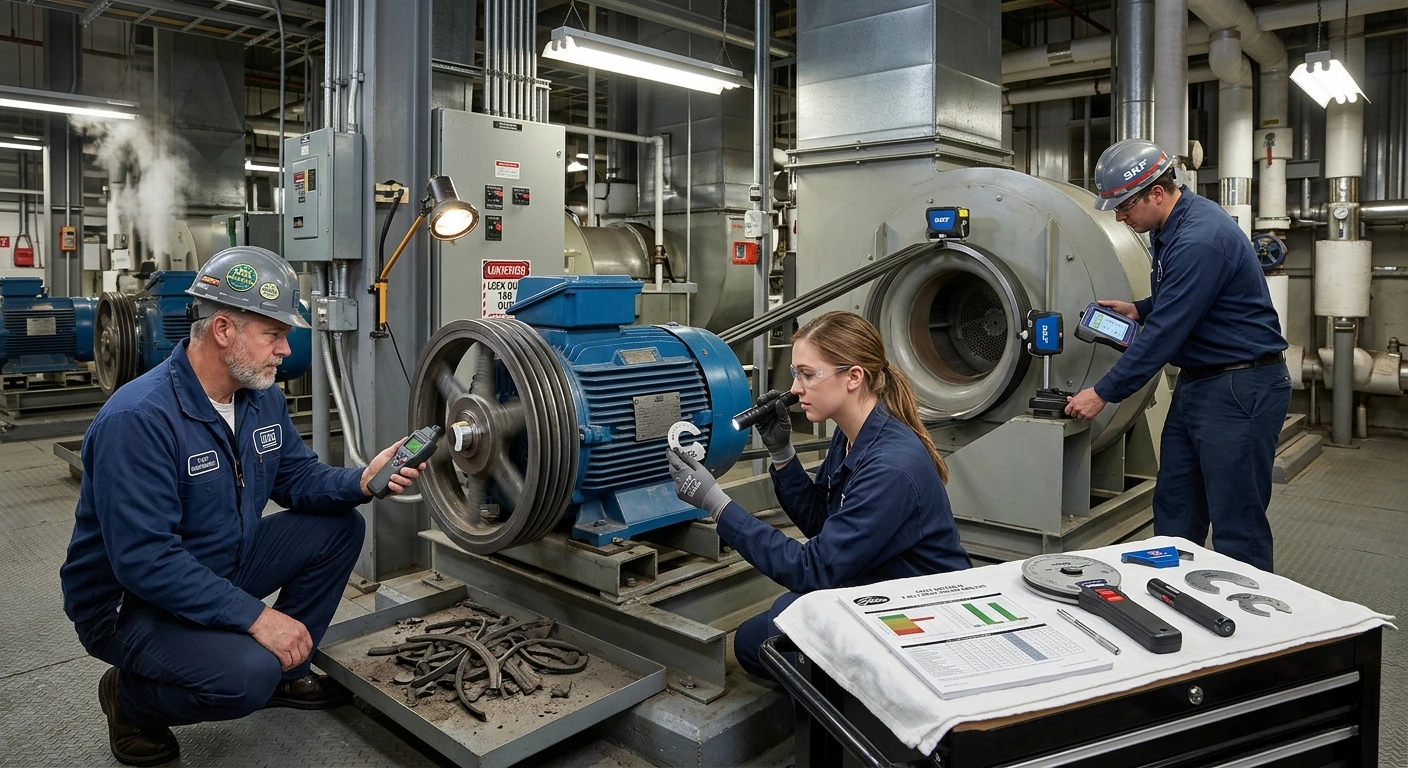
Belt Slip and RPM Loss Reference Table
| Problem Condition | Possible Cause | RPM Impact | Industrial Effect | Recommended Solution |
|---|---|---|---|---|
| Loose belt tension | Improper adjustment | RPM decreases | Low airflow | Adjust belt tension |
| Pulley misalignment | Incorrect installation | Irregular RPM | Vibration issues | Perform alignment |
| Worn V-belt | Aging and heat | Continuous RPM loss | Reduced efficiency | Replace belt |
| Oil contamination | Lubricant leakage | Severe slipping | System instability | Clean or replace belt |
How Technicians Diagnose Belt Slip Problems
Experienced technicians do not rely only on visual inspection. They verify RPM loss using practical troubleshooting methods.
- Measure motor RPM with tachometer
- Measure driven shaft RPM
- Inspect pulley groove wear
- Check shaft alignment condition
- Verify belt tension specifications
- Inspect belt surface for glazing or cracks
Technicians also compare pulley sizing using Motor Pulley Sizing Guide to confirm the system is correctly configured.
For related troubleshooting, see our Pulley Alignment Problems guide and Motor Pulley Sizing Guide.
How to Prevent Belt Slip and RPM Loss
Preventive maintenance plays a major role in reducing belt drive failures. Most RPM loss problems can be avoided through routine inspection.
Recommended maintenance practices include:
- Regular belt tension checks
- Pulley groove inspection
- Periodic shaft alignment verification
- Replacing worn belts early
- Cleaning oil contamination immediately
- Monitoring vibration levels
When replacing pulleys or belts, technicians should also verify belt length using the Belt Length Calculator to ensure proper installation and tension.
Real World Engineering Insight
In continuous-duty HVAC and cooling equipment, belt-drive problems can become more noticeable when the system operates under sustained load and temperature conditions.
A typical troubleshooting scenario may involve high vibration, reduced airflow, or unexpected fan speed. In such a case, technicians should compare expected and measured RPM and then inspect belt condition, pulley wear, tension, and alignment to identify the underlying mechanical problem.
If worn pulleys, damaged belts, or incorrect tension are confirmed, correcting the belt-drive condition and verifying alignment can help restore stable power transmission and expected shaft speed.
Experienced technicians understand that RPM loss is not always an electrical issue. In many industrial failures, the real problem starts with poor mechanical power transfer between the motor shaft, pulley, and belt assembly. Ignoring small belt slip symptoms for long periods can eventually damage bearings, increase vibration, reduce airflow stability, and shorten overall equipment life.
Frequently Asked Questions
What is belt slip in a pulley system?
Belt slip occurs when the belt does not maintain sufficient grip on the pulley surfaces, causing the driven pulley to rotate slower than the theoretical speed predicted by the belt-drive relationship.
How does belt slip affect RPM?
Belt slip can reduce actual driven RPM compared with the theoretical RPM calculated from driver speed and pulley diameters.
What causes RPM loss in industrial systems?
Common causes include belt slip, incorrect belt tension, pulley wear, misalignment, contamination, incorrect pulley sizing, excessive load, and other mechanical conditions.
How can technicians measure RPM loss?
Technicians can use a tachometer to measure the actual shaft RPM and compare it with the expected RPM calculated from the driver speed and pulley dimensions.
Can belt slip damage equipment?
Yes. Persistent belt slip can generate heat, reduce power-transmission efficiency, increase vibration, accelerate belt and pulley wear, and contribute to equipment performance problems.