
How to Measure Pulley Diameter Correctly
How to measure pulley diameter correctly is a critical skill for technicians because even a small measurement error can lead to incorrect belt speed calculations, wrong pulley replacement decisions, reduced equipment performance, and unnecessary downtime. Many maintenance teams spend hours troubleshooting motors, belts, and bearings only to discover that the original pulley measurement was inaccurate.
In industrial environments, pulley diameter affects belt speed, RPM ratios, power transmission, airflow performance, and production output. If the wrong diameter is used during calculations, every result that follows may also be incorrect. This is particularly important when replacing worn pulleys, verifying equipment modifications, or troubleshooting conveyor and belt-driven systems.
This guide explains how technicians accurately measure pulley diameter, which measurement tools produce the best results, common mistakes to avoid, and how pulley dimensions affect overall system performance. Before performing calculations, many engineers verify measurements using the Belt Speed Calculator and compare results against equipment specifications and field measurements.
Why Accurate Pulley Measurement Matters
Pulley diameter is one of the most important inputs used in belt speed calculations and drive ratio analysis. When the diameter value is incorrect, the resulting calculations may no longer represent actual operating conditions.
For example, a conveyor may appear to be operating below its expected throughput. A technician calculates belt speed using a pulley diameter recorded years ago and concludes that the system is operating correctly. However, after inspection, the pulley is found to be worn, reducing its effective diameter and changing actual belt speed.
Situations where accurate pulley measurement becomes critical include:
- Belt speed calculations
- Pulley replacement projects
- Conveyor troubleshooting
- HVAC fan drive inspections
- RPM ratio verification
- Shutdown maintenance activities
- Root cause failure analysis
Engineers frequently reference Pulley Diameter and Belt Speed Relationship when evaluating how pulley size influences belt velocity and equipment performance.
Tools Used to Measure Pulley Diameter
The accuracy of any measurement depends heavily on the tools used. While some technicians rely on tape measures for quick inspections, precision measurements often require more suitable instruments.
Common tools used for pulley measurement include:
- Tape measures
- Steel rulers
- Vernier calipers
- Digital calipers
- Outside micrometers
- Laser measurement tools
For large conveyor pulleys, tape measures may provide sufficient accuracy for general maintenance work. However, for smaller pulleys, precision drives, and critical equipment, Vernier calipers or digital calipers typically produce more reliable results.
Experienced maintenance technicians select measuring tools based on:
- Pulley size
- Required accuracy
- Equipment accessibility
- Inspection objectives
- Replacement requirements
Using the correct tool reduces measurement uncertainty and helps prevent costly errors during troubleshooting and replacement planning.
Step 1: Identify the Correct Pulley
Before measuring anything, technicians must confirm that they are working with the correct pulley. This may sound obvious, but it is one of the most common causes of inaccurate calculations in belt-driven systems.
Before taking measurements, technicians should clearly identify whether they are measuring the driver pulley or the driven pulley. The differences are explained in Driver vs Driven Pulley Explained.
Complex equipment often contains multiple pulleys with different functions. Measuring the wrong pulley can completely invalidate subsequent calculations.
Particular attention should be paid to:
- Driver pulleys
- Driven pulleys
- Intermediate pulleys
- Variable-speed pulleys
- Multi-stage drive systems
Maintenance teams frequently encounter measurement errors during shutdowns when equipment modifications, pulley replacements, or emergency repairs are being performed under time pressure.
The troubleshooting lessons discussed in Common Belt Speed Calculation Mistakes demonstrate how incorrect pulley identification can create misleading belt speed calculations and unnecessary troubleshooting efforts.
Step 2: Measure Pulley Diameter Properly
Once the correct pulley has been identified, technicians can begin the measurement process. The goal is to obtain a reliable diameter value that accurately reflects the pulley currently operating in the system.
A typical measurement procedure includes:
- Shut down equipment and apply lockout/tagout procedures.
- Clean dirt, dust, and debris from the pulley surface.
- Inspect for visible wear or damage.
- Measure across the centerline of the pulley.
- Record the diameter value.
- Repeat the measurement at multiple locations if wear is suspected.
- Compare measurements against equipment records.
When measuring worn pulleys, technicians should avoid relying on a single measurement. Taking multiple readings can reveal uneven wear patterns that affect belt performance and calculation accuracy.
| Measurement Type | Description | Used For | Common Mistake |
|---|---|---|---|
| Outside Diameter | Full outer pulley diameter | General inspections | Assuming it equals pitch diameter |
| Pitch Diameter | Effective belt contact diameter | Speed calculations | Ignoring groove geometry |
| Groove Diameter | Diameter measured within grooves | V-belt analysis | Using worn groove measurements |
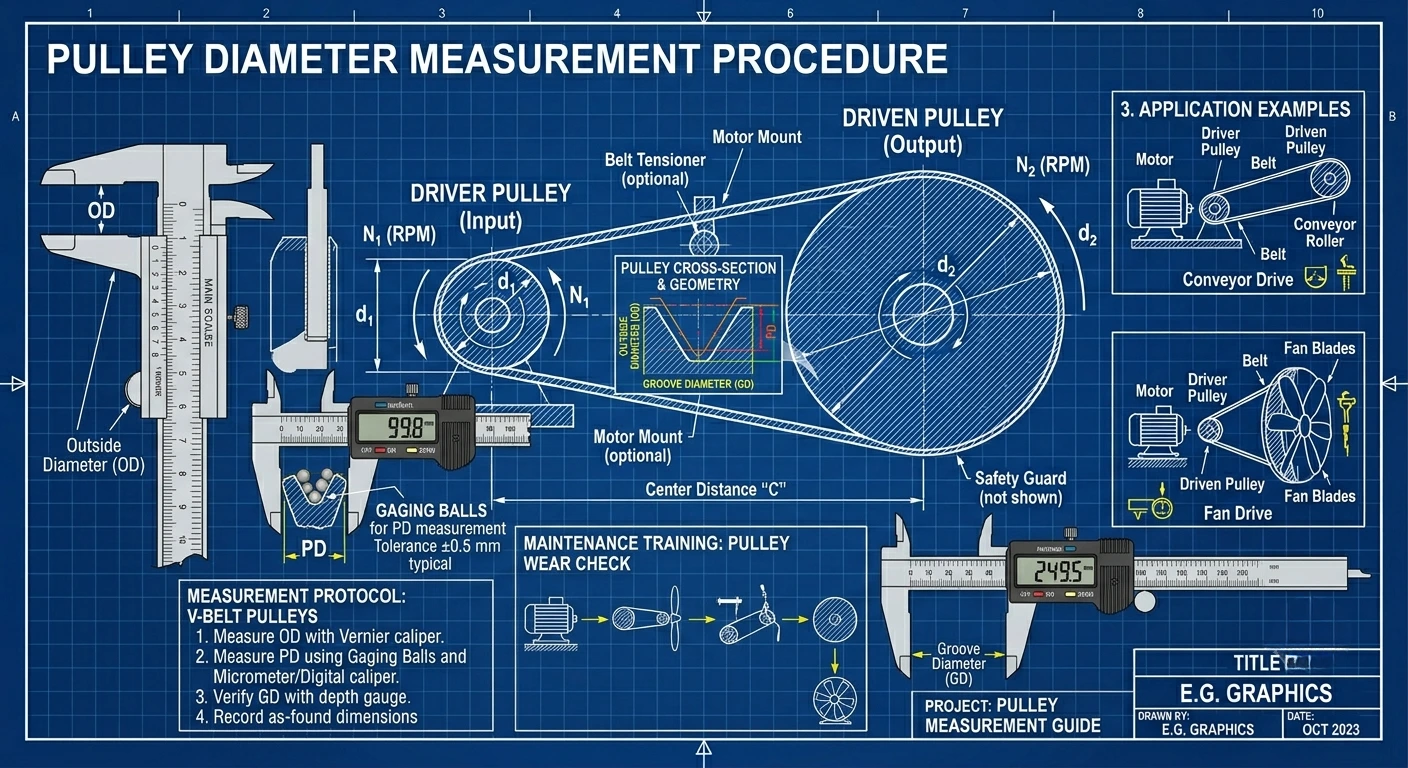
Outside Diameter vs Pitch Diameter
One of the biggest sources of confusion during pulley measurement is the difference between outside diameter and pitch diameter. Many technicians measure the outer edge of the pulley and assume that this value should be used for belt speed calculations. In reality, the correct measurement depends on the purpose of the calculation.
For most belt speed and RPM calculations, pitch diameter is usually more important than outside diameter because it represents the effective point where power is transmitted through the belt.
The outside diameter is the total diameter measured across the outermost edges of the pulley. This measurement is useful for inspections, replacement verification, and general maintenance records.
Pitch diameter is different. It represents the effective diameter where the belt transmits power through the pulley. Because belts operate within grooves rather than on the outer edge, pitch diameter is often the more important value for speed calculations and drive ratio analysis.
Using outside diameter instead of pitch diameter can produce noticeable errors when calculating belt speed, RPM ratios, and equipment performance.
Engineers performing belt speed calculations frequently reference both Belt Speed Formula Explained and RPM to Belt Speed Formula and Calculation to ensure the correct pulley measurement is being used.
Common Pulley Measurement Mistakes
Even experienced maintenance professionals occasionally make pulley measurement mistakes when equipment is difficult to access or when inspections are performed during short shutdown windows.
The most common measurement mistakes include:
- Measuring the wrong pulley
- Using worn pulley dimensions
- Ignoring pitch diameter requirements
- Using low-accuracy measuring tools
- Taking only one measurement
- Recording incorrect units
- Failing to verify historical records
Many of these errors appear minor but can significantly affect troubleshooting decisions. A few millimeters of measurement error may alter calculated belt speed, RPM relationships, and pulley replacement specifications.
Maintenance teams investigating recurring speed-related problems often review Common Belt Speed Calculation Mistakes to identify errors that frequently occur during inspections and calculations.
One best practice is to independently verify critical measurements before ordering replacement parts or modifying operating parameters.
How Pulley Diameter Affects Belt Speed Calculations
Pulley diameter directly influences the speed at which a belt travels. Any change in pulley size can affect belt velocity, drive ratios, airflow performance, conveyor throughput, and equipment efficiency.
Larger pulleys generally increase belt travel distance per revolution, while smaller pulleys reduce it. This relationship explains why accurate diameter measurements are essential for reliable calculations.
When engineers calculate belt speed, they combine pulley diameter and RPM values to estimate how quickly the belt moves through the system. If either value is inaccurate, the resulting speed calculation becomes less reliable.
After verifying pulley dimensions, engineers often use the Pulley RPM Calculator to evaluate how diameter changes influence shaft speed and drive system performance.
Maintenance technicians frequently use the Belt Speed Calculator together with verified pulley measurements to evaluate operating conditions and confirm whether equipment is performing as expected.
This relationship becomes particularly important in:
- Conveyor systems
- HVAC fan drives
- Packaging equipment
- Mining conveyors
- Material handling systems
- Industrial process equipment
For a deeper understanding of how diameter changes affect system performance, engineers often review Pulley Diameter and Belt Speed Relationship before making adjustments to pulley sizes or drive configurations.
Incorrect diameter measurements can also affect transmitted torque calculations. In some applications, technicians may suspect a motor loading issue when the real problem originates from inaccurate pulley measurements and incorrect speed assumptions.
Accurate pulley diameter measurements are also essential when calculating drive ratios. Engineers frequently use the guidance in How to Calculate Pulley Ratio to determine how pulley size changes affect RPM and equipment performance.
Related Calculators and Troubleshooting Guides
Accurate pulley measurement is only one part of maintaining reliable belt-driven equipment. Technicians should verify pulley dimensions together with RPM, belt condition, alignment, vibration levels, and operating performance before making maintenance decisions.
- Belt Speed Calculator
- Mechanical Calculators Hub
- How to Calculate Belt Speed Step by Step
- Belt Speed Formula Explained
- Pulley Diameter and Belt Speed Relationship
- RPM to Belt Speed Formula and Calculation
- Common Belt Speed Calculation Mistakes
- What Is a Good Belt Speed
Engineers working with drive systems often continue their research into How to Calculate Pulley Ratio when evaluating speed changes, pulley replacements, and drive modifications.
Real-World Engineering Insight
During shutdown maintenance projects in Gulf cement plants, manufacturing facilities, and material handling systems, pulley measurement errors are more common than many engineers realize. In several cases, maintenance teams spent considerable time troubleshooting conveyors and fan systems only to discover that the original pulley dimensions used in calculations were incorrect.
One common issue occurs when worn pulleys remain in service for years while historical records continue to show original dimensions. Because wear develops gradually, technicians may not immediately notice that the effective pulley diameter has changed.
Another recurring problem involves emergency replacements. Under production pressure, replacement pulleys are sometimes ordered using estimated dimensions rather than verified measurements. The result can be incorrect belt speed, reduced throughput, increased vibration, and unnecessary maintenance costs.
Experienced reliability engineers therefore verify pulley dimensions during shutdown inspections, compare measurements with OEM records, review belt condition, and validate calculations before approving equipment modifications.
The most effective maintenance teams treat pulley measurement as a precision task rather than a quick inspection activity. A few minutes spent verifying dimensions can prevent weeks of troubleshooting later.

Frequently Asked Questions
How do you measure pulley diameter correctly?
Measure across the centerline of the pulley using an appropriate measuring tool such as a tape measure, Vernier caliper, or digital caliper. Multiple measurements should be taken if wear is suspected.
What is the difference between outside diameter and pitch diameter?
Outside diameter is the total pulley diameter measured across the outer edges, while pitch diameter represents the effective diameter where the belt transmits power and is commonly used in speed calculations.
Can worn pulleys affect belt speed calculations?
Yes. Pulley wear can reduce effective diameter, leading to inaccurate belt speed calculations and incorrect troubleshooting conclusions.
Which tool is best for measuring pulley diameter?
Digital calipers and Vernier calipers provide higher accuracy than tape measures, particularly for smaller pulleys and precision drive systems.
Why is pulley diameter important in belt speed calculations?
Pulley diameter directly affects belt travel distance per revolution. Incorrect diameter values can produce inaccurate speed calculations and performance assessments.
Should pulley measurements be verified before replacement?
Yes. Verifying pulley dimensions before ordering replacement parts helps prevent installation issues, speed mismatches, and unnecessary downtime.