
How to Increase RPM Using Pulleys Without Changing the Motor
How to increase RPM using pulleys is a common question among maintenance technicians, engineers, and plant operators who want to improve machine performance without replacing the motor. In many industrial facilities, production bottlenecks, low airflow, insufficient conveyor speed, or reduced machine output can often be corrected through pulley modifications rather than expensive equipment upgrades.
One of the biggest mistakes technicians make is changing pulley sizes without calculating the impact on RPM, belt speed, torque, and equipment reliability. A simple pulley change can significantly increase output speed, but it can also create excessive vibration, belt wear, bearing loading, and unexpected maintenance problems if not properly evaluated.
Before making any pulley changes, engineers typically verify existing operating conditions using the Pulley RPM Calculator and evaluate system performance with the Belt Speed Calculator. These tools help predict speed changes before modifications are implemented.
This guide explains how pulley systems affect RPM, practical methods used to increase speed, common mistakes to avoid, and the real-world considerations maintenance teams should evaluate before modifying equipment.
Why RPM Changes Matter in Industrial Equipment
RPM, or revolutions per minute, directly affects how quickly a machine performs work. Conveyor throughput, fan airflow, pump performance, machine cycle times, and production rates are all influenced by rotational speed.
In many cases, equipment appears mechanically healthy but fails to meet production targets because operating speed is lower than required. Before considering motor replacement, experienced engineers often evaluate whether pulley ratio adjustments can provide the desired speed increase.
Common situations where RPM increases are considered include:
- Increasing conveyor production capacity
- Improving fan airflow performance
- Boosting machine output rates
- Compensating for process modifications
- Optimizing equipment efficiency
- Correcting previous pulley selection errors
Understanding the relationship between pulley size and speed is critical because every RPM increase also affects belt speed, transmitted torque, bearing loads, and overall equipment reliability.
How Pulley Size Affects RPM
Pulley diameter is one of the most important factors controlling rotational speed in belt-driven systems. The relationship is simple: changing pulley size changes the speed transferred through the belt.
A larger driver pulley moves more belt per revolution and generally increases output speed. A smaller driver pulley typically reduces the amount of belt movement and lowers output speed.
Similarly, reducing the diameter of the driven pulley usually increases RPM, while increasing the diameter of the driven pulley reduces RPM.
This relationship forms the foundation of pulley ratio calculations and speed modification projects.
Engineers often review How to Calculate Pulley Ratio and Driver vs Driven Pulley Explained before making pulley changes to ensure the correct pulley is being modified.
Before calculations are performed, pulley dimensions should always be verified using the procedures explained in How to Measure Pulley Diameter Correctly.
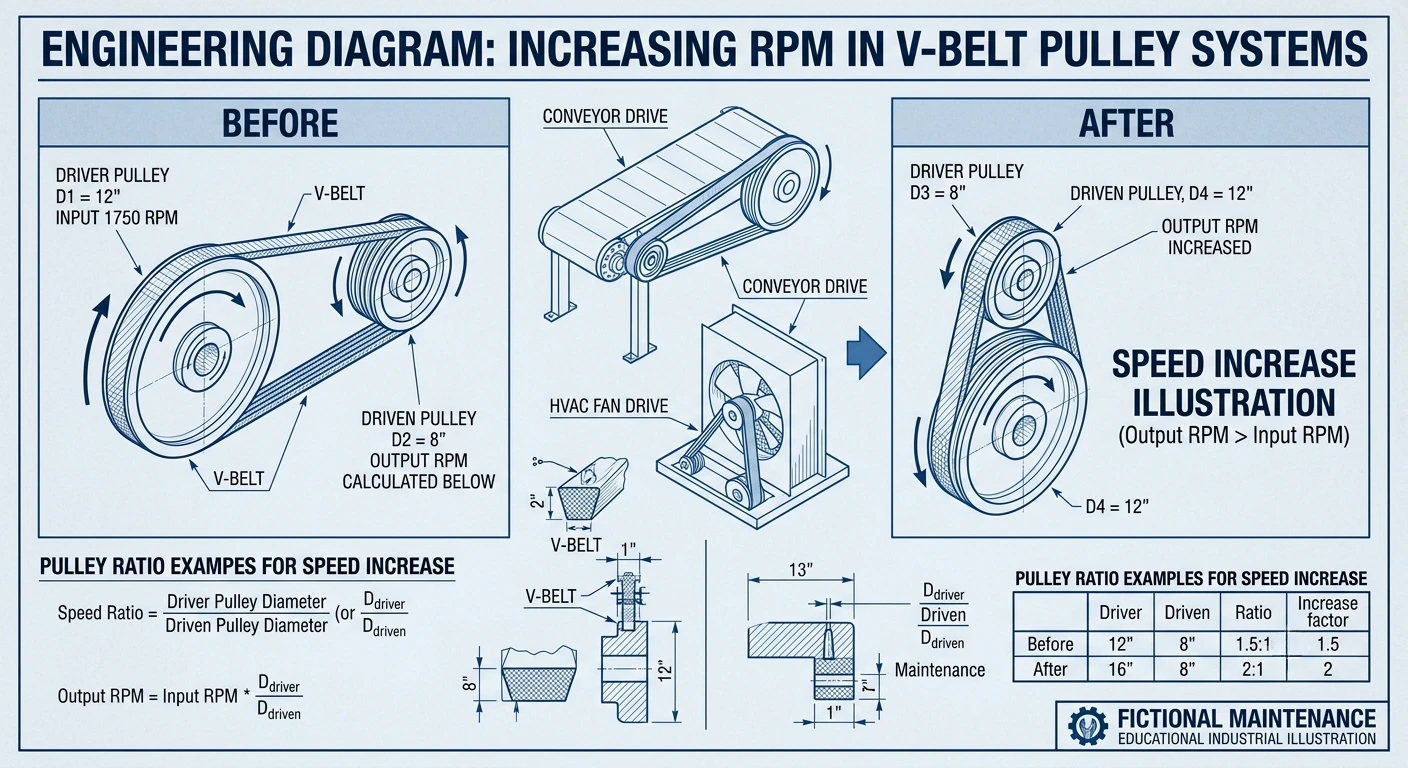
Methods to Increase RPM Using Pulleys
There are two primary methods used to increase RPM in a belt-driven system. The correct method depends on equipment design, available space, operating requirements, and reliability considerations.
The most common approach is increasing the diameter of the driver pulley. Because the driver pulley is connected directly to the motor, increasing its diameter allows more belt movement per revolution and increases the speed transmitted to the driven pulley.
The second method is reducing the diameter of the driven pulley. A smaller driven pulley requires fewer belt movements to complete one revolution, resulting in higher output RPM.
In some applications, engineers combine both methods to achieve larger speed increases. However, these changes must be carefully evaluated because excessive RPM increases can create new maintenance challenges.
Before implementing modifications, maintenance teams typically:
- Calculate existing pulley ratios
- Estimate expected RPM changes
- Verify belt speed limitations
- Review bearing operating limits
- Check OEM specifications
- Assess equipment reliability impacts
For many systems, the most accurate approach is to calculate expected speed changes first and then verify the results using actual RPM measurements after installation.
| Pulley Change | RPM Effect | Typical Use Case | Risk Level |
|---|---|---|---|
| Larger Driver Pulley | RPM Increases | Conveyors, Fans | Moderate |
| Smaller Driven Pulley | RPM Increases | Machine Speed Improvements | Moderate |
| Both Changes Combined | Large RPM Increase | Special Applications | High |
The easiest way to increase RPM using pulleys is to install a larger driver pulley or a smaller driven pulley. However, engineers should also evaluate belt speed, torque requirements, bearing limits, and OEM recommendations before making modifications.
Which Pulley Should You Change to Increase RPM?
One of the most common questions during maintenance upgrades is whether the driver pulley or the driven pulley should be modified to increase RPM. The answer depends on equipment design, available space, operating limits, and the amount of speed increase required.
In most industrial applications, technicians can increase RPM using either of the following approaches:
- Increase the diameter of the driver pulley.
- Decrease the diameter of the driven pulley.
Both methods increase output speed, but each has different practical considerations.
Increasing the driver pulley is often preferred when sufficient shaft clearance and belt length adjustments are available. This method allows the motor to transfer more belt movement per revolution.
Reducing the driven pulley diameter can also increase RPM, but engineers must verify that the pulley remains within manufacturer operating limits and does not create excessive belt bending stresses.
Before making changes, maintenance teams should calculate the expected speed increase using the Pulley RPM Calculator and verify the resulting belt speed using the Belt Speed Calculator.
Real Industrial Example
Consider a conveyor system driven by a 1,450 RPM motor. The system currently uses:
- Driver Pulley = 100 mm
- Driven Pulley = 200 mm
The pulley ratio reduces output speed, allowing the conveyor to operate at the required production rate.
Management requests a production increase, and engineers determine that a higher conveyor speed is needed. Instead of replacing the motor, the maintenance team evaluates pulley modifications.
After reviewing the system, engineers increase the driver pulley diameter from 100 mm to 125 mm.
The result is:
- Higher output RPM
- Increased belt speed
- Improved conveyor throughput
- No motor replacement cost
However, the project does not end with RPM calculations. Engineers must also evaluate bearing loads, belt tension, shaft stress, and equipment reliability before approving the modification.
This is why experienced maintenance teams treat pulley changes as engineering projects rather than simple component replacements.
Common Mistakes When Increasing RPM
Increasing RPM may appear straightforward, but many industrial problems begin when pulley modifications are made without fully evaluating their consequences.
The most common mistakes include:
- Changing pulley sizes without calculations
- Ignoring pulley ratio effects
- Exceeding belt speed recommendations
- Using incorrect pulley measurements
- Ignoring bearing operating limits
- Overlooking motor load increases
- Failing to verify actual RPM after installation
Many of these errors originate during the planning phase. Technicians often focus on achieving higher RPM while overlooking secondary effects that impact equipment reliability.
To reduce risk, maintenance teams should review Common Belt Speed Calculation Mistakes and verify pulley dimensions using How to Measure Pulley Diameter Correctly before implementing modifications.
How Increased RPM Affects Belt Speed and Torque
RPM changes rarely affect only speed. In most belt-driven systems, increasing RPM also changes belt speed and influences torque characteristics.
As RPM increases, the belt typically moves faster through the system. Higher belt speed may improve productivity, but it can also increase wear, heat generation, and maintenance requirements.
Technicians who want to manually verify speed calculations can follow the procedure explained in How to Calculate Belt Speed Step by Step.
Before increasing speed, engineers should compare operating values against the recommendations discussed in What Is a Good Belt Speed.
Engineers often evaluate speed changes together with the guidance provided in RPM to Belt Speed Formula and Calculation and Pulley Diameter and Belt Speed Relationship.
Another important consideration is torque. In many applications, increasing RPM through pulley changes may reduce available output torque. While this may be acceptable for some machines, it can create performance issues in systems handling heavy loads.
This trade-off becomes particularly important in:
- Conveyor systems
- Material handling equipment
- Industrial mixers
- Heavy-duty pumps
- Large HVAC systems
For applications where load capacity is critical, engineers frequently evaluate torque requirements using the Torque Calculator before implementing RPM increases.
The most successful pulley modification projects achieve a balance between speed improvement, equipment reliability, and long-term maintenance performance.
Related Calculators and Troubleshooting Guides
Increasing RPM successfully requires more than changing pulley sizes. Engineers should verify pulley dimensions, calculate speed changes, evaluate belt speed, review torque requirements, and confirm equipment operating limits before implementing modifications.
- Pulley RPM Calculator
- Belt Speed Calculator
- Torque Calculator
- Mechanical Calculators Hub
- How to Calculate Pulley Ratio
- Driver vs Driven Pulley Explained
- How to Measure Pulley Diameter Correctly
- RPM to Belt Speed Formula and Calculation
- Pulley Diameter and Belt Speed Relationship
- Common Belt Speed Calculation Mistakes
Maintenance teams evaluating speed modifications often continue their research into How to Reduce RPM Using Pulleys when troubleshooting overspeed conditions or optimizing equipment performance.
Real-World Engineering Insight
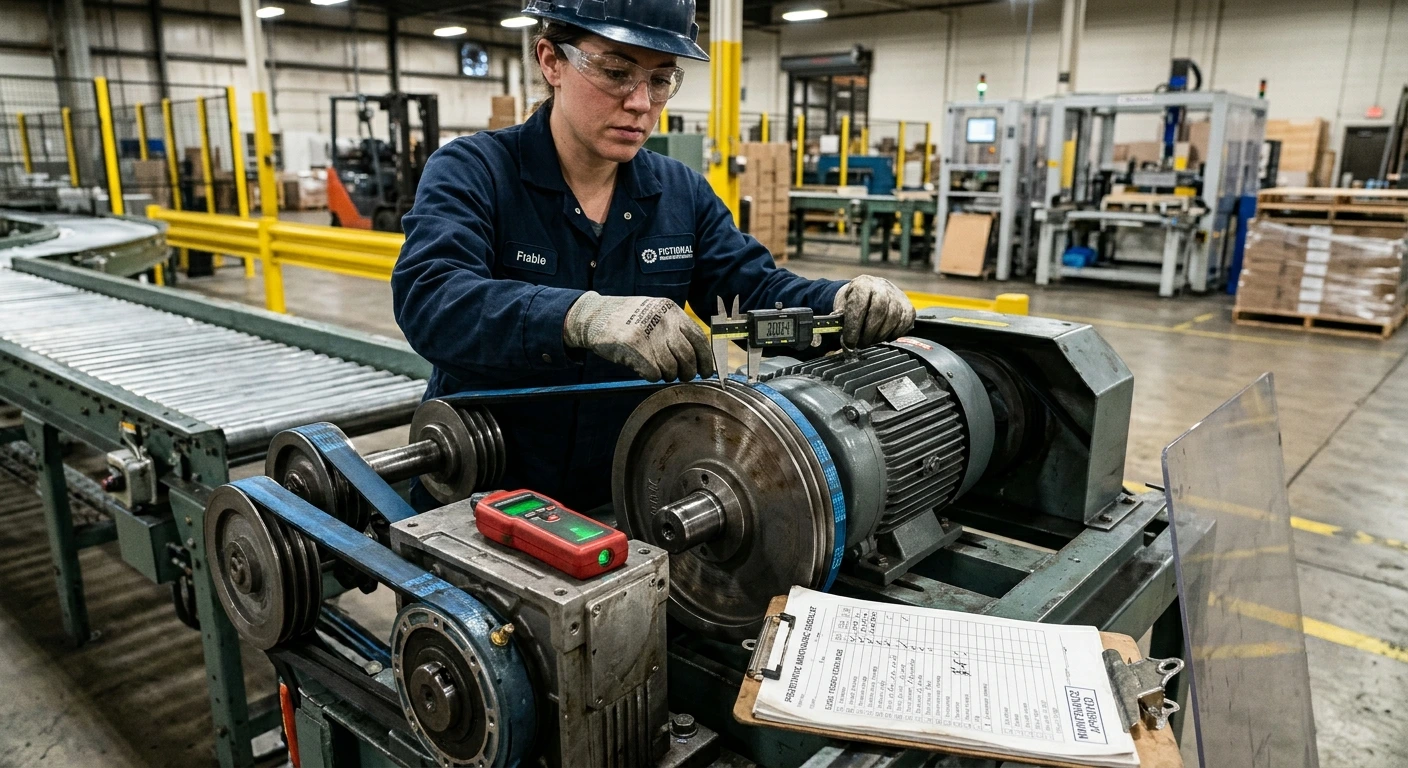
During maintenance projects across Gulf manufacturing facilities, one of the most common requests from production departments is increasing machine speed without replacing the motor. While pulley modifications can often achieve this objective, successful projects require a complete evaluation of the entire drive system rather than focusing only on RPM.
In one conveyor application, production output was below target, and management initially requested a larger motor. After reviewing pulley sizes and operating conditions, engineers increased the driver pulley diameter and achieved the required throughput increase without replacing the motor.
However, the project also required adjustments to belt tension, alignment verification, and bearing inspections because higher operating speeds introduced additional mechanical stresses.
Another common issue occurs when technicians increase RPM without reviewing Original Equipment Manufacturer (OEM) recommendations. Although the equipment may initially operate correctly, excessive speed can accelerate belt wear, increase vibration levels, and shorten bearing life.
Experienced reliability engineers therefore evaluate:
- RPM changes
- Belt speed limits
- Bearing operating ranges
- Shaft loading conditions
- Motor performance
- Long-term maintenance impacts
The most successful RPM increase projects are those that improve productivity while maintaining equipment reliability and minimizing future maintenance costs.
Frequently Asked Questions
Can RPM be increased without replacing the motor?
Yes. In many belt-driven systems, RPM can be increased by changing pulley sizes while keeping the existing motor.
Which pulley should be changed to increase RPM?
RPM can usually be increased by installing a larger driver pulley, a smaller driven pulley, or a combination of both depending on system requirements.
Does increasing RPM affect belt speed?
Yes. Higher RPM generally increases belt speed, which can affect productivity, wear rates, and equipment operating conditions.
Can increasing RPM reduce torque?
In some applications, increasing RPM through pulley modifications may reduce available output torque. Engineers should evaluate load requirements before making changes.
What are the risks of increasing RPM too much?
Excessive RPM can increase vibration, bearing temperatures, belt wear, shaft stress, and overall maintenance requirements.
Should OEM recommendations be checked before modifying pulleys?
Yes. OEM specifications help ensure pulley modifications remain within safe operating limits and do not negatively affect equipment reliability.