
Key Takeaways
- Newton-meters (Nm) and pound-feet (lb-ft) are the two most commonly used units for measuring torque.
- This calculator instantly converts Nm to lb-ft using the standard engineering conversion factor for accurate and reliable results.
- Accurate torque conversion helps prevent over-tightening, under-tightening, equipment damage, and premature component failure.
- Nm to lb-ft conversion is widely used in industrial maintenance, automotive repair, manufacturing, mechanical engineering, equipment installation, and torque wrench applications.
- Always verify the recommended torque specification in the equipment manufacturer's manual before tightening bolts or mechanical components.
What Does Your Torque Result Mean?
Your converted torque value represents the equivalent rotational force in pound-feet (lb-ft) based on the Newton-meter (Nm) value you entered. Since both units measure the same physical quantity, the conversion simply expresses torque using the imperial measurement system commonly found in equipment manuals and torque wrench specifications.
Accurate torque conversion is essential when working with machinery, vehicles, industrial equipment, and mechanical assemblies that use different unit systems. Using the correct unit helps ensure components are tightened according to the manufacturer's recommended specifications, reducing the risk of equipment damage and maintenance failures.
Common Nm to lb-ft Conversion Examples
| Torque (Nm) | Equivalent (lb-ft) | Typical Application |
|---|---|---|
| 10 Nm | 7.38 lb-ft | Electronic devices and small fasteners |
| 50 Nm | 36.88 lb-ft | Automotive parts, pumps and couplings |
| 100 Nm | 73.76 lb-ft | Motors, gearboxes and industrial machinery |
| 200 Nm | 147.51 lb-ft | Heavy equipment, structural bolts and flanges |
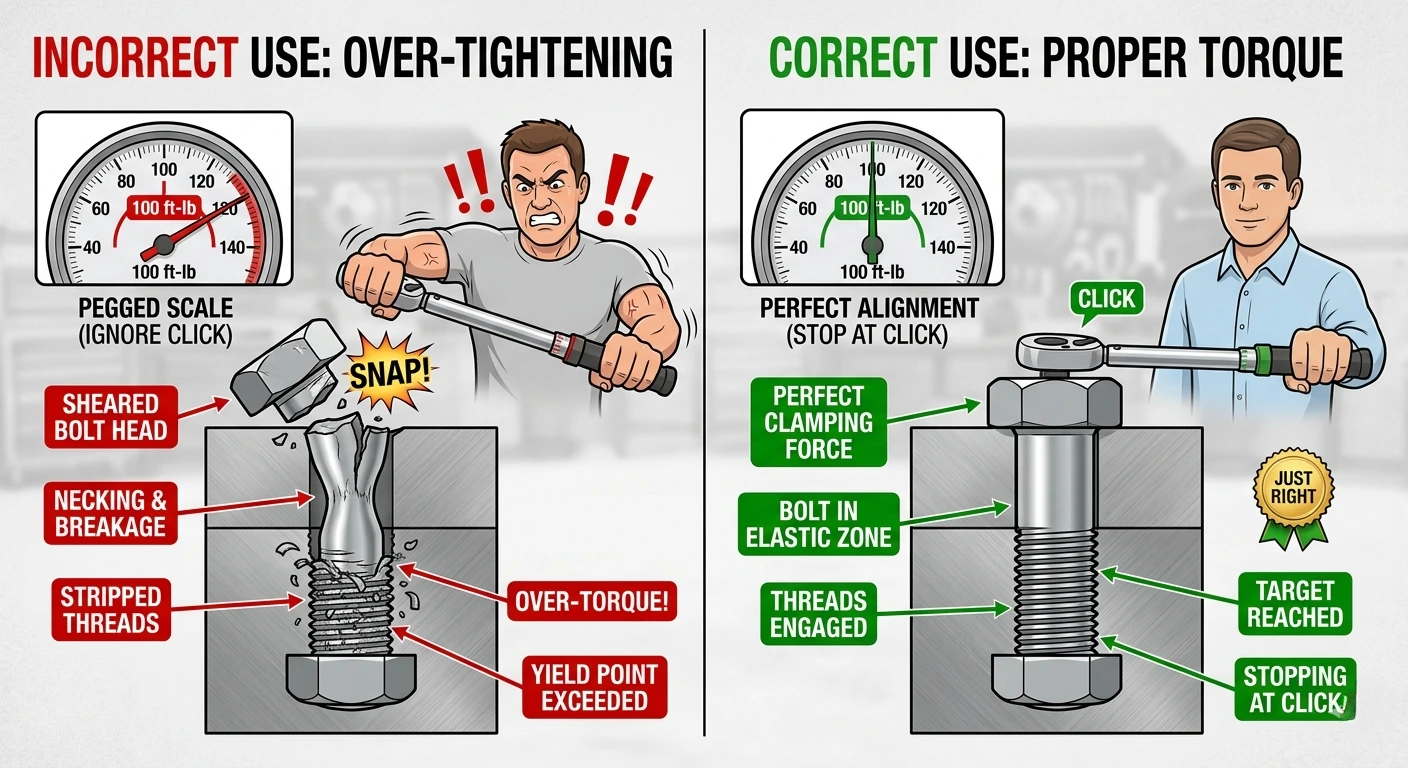
Before applying torque, always verify whether the equipment manufacturer specifies values in Nm or lb-ft. Converting to the wrong unit can result in over-tightening or under-tightening, potentially causing bolt failure, thread damage, vibration, or premature equipment wear.
Want to understand how torque units are converted? Read our detailed guide on Torque Conversion Chart & Unit Guide to learn more about Nm, lb-ft, kg-m, and other commonly used torque units.
Quick Nm to lb-ft Conversion Chart
| Torque (Nm) | Torque (lb-ft) |
|---|---|
| 10 | 7.38 |
| 20 | 14.75 |
| 50 | 36.88 |
| 100 | 73.76 |
| 150 | 110.63 |
| 200 | 147.51 |
| 250 | 184.39 |
| 300 | 221.27 |
Nm to lb-ft Conversion Formula
Converting torque from Newton-meters (Nm) to pound-feet (lb-ft) requires a standard engineering conversion factor. This conversion is widely used when equipment manuals, torque wrenches, and manufacturer specifications use different unit systems.
Standard Conversion Formula
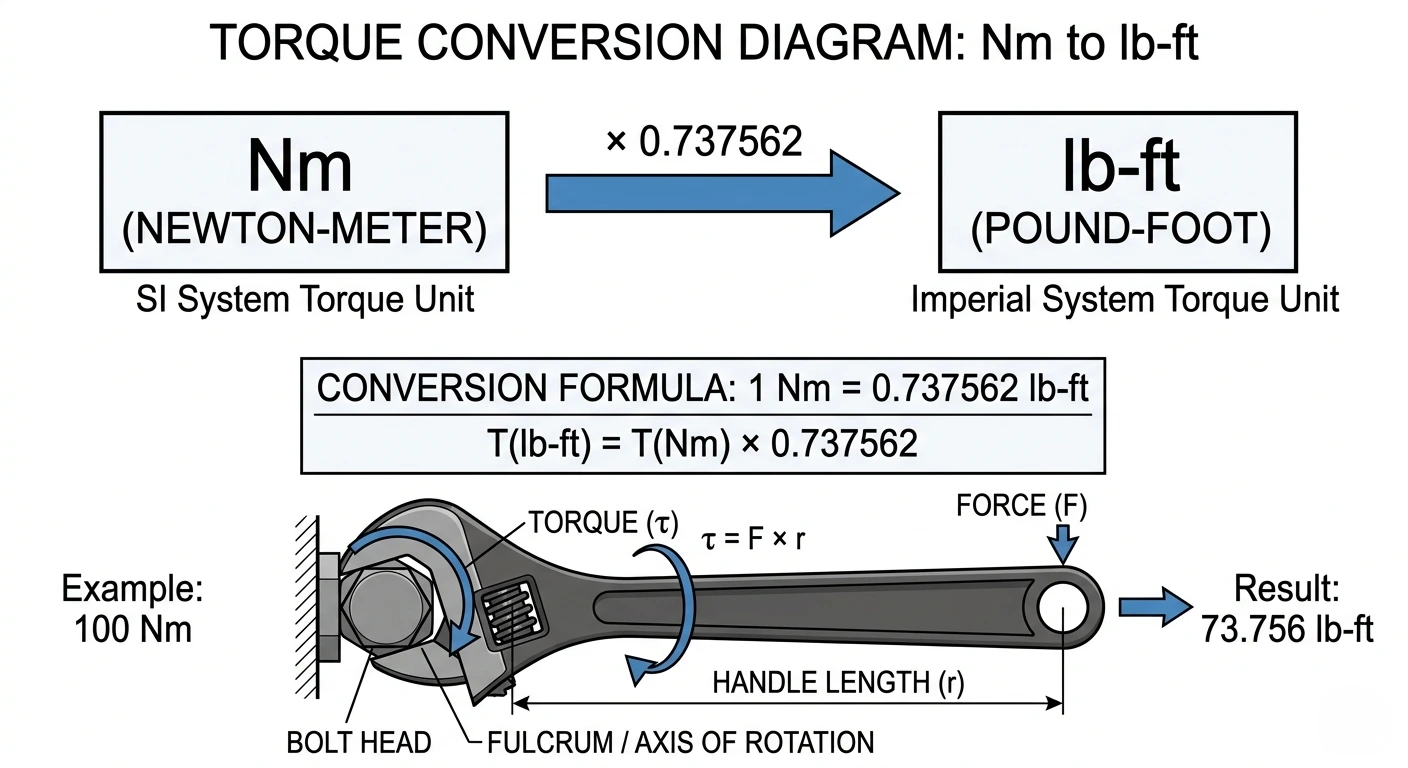
lb-ft = Nm × 0.737562
For example, if the torque value is 100 Nm, the equivalent value is:
- 100 × 0.737562 = 73.76 lb-ft
This standard conversion factor ensures accurate results when working with mechanical equipment, automotive systems, industrial machinery, and torque wrench settings.
Standard Torque Formula
Torque (T) = Force (F) × Distance (r)
Unit: Newton-meter (Nm)
Where:
- T = Torque (Newton-meter, Nm)
- F = Applied Force (Newton, N)
- r = Lever Arm Distance (Meter, m)
Newton-meter (Nm) and pound-foot (lb-ft) measure the same physical quantity—torque. The only difference is the measurement system: Nm is used in the metric system, while lb-ft is commonly used in the imperial system.
Worked Conversion Example
Suppose an equipment manual specifies a tightening torque of 100 Nm, but your torque wrench is calibrated in lb-ft. Before tightening the fastener, you need to convert the value into the correct unit.
Step 1
Write down the torque value in Newton-meters.
100 Nm
Step 2
Multiply by the standard conversion factor.
100 × 0.737562
Step 3
73.76 lb-ft
This means a torque specification of 100 Nm is equivalent to 73.76 lb-ft. Performing the correct conversion ensures that bolts, couplings, flanges, and other mechanical components are tightened according to the manufacturer's specifications, reducing the risk of equipment damage and maintenance failures.
Always confirm whether your equipment manual and torque wrench use Nm or lb-ft. Applying the wrong unit can result in incorrect tightening, leading to thread damage, bolt loosening, vibration, or premature component failure.
The illustration below shows the standard engineering formula used to convert torque from Newton-meters (Nm) to pound-feet (lb-ft). Understanding this conversion helps technicians interpret equipment manuals and set torque wrenches correctly.
👉 Learn more about torque unit conversions: Nm to lb-ft Conversion Chart & Unit Guide
Real Industrial Applications of Nm to lb-ft Torque Conversion
Accurate Nm to lb-ft torque conversion is essential whenever equipment manuals, torque wrenches, or manufacturer specifications use different measurement systems. Converting torque correctly helps maintenance professionals apply the specified tightening force, reducing the risk of equipment failure, safety issues, and costly rework.
In many industrial plants, European equipment is supplied with metric (Nm) torque values, while imported tools or older equipment may use imperial (lb-ft) units. A reliable torque converter helps engineers and technicians work confidently across both systems.
Common Industrial Applications
- Bolt Tightening: Convert torque specifications before tightening structural bolts, flanges, and machine assemblies.
- Pump Maintenance: Follow the correct torque values when installing pump casings, bearing housings, and coupling bolts.
- Electric Motors: Convert manufacturer torque specifications before securing motor mounting bolts and alignment components.
- Gearboxes: Apply the correct converted torque values during gearbox assembly, maintenance, and repairs.
- Industrial Machinery: Ensure accurate torque settings when installing compressors, conveyors, rotating equipment, and production machinery.
- Automotive Maintenance: Convert torque values correctly when servicing wheel nuts, engine components, brake systems, and suspension parts.
Before tightening any fastener, always confirm whether the specified torque is given in Nm or lb-ft. Using the wrong unit can result in incorrect bolt preload, leading to loose connections, thread damage, leaks, vibration, or premature equipment failure.
Why Accurate Torque Conversion Matters
Accurate Nm to lb-ft torque conversion is just as important as applying the correct torque itself. Even a small conversion error can result in over-tightening or under-tightening, increasing the risk of thread damage, loose fasteners, vibration, leakage, and premature equipment failure.
Maintenance engineers and technicians frequently work with equipment manufactured in different countries. Since some manuals specify torque in Newton-meters (Nm) while others use pound-feet (lb-ft), converting the value correctly ensures maintenance work is completed safely and according to the manufacturer's recommendations.
Before tightening any fastener, verify whether the specified torque is provided in Nm or lb-ft. Always use a calibrated torque wrench and follow the manufacturer's tightening sequence to achieve the correct bolt preload and improve equipment reliability.

👉 Learn more about practical torque applications: Real-Life Torque Calculation Examples
Nm vs lb-ft – What's the Difference?
Both Newton-meters (Nm) and pound-feet (lb-ft) measure the same physical quantity—torque. The difference lies in the measurement system used.
| Unit | Measurement System | Common Use |
|---|---|---|
| Nm | Metric (SI) | Industrial equipment, European machinery, engineering manuals |
| lb-ft | Imperial | Automotive, North American equipment, torque wrenches, service manuals |
👉 Learn more about torque measurement systems: Torque Units Explained
Common Nm to lb-ft Conversion Mistakes and Technician Tips
Although converting torque from Newton-meters (Nm) to pound-feet (lb-ft) is straightforward, simple mistakes can still lead to incorrect torque settings. Using the wrong unit or conversion factor may result in improper bolt preload, equipment damage, or maintenance failures. The following tips can help ensure accurate and reliable torque conversions.
| Common Mistake | Why It Matters | Best Practice |
|---|---|---|
| Using the wrong conversion factor | Even small conversion errors can produce incorrect torque settings. | Always use the standard engineering conversion factor or a trusted converter. |
| Confusing Nm with lb-ft | Applying the wrong unit may result in over-tightening or under-tightening. | Verify the unit specified in the equipment manual before applying torque. |
| Ignoring manufacturer specifications | Different machines require different tightening torque values. | Always follow the OEM or equipment manufacturer's recommended torque specifications. |
| Using an uncalibrated torque wrench | An inaccurate torque wrench can apply the wrong tightening force. | Calibrate torque tools regularly according to the manufacturer's recommendations. |
| Skipping a final verification | Incorrect settings may go unnoticed until equipment is in operation. | Double-check the converted value before tightening critical components. |
Technician Tips
- ✔ Confirm whether the specification is in Nm or lb-ft before starting work.
- ✔ Use a calibrated torque wrench for critical maintenance tasks.
- ✔ Verify converted values before tightening structural or rotating equipment.
- ✔ Follow the manufacturer's recommended tightening sequence.
- ✔ Record torque values during preventive maintenance for future inspections.
- ✔ Recheck torque after commissioning if recommended by the equipment manufacturer.
Applying the correct torque value is only effective if the correct unit is used. Always verify whether the specification is given in Nm or lb-ft before tightening fasteners or servicing mechanical equipment.
Related Torque Resources
Related Maintenance Calculators
Continue Your Torque Learning
Expand your knowledge of torque measurement, unit conversion, and industrial maintenance with these related engineering resources. These guides will help you understand torque specifications, use torque wrenches correctly, and avoid common tightening mistakes.
Torque Conversion Chart
Reference table for converting between Nm, lb-ft, lb-in, kgf-m, and other common torque units.
Torque Units Explained
Learn the differences between Newton-meters, pound-feet, pound-inches, and other torque units.
Torque Wrench Calibration Guide
Understand why calibration is essential for achieving accurate and repeatable torque values.
Related Maintenance Calculators
Explore engineering calculators for belt length, pulley RPM, belt speed, and other industrial maintenance tasks.
Frequently Asked Questions (FAQs)
How do I convert Nm to lb-ft?
To convert Newton-meters (Nm) to pound-feet (lb-ft), multiply the torque value by 0.737562. For example, 100 Nm × 0.737562 = 73.76 lb-ft. You can also use the Maitenics Nm to lb-ft Converter for instant and accurate results.
What is the formula to convert Nm to lb-ft?
The standard engineering conversion formula is: lb-ft = Nm × 0.737562. This conversion factor is widely used in industrial maintenance, automotive repair, and mechanical engineering.
How many lb-ft is 100 Nm?
100 Nm equals 73.76 lb-ft. This is one of the most commonly converted torque values for automotive and industrial maintenance applications.
What is the difference between Nm and lb-ft?
Both Nm (Newton-meters) and lb-ft (pound-feet) measure torque. The difference is the measurement system: Nm belongs to the metric (SI) system, while lb-ft belongs to the imperial system.
When should I use Nm instead of lb-ft?
Use the unit specified by the equipment manufacturer. Most European and Asian machinery uses Nm, while many North American vehicles and tools use lb-ft.
Why is accurate torque conversion important?
Using the wrong torque unit can result in over-tightening or under-tightening fasteners. Accurate conversion helps prevent damaged threads, loose bolts, vibration, leaks, and premature equipment failure.
Can I use this converter for torque wrench settings?
Yes. If your equipment manual specifies torque in Nm but your torque wrench displays lb-ft (or vice versa), this converter helps you determine the correct equivalent value. Always verify the manufacturer's recommended torque specification before tightening.
Who can use this Nm to lb-ft Converter?
This converter is designed for maintenance engineers, mechanical engineers, technicians, automotive professionals, students, and anyone who needs to convert torque units accurately.
Is this Nm to lb-ft Converter free?
Yes. The Maitenics Nm to lb-ft Converter is completely free to use on desktop, tablet, and mobile devices without registration.
How do I convert lb-ft back to Nm?
To convert lb-ft to Nm, multiply the pound-foot value by 1.35582. For example, 50 lb-ft × 1.35582 = 67.79 Nm.
Final Thoughts
Accurate Nm to lb-ft torque conversion is essential for safe equipment assembly, preventive maintenance, and reliable mechanical repairs. Whether you are working on industrial machinery, pumps, electric motors, gearboxes, or automotive components, using the correct torque unit helps ensure fasteners are tightened according to the manufacturer's specifications.
The free Maitenics Nm to lb-ft Converter provides instant and accurate torque conversions for engineers, technicians, mechanics, students, and maintenance professionals. Simply enter the torque value in Newton-meters (Nm) to get the equivalent value in pound-feet (lb-ft), helping you work confidently with both metric and imperial torque specifications.
Continue Learning
Expand your engineering knowledge with these related Maitenics resources:
- Torque Conversion Chart – Convert between Nm, lb-ft, lb-in, kgf-m, and other common torque units.
- Torque Units Explained – Learn when and where different torque units are used.
- Torque Wrench Calibration Guide – Improve torque accuracy with proper tool calibration.
- Explore All Maintenance Calculators – Discover free engineering calculators for industrial maintenance.
Although this converter provides accurate engineering unit conversions, always verify the required torque specification in the equipment manufacturer's documentation before tightening critical fasteners. Use a calibrated torque wrench and follow the recommended tightening sequence for the best results.
Need more engineering tools? Visit our Maintenance Calculators Hub to access practical calculators designed for maintenance engineers, technicians, mechanics, students, and industrial professionals.