
Maximum Recommended Belt Speed
Maximum recommended belt speed is one of the most important factors affecting conveyor reliability, production efficiency, and maintenance costs. Many engineers assume that increasing belt speed will always improve production, but operating beyond practical speed limits can lead to excessive belt wear, material spillage, dust generation, bearing failures, and costly downtime.
In industrial facilities, conveyor performance is rarely limited by speed alone. Every belt conveyor is designed to operate within a safe range based on its application, belt construction, material characteristics, pulley arrangement, and the Original Equipment Manufacturer (OEM) recommendations. Exceeding those limits may improve throughput temporarily, but it often reduces equipment reliability over the long term.
Before modifying conveyor speed, maintenance engineers typically verify the existing operating conditions using the Belt Speed Calculator and compare the results with the conveyor's design specifications rather than increasing speed based on assumptions.
This guide explains how engineers determine the maximum recommended belt speed, why there is no single universal speed limit, and what practical factors should be evaluated before increasing conveyor operating speed.
Why There Is No Universal Maximum Belt Speed
One of the most common misconceptions is believing that every conveyor should operate below a specific speed value. In reality, acceptable belt speed varies significantly from one application to another.
For example, a conveyor transporting packaged boxes inside a distribution center can safely operate at a much higher speed than a conveyor carrying abrasive materials such as crushed stone, clinker, coal, or iron ore.
Likewise, food-processing conveyors, airport baggage systems, mining conveyors, and cement plant conveyors all have different operating requirements, making a single maximum speed recommendation impossible.
Experienced engineers therefore evaluate the complete conveyor system rather than relying on a fixed speed limit.
Before increasing conveyor speed, it is also important to understand whether the existing speed already falls within an efficient operating range. The article What Is a Good Belt Speed explains how suitable operating speeds are selected for different industrial applications.
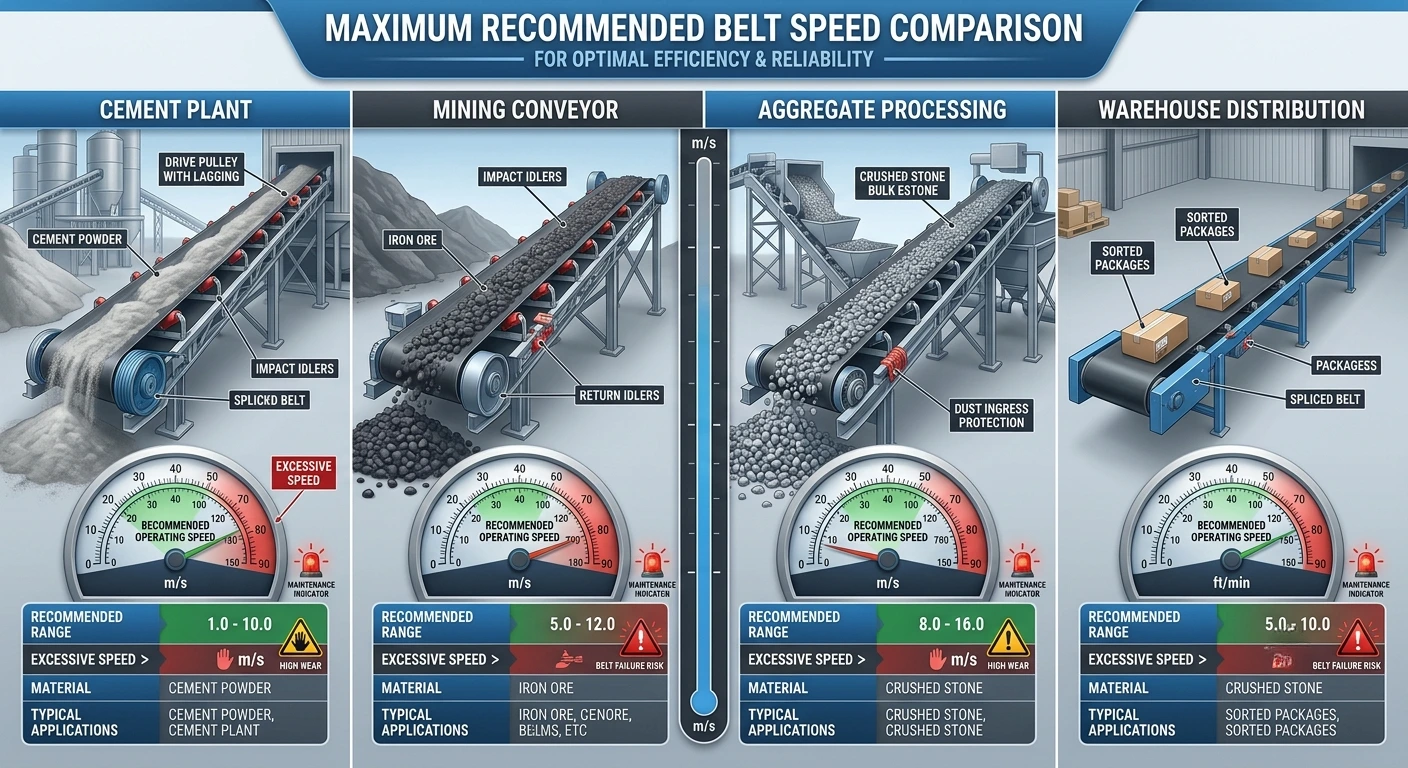
Factors That Determine the Maximum Recommended Belt Speed
Instead of asking, "How fast can this conveyor run?", maintenance engineers ask a more practical question:
"Can this conveyor continue operating reliably at a higher speed?"
Answering that question requires evaluating multiple engineering factors together.
The most important considerations include:
- Type of conveyed material
- Material density and particle size
- Belt width and construction
- Pulley diameter
- Drive system capability
- Loading and discharge design
- Transfer point efficiency
- Belt tracking stability
- Environmental conditions such as dust, heat, and moisture
- OEM operating recommendations
Ignoring any of these variables can result in unstable operation, even when the calculated belt speed appears acceptable.
Engineers often review Pulley Diameter and Belt Speed Relationship together with Belt Speed vs Conveyor Capacity before approving any speed increase.
Common Problems Caused by Excessive Belt Speed
Operating above the recommended belt speed may increase production temporarily, but it also increases the likelihood of reliability and maintenance issues.
Some of the most common field problems include:
- Material spillage at transfer points
- Excessive dust generation
- Premature belt wear
- Reduced belt cleaner efficiency
- Higher bearing operating temperatures
- Pulley lagging damage
- Belt mistracking
- Increased energy consumption
- Unexpected production stoppages
Many of these failures develop gradually and are mistakenly blamed on poor maintenance, when the actual root cause is operating the conveyor beyond its practical speed limit.
| Operating Condition | Typical Effect | Maintenance Impact | Recommended Action |
|---|---|---|---|
| Within Recommended Speed | Stable Material Flow | Lower Wear | Continue Routine Monitoring |
| Near Maximum Limit | Higher Throughput | Closer Inspection Required | Monitor Bearings, Belt and Pulleys |
| Above Recommended Limit | Unstable Operation | Frequent Failures | Reduce Speed and Investigate Root Cause |
Real Industrial Example of Safe Belt Speed Selection
Consider a conveyor system transporting crushed limestone in a cement plant. The maintenance team receives a request from production to increase conveyor output because the downstream process has become a bottleneck.
- Current Belt Speed = 2.8 m/s
- Material = Crushed Limestone
- Belt Width = 1000 mm
- Conveyor Condition = Good
- Production Target = Increase throughput by 12%
The first suggestion is to increase belt speed to 3.4 m/s. Although this appears to be a simple solution, the engineering review identifies several risks before any modification is approved.
The transfer chute was originally designed for the existing operating speed, the belt cleaners were selected according to the original conveyor specification, and the pulley lagging already shows signs of normal wear.
Instead of immediately increasing speed, engineers inspect the complete conveyor system, including material loading, transfer points, pulley condition, bearings, and belt tracking.
After the inspection, they determine that improving loading efficiency and adjusting the material feed distribution will increase production without operating the conveyor above its recommended speed range.
This approach improves throughput while avoiding unnecessary wear on conveyor components and reducing future maintenance costs.
How Engineers Decide Whether Belt Speed Can Be Increased
Experienced maintenance engineers rarely increase conveyor speed based solely on production requirements. Instead, they evaluate whether the entire conveyor system can safely support higher operating conditions.
Before approving a speed increase, engineers normally review the following:
- OEM (Original Equipment Manufacturer) operating recommendations
- Motor loading and available power reserve
- Pulley diameter and drive configuration
- Bearing operating temperature
- Belt tracking stability
- Transfer point performance
- Material spillage history
- Belt cleaner efficiency
- Maintenance records
- Actual production requirements
If one or more of these factors already shows signs of overload, increasing belt speed usually creates additional maintenance problems instead of increasing long-term production.
Before making any speed changes, engineers often compare the existing operating conditions with Belt Speed vs Conveyor Capacity to understand whether higher speed will actually improve throughput.
When Increasing Belt Speed Is Not the Best Solution
There are many situations where increasing conveyor speed is not the correct engineering decision.
For example, increasing speed may not improve production if:
- The conveyor is already fully loaded.
- Material flow into the conveyor is inconsistent.
- Transfer chutes are restricting material flow.
- Belt slip is already occurring.
- The discharge system cannot handle additional throughput.
- Bearings or pulleys show excessive wear.
In these situations, increasing speed simply places additional stress on the conveyor without solving the actual production bottleneck.
Maintenance teams should first inspect the conveyor for common operating problems before modifying speed. The guides Conveyor Belt Slip Causes and Common Belt Speed Calculation Mistakes explain many of the issues that should be investigated during troubleshooting.
Industry Applications Where Belt Speed Limits Are Critical
Maximum recommended belt speed becomes especially important in industries where material handling reliability directly affects production and equipment life.
Typical examples include:
- Cement manufacturing plants
- Mining and quarry operations
- Aggregate processing facilities
- Coal handling systems
- Power generation plants
- Food processing industries
- Warehouse and distribution centers
- Airport baggage handling systems
Each application has different operating requirements, which is why engineers rely on equipment specifications, maintenance history, and field observations instead of applying a single maximum belt speed value to every conveyor.
When speed adjustments are necessary, engineers usually verify the new operating speed using the Belt Speed Calculator before implementing any mechanical changes.
Real-World Engineering Insight
During shutdown maintenance projects in Gulf industries, one of the most common requests from production departments is to increase conveyor output without purchasing new equipment. The first suggestion is often to increase belt speed, but field experience shows that this is not always the best solution.
In one cement plant, operators reported that material was spilling from the transfer points whenever production demand increased. The initial assumption was that the conveyor required a higher operating speed to move additional material. After a detailed inspection, however, the maintenance team found that the transfer chute design and uneven material loading were the actual causes of the problem.
Instead of increasing belt speed beyond the recommended operating range, engineers modified the loading arrangement, improved belt tracking, and replaced worn belt cleaners. These changes increased conveyor efficiency while maintaining the original belt speed, resulting in lower maintenance costs and more reliable production.
This type of situation is common across mining, aggregate, cement, and bulk material handling industries. Increasing belt speed may appear to improve production for a short period, but if the conveyor system cannot safely support higher operating conditions, the long-term result is usually increased downtime and premature component wear.
Experienced maintenance engineers therefore treat belt speed as only one part of the overall conveyor system rather than the primary solution to every production problem.
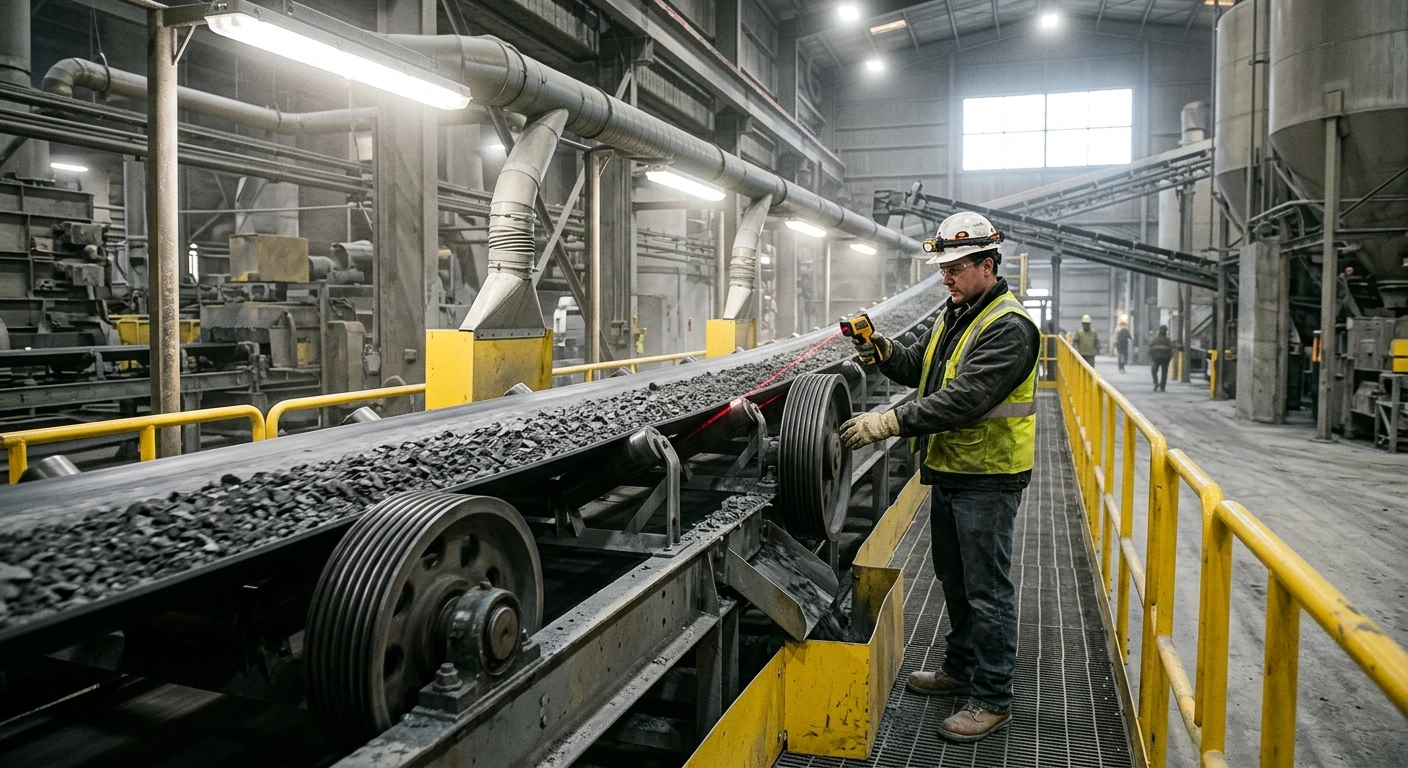
Selecting the maximum recommended belt speed requires balancing production goals with equipment reliability. Evaluating conveyor design, operating conditions, and maintenance history together helps engineers increase throughput without creating unnecessary wear or downtime.
Frequently Asked Questions
What is the maximum recommended belt speed?
There is no single maximum belt speed that applies to every conveyor system. The recommended operating speed depends on the conveyor application, material properties, belt design, pulley arrangement, and OEM (Original Equipment Manufacturer) specifications.
Can increasing belt speed improve production?
Yes, but only when the conveyor system is designed to handle additional throughput. If loading efficiency, transfer points, or downstream equipment become limiting factors, increasing belt speed may create maintenance problems instead of improving production.
What happens if a conveyor operates above the recommended belt speed?
Operating above the recommended speed can increase material spillage, dust generation, belt wear, pulley damage, bearing temperatures, and overall maintenance costs while reducing long-term reliability.
How do engineers determine a safe operating belt speed?
Engineers evaluate OEM recommendations, conveyor design, material characteristics, pulley size, loading conditions, maintenance history, and operating environment before approving any increase in belt speed.
Does pulley diameter affect the maximum recommended belt speed?
Yes. Pulley diameter directly influences belt speed and should always be considered when modifying conveyor drive systems or changing operating RPM.
Should conveyor speed always be increased to meet higher production targets?
No. Production bottlenecks are often caused by poor loading, transfer point restrictions, belt slip, or equipment limitations rather than insufficient belt speed. Identifying the root cause is more effective than simply increasing conveyor speed.
Conclusion
Maximum recommended belt speed is not defined by a single number but by the operating conditions that allow a conveyor to deliver reliable production without creating unnecessary maintenance problems. Before increasing belt speed, engineers should evaluate the complete conveyor system, review OEM recommendations, inspect key components, and confirm that higher operating speeds will improve overall performance rather than simply increasing wear.
In most industrial applications, long-term conveyor reliability is achieved by optimizing the entire conveying system rather than simply operating at the highest possible belt speed.
For accurate calculations, use the Belt Speed Calculator and compare your operating conditions with the guidance provided in What Is a Good Belt Speed and Belt Speed vs Conveyor Capacity before making any changes to your conveyor system.
Recommended Next Steps
After understanding the maximum recommended belt speed, continue with these guides to diagnose speed-related problems, avoid common engineering mistakes, and optimize conveyor performance safely.