
Industrial Belt Drive Troubleshooting Guide
Industrial Belt Drive Troubleshooting Guide becomes critical when small belt drive problems quietly grow into major production failures, vibration issues, overheating, RPM instability, or emergency shutdowns. In many industrial plants, technicians initially ignore small belt slip or alignment problems until conveyor systems, HVAC fans, compressors, or cooling towers suddenly lose performance during continuous operation.
In Gulf industrial plants, conveyor systems, HVAC fans, cooling towers, compressors, and process machinery operate continuously under dust, heat, vibration, and heavy mechanical load. Small issues such as pulley misalignment, belt slip, incorrect tension, or worn bearings can silently damage the entire drive assembly over time. During troubleshooting, technicians frequently use the Pulley RPM Calculator to verify RPM loss, pulley ratio problems, and conveyor speed instability before replacing components unnecessarily. Engineers also compare RPM transfer behavior using the How to Calculate Pulley RPM guide because incorrect pulley sizing and RPM mismatch are among the most common causes of industrial belt drive instability.
A proper troubleshooting process helps maintenance teams identify root causes quickly, reduce downtime, prevent repeated failures, and improve overall equipment reliability across industrial belt drive systems.
How Industrial Belt Drive Systems Work
Industrial belt drive systems transfer rotational power from a motor shaft to driven equipment using pulleys and belts. These systems are commonly used in:
- HVAC systems
- Cooling towers
- Conveyors
- Compressors
- Industrial blowers
- Material handling systems
- Pumps
- Ventilation systems
A complete belt drive system normally includes:
- Electric motor
- Driver pulley
- Driven pulley
- V belt
- Bearings
- Shaft assembly
- Couplings
- Tensioning system
When one component begins failing, the entire system performance becomes unstable.
Many technicians replace belts repeatedly without checking pulley wear, alignment, shaft vibration, or RPM changes.
In several Gulf industrial facilities, repeated belt replacement continued for months before technicians discovered that hidden pulley wear and unstable RPM transfer had already damaged bearings and overloaded the motor assembly.
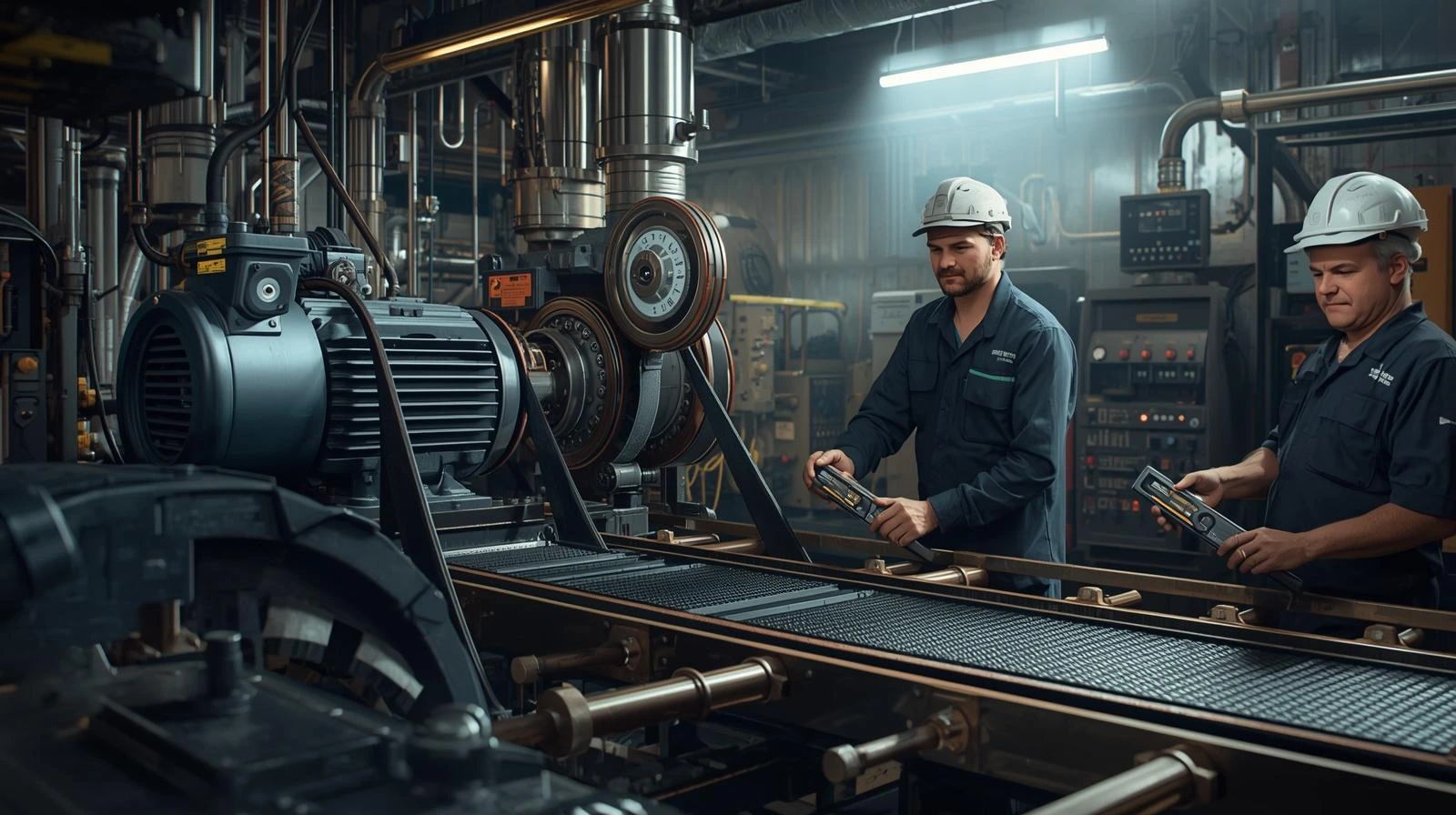
Most Common Industrial Belt Drive Problems
Most industrial belt drive failures develop gradually and show warning signs long before complete shutdown occurs.
Common industrial belt drive problems include:
- Belt slip
- RPM loss
- Pulley wear
- High vibration
- Motor overheating
- Bearing failure
- Misalignment
- Excessive belt tension
- Conveyor speed instability
- Airflow reduction
These failures are usually connected rather than isolated.
For example:
Incorrect tension → belt slip → pulley wear → RPM instability → vibration → bearing overheating → motor overload
Understanding this relationship is critical during troubleshooting because replacing only the damaged belt rarely solves the real issue.
These conditions are closely related to Belt Slip and RPM Loss, Pulley Wear Symptoms, Pulley Alignment Problems, Common Pulley Mistakes, and industrial vibration monitoring procedure.
How Technicians Troubleshoot Belt Slip and RPM Loss
Belt slip is one of the most common industrial troubleshooting situations.
Typical symptoms include:
- Squealing noise
- Belt dust
- Reduced airflow
- Low conveyor speed
- High motor amperage
- Hot pulley surfaces
- Visible RPM fluctuation
Professional troubleshooting starts by checking:
- Belt condition
- Pulley groove wear
- Belt tension
- Pulley alignment
- Motor RPM
- Driven shaft RPM
Many technicians immediately tighten the belt aggressively. This may temporarily reduce slip but often overloads bearings and increases shaft vibration.
This mistake is extremely common during emergency troubleshooting because maintenance teams focus on restoring production quickly instead of identifying the real mechanical root cause behind the slipping problem.
Accurate troubleshooting requires understanding Belt Tension Calculation, Belt Speed Calculation Formula, Pulley Ratio Explained, Pulley Speed Ratio Formula, and belt drive efficiency analysis.
Industrial Belt Drive Troubleshooting Inspection Table
| Problem Symptom | Possible Cause | Equipment Effect | Risk Level | Recommended Action |
|---|---|---|---|---|
| Belt slipping | Loose tension or worn pulley | RPM loss | High | Check tension and pulley grooves |
| High vibration | Pulley misalignment | Bearing stress | Critical | Perform laser alignment |
| Hot bearings | Over-tightened belt | Bearing failure | Critical | Reset belt tension |
| Low airflow | RPM instability | Cooling failure | High | Inspect pulley ratio |
How Misalignment and Pulley Wear Create Major Failures
Even small pulley alignment problems can destroy an entire belt drive system gradually.
Misalignment creates:
- Uneven belt wear
- Excessive side loading
- Bearing overheating
- Shaft stress
- High vibration
- RPM fluctuation
At the same time, pulley groove wear reduces belt grip and increases slipping under load.
One dangerous maintenance mistake is replacing only belts while leaving worn pulleys installed. New belts quickly fail again because the pulley surface is already damaged.
Although the system may temporarily restart normally, hidden pulley wear often causes repeated vibration, unstable RPM transfer, and unexpected downtime within a short operating period.
Technicians should understand the relationship between:
- Pulley diameter
- Belt grip
- RPM stability
- Shaft alignment
- Motor load
- Vibration levels
These conditions are strongly connected to Motor Pulley Sizing Guide, Pulley Measurement Guide, Pulley Diameter vs RPM, industrial shaft balancing procedure, and bearing vibration troubleshooting.
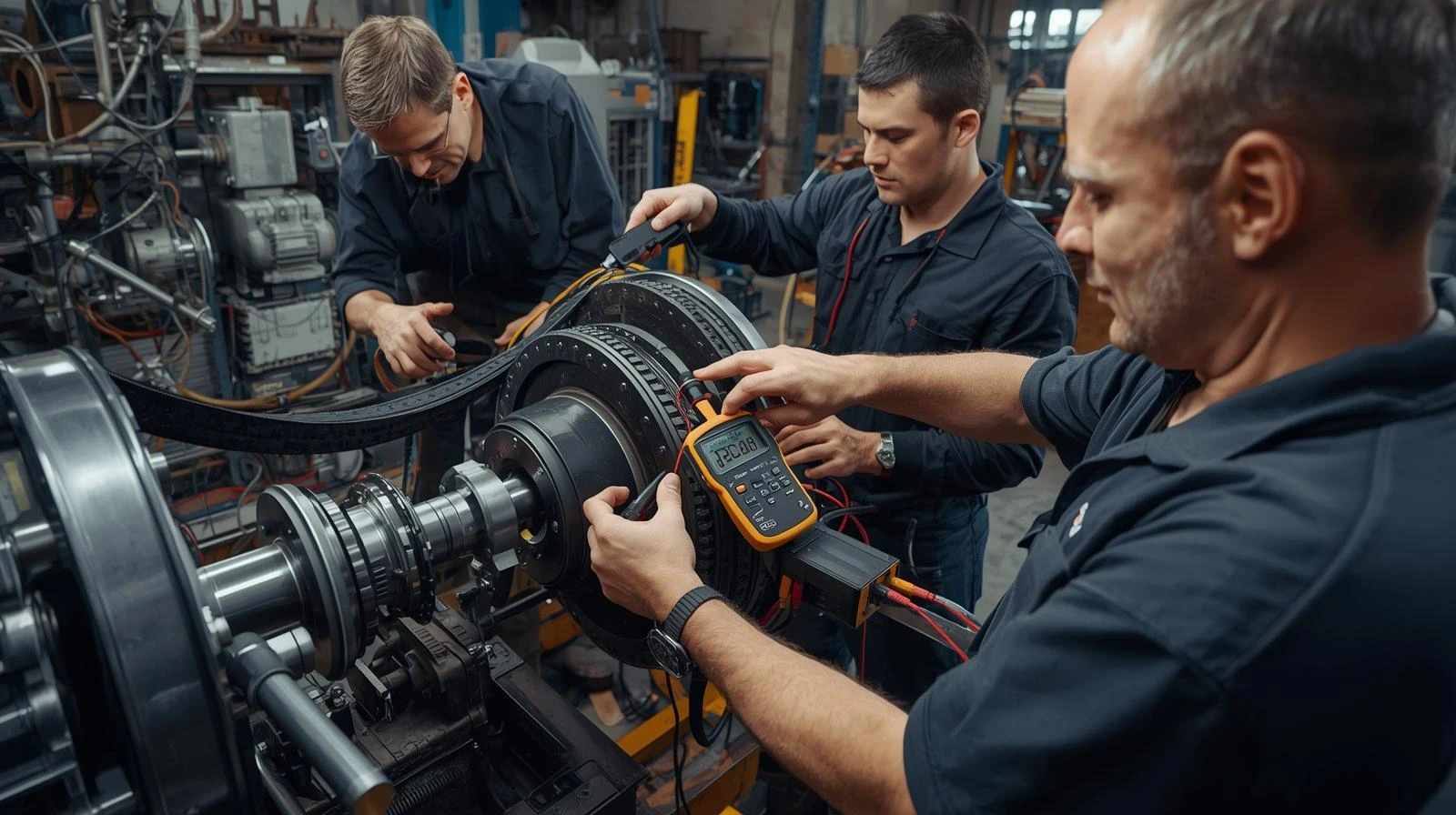
Conveyor and HVAC Troubleshooting Problems
Industrial troubleshooting changes depending on application type.
In conveyor systems, technicians commonly face:
- Conveyor belt slip
- Material accumulation
- Unstable conveyor speed
- Lagging wear
- Gearbox overload
These issues are often connected to Conveyor Belt Slip Causes and Conveyor Belt Speed Calculation.
In HVAC systems, technicians usually troubleshoot:
- Low airflow
- Fan vibration
- Cooling inefficiency
- Pulley RPM instability
- Bearing overheating
These conditions are closely related to Fan Speed vs Airflow and Pulley Systems in HVAC.
For deeper understanding, technicians should also learn Fan Speed vs Airflow, Pulley Systems in HVAC, Conveyor Belt Slip Causes, belt tension adjustment guide, shaft speed calculation basics, industrial vibration analysis, and cooling tower airflow troubleshooting.
Step-by-Step Industrial Troubleshooting Procedure
Experienced maintenance teams follow a structured troubleshooting process instead of replacing parts randomly.
A practical troubleshooting sequence includes:
- Inspect belt condition
- Check pulley groove wear
- Verify alignment
- Measure RPM
- Inspect vibration levels
- Check bearing temperature
- Inspect lubrication condition
- Verify belt tension
- Check conveyor or fan load
- Confirm motor amperage
This process helps technicians isolate root causes faster while preventing unnecessary component replacement.
During troubleshooting, engineers also compare conveyor and blower speed behavior using the Conveyor Belt Speed Calculation method because incorrect RPM transfer often affects airflow systems and conveyor throughput simultaneously.
Many industrial failures occur because technicians solve symptoms instead of identifying the actual mechanical problem.
Real-World Engineering Insight
During shutdown maintenance in a Gulf cement facility, technicians reported repeated belt failures and severe vibration on a conveyor drive assembly.
The maintenance team had already replaced belts multiple times without solving the issue. After detailed inspection, we discovered severe pulley misalignment combined with worn pulley grooves and excessive belt tension.
The unstable tension overloaded bearings and created continuous RPM fluctuation across the conveyor system.
After correcting alignment, replacing worn pulleys, resetting belt tension, and verifying RPM using pulley calculations, conveyor performance stabilized immediately.
Maintenance engineers also verified airflow behavior using the Fan Speed vs Airflow guide because unstable pulley RPM was affecting cooling performance in connected ventilation systems.
Experienced technicians understand that successful industrial belt drive troubleshooting depends on identifying relationships between belt condition, pulley wear, RPM behavior, alignment, vibration, and load conditions rather than treating each symptom separately.
Frequently Asked Questions
What is the most common industrial belt drive problem?
Belt slip caused by incorrect tension, pulley wear, or misalignment is one of the most common industrial belt drive problems.
Can pulley misalignment damage bearings?
Yes. Misalignment creates side loading and vibration that overload bearings and shafts over time.
Why do belts fail repeatedly in industrial systems?
Repeated belt failure is usually caused by worn pulleys, incorrect tension, misalignment, or excessive vibration.
How do technicians troubleshoot RPM loss?
Technicians inspect pulley ratio, belt condition, pulley wear, alignment, and shaft RPM stability.
Why is belt tension important during troubleshooting?
Incorrect belt tension can create slipping, vibration, bearing overload, and premature belt wear.
Use RPM Tools During Belt Drive Troubleshooting
For accurate troubleshooting and early failure prevention, technicians should verify pulley ratio, RPM transfer, and shaft speed stability using the Pulley RPM Calculator. Early RPM analysis helps identify hidden belt slip, pulley wear, airflow instability, conveyor speed problems, and vibration issues before they create expensive industrial downtime.
Engineers also use the How to Calculate Belt RPM guide and the Belt Drive RPM Calculation resource to diagnose airflow instability, belt slip, and pulley speed mismatch during maintenance inspections.