
Belt Speed Calculation Formula for Industrial Belt Drive Systems
Belt Speed Calculation Formula directly affects conveyor efficiency, airflow stability, production output, and equipment reliability in industrial belt drive systems. In many industrial plants, incorrect belt speed gradually creates vibration, overheating, unstable material handling, airflow imbalance, and unnecessary energy loss long before operators identify the real performance problem.
Many technicians focus only on pulley RPM without calculating actual belt velocity. However, belt speed determines how fast mechanical power moves through conveyors, blowers, fans, and rotating machinery. Before changing pulley sizes or adjusting motor speed, maintenance teams often verify RPM using the Pulley RPM Calculator to ensure the final belt speed remains within safe operating limits. Engineers also compare rotational behavior using the How to Calculate Pulley RPM guide to verify whether pulley ratio changes are creating excessive belt velocity.
Understanding belt speed calculation helps technicians optimize equipment performance, reduce belt wear, improve airflow control, and maintain stable production conditions in conveyors, HVAC systems, crushers, cooling towers, and industrial material handling systems.
What Is Belt Speed in Industrial Systems
Belt speed refers to the linear velocity at which a belt travels around pulleys inside a belt drive system. Unlike RPM, which measures rotational speed, belt speed measures the actual movement of the belt surface.
Belt speed is commonly expressed in:
- Meters per second (m/s)
- Feet per minute (FPM)
- Meters per minute (m/min)
Industrial belt speed affects:
- Material transfer rate
- Airflow movement
- Heat generation
- Power transmission efficiency
- Belt wear rate
- Vibration behavior
In HVAC systems, higher belt speed increases airflow. In conveyors, belt speed determines production capacity and material handling efficiency.
In large industrial facilities, incorrect belt speed often causes hidden operational problems such as unstable airflow, conveyor tracking issues, rising motor temperature, and repeated belt wear during high-load production periods.
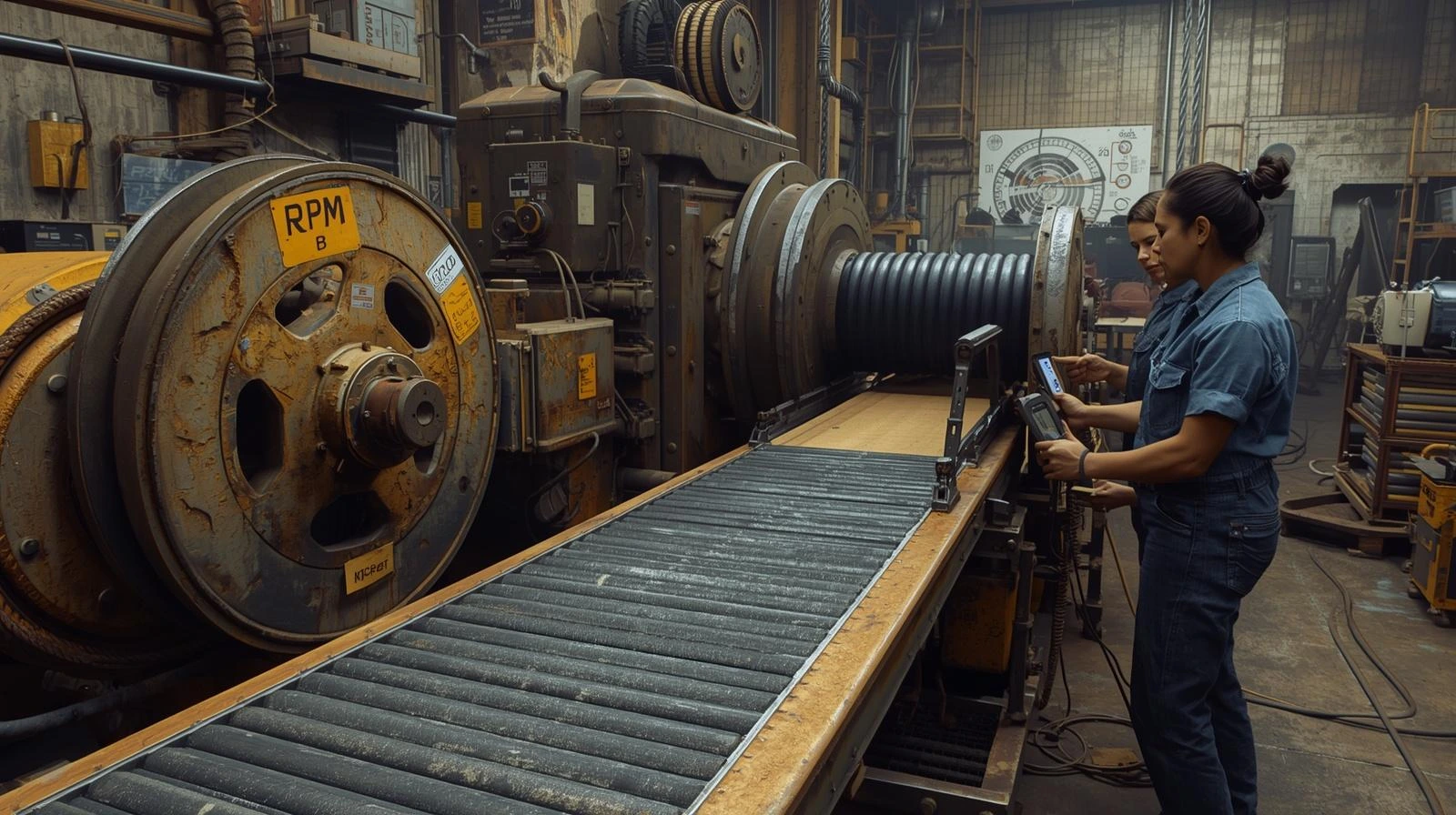
Belt Speed Calculation Formula Explained
The standard belt speed calculation formula is:
Belt Speed = π × Pulley Diameter × RPM
To calculate speed in meters per second:
Belt Speed (m/s) = (π × Pulley Diameter × RPM) ÷ 60
Where:
- π = 3.1416
- Pulley Diameter = meters
- RPM = rotational speed
This formula helps technicians determine how fast the belt surface moves during operation.
The calculation is closely connected to Belt Drive RPM Calculation because pulley RPM directly affects belt velocity. Maintenance technicians also use the Pulley Diameter vs RPM guide to understand how pulley size changes influence final belt speed and system efficiency.
Practical Belt Speed Calculation Example
Consider an industrial conveyor system operating with:
- Pulley diameter = 0.30 meters
- Motor speed = 1440 RPM
Using the formula:
Belt Speed = (3.1416 × 0.30 × 1440) ÷ 60
Belt Speed = 22.6 meters per second
This means the conveyor belt surface moves approximately 22.6 meters every second.
In real maintenance work, technicians compare actual belt speed with equipment design specifications to prevent overloading and excessive wear.
Experienced maintenance teams also verify vibration behavior, motor amperage, and airflow performance because incorrect belt speed can slowly reduce overall system efficiency without creating immediate visible failure symptoms.
These calculations are frequently related to Pulley Ratio Explained, Conveyor Belt Speed Calculation, shaft speed calculation basics, industrial conveyor troubleshooting, and belt drive efficiency optimization.
How Belt Speed Affects Industrial Equipment
Belt speed directly influences equipment performance and operating stability.
Excessive belt speed can create:
- Premature belt wear
- High vibration
- Product spillage
- Motor overload
- Increased bearing temperature
- Noise during operation
Low belt speed can create:
- Reduced airflow
- Low production output
- Poor cooling efficiency
- Insufficient material transfer
In Gulf industrial facilities, high ambient temperatures increase the importance of correct belt speed because overheating becomes a major reliability issue during continuous operation.
When belt speed exceeds safe operating limits in high-temperature environments, belts often experience faster wear, unstable tracking, excessive heat buildup, and increased maintenance frequency across conveyor and HVAC systems.
Belt Speed Reference Table for Industrial Applications
| Pulley Diameter | Operating RPM | Calculated Belt Speed | Industrial Application | Operational Impact |
|---|---|---|---|---|
| 200 mm | 960 RPM | 10.05 m/s | HVAC blower system | Stable airflow |
| 300 mm | 1440 RPM | 22.6 m/s | Industrial conveyor | High production rate |
| 150 mm | 1750 RPM | 13.7 m/s | Cooling tower fan | Efficient cooling airflow |
| 400 mm | 720 RPM | 15.1 m/s | Crusher conveyor system | Controlled material flow |
Most industrial belt speed problems develop gradually during continuous operation. Early RPM verification and routine speed inspection help technicians identify unstable operating conditions before they create larger maintenance or production issues.
Common Belt Speed Calculation Mistakes
Many technicians make calculation mistakes that create serious operational problems.
The most common errors include:
- Using incorrect pulley diameter
- Ignoring pitch diameter
- Using wrong RPM values
- Ignoring belt slip
- Mixing units incorrectly
- Skipping airflow verification
One common mistake I’ve seen during conveyor maintenance is calculating belt speed using outside pulley diameter instead of pitch diameter. This creates inaccurate speed calculations and improper production settings.
These problems are commonly connected to Common Pulley Mistakes, Pulley Measurement Guide, Belt Tension Calculation, belt drive vibration analysis, and industrial pulley balancing procedure.
How Technicians Verify Actual Belt Speed
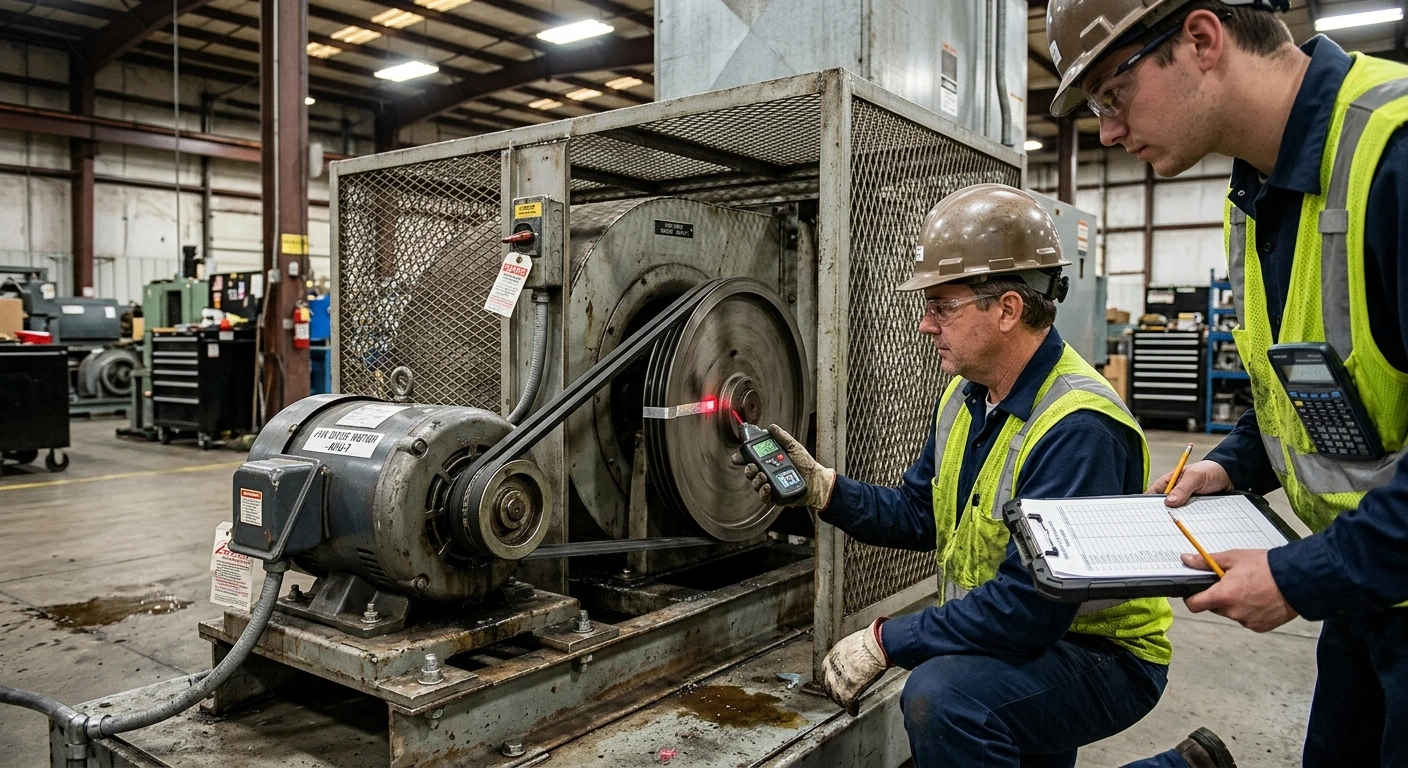
Experienced technicians do not rely only on theoretical calculations. They also verify actual operating speed using measurement tools.
Common verification methods include:
- Tachometer measurement
- Laser RPM testing
- Conveyor timing checks
- Airflow performance testing
- Vibration analysis
Technicians compare calculated belt speed with actual operating conditions to identify:
- Belt slip
- Pulley wear
- Motor overload
- RPM loss
- Alignment problems
These conditions are frequently related to Belt Slip and RPM Loss, Pulley Alignment Problems, Fan Speed vs Airflow, industrial airflow balancing, fan speed optimization, and conveyor vibration troubleshooting.
Real World Engineering Insight
In Gulf industrial facilities, belt speed calculation becomes extremely important in conveyors and HVAC systems operating continuously under high ambient temperatures.
One common issue I’ve seen in industrial conveyor systems is technicians increasing motor RPM to improve production output without verifying safe belt speed limits. Initially, production increases, but after several weeks belts begin overheating and bearings fail prematurely.
Maintenance teams often discover these problems late because small belt speed increases may continue affecting vibration levels and equipment reliability long before major operational failure becomes visible.
In one cooling tower system, airflow problems continued even after motor replacement. After investigation, we discovered the replacement pulley changed belt speed significantly compared to the original design. Once we corrected pulley dimensions and verified belt speed properly, airflow stabilized and motor load returned to normal.
During troubleshooting, maintenance engineers also verified pulley speed behavior using the Pulley Speed Ratio Formula because incorrect pulley ratio selection was causing unstable airflow and excessive belt vibration.
Experienced maintenance technicians understand that belt speed is not just a mathematical value. It directly affects airflow, conveyor efficiency, vibration levels, bearing life, energy consumption, and overall equipment reliability.
Frequently Asked Questions
What is the belt speed calculation formula?
The standard belt speed calculation formula is Belt Speed = π × Pulley Diameter × RPM.
Why is belt speed important in industrial systems?
Belt speed affects airflow, conveyor output, power transmission efficiency, and equipment reliability.
What units are used for belt speed?
Belt speed is commonly measured in meters per second, meters per minute, or feet per minute.
Can incorrect belt speed damage equipment?
Yes. Incorrect belt speed can create vibration, overheating, excessive wear, and motor overload.
How do technicians verify actual belt speed?
Technicians use tachometers, laser RPM tools, airflow testing, and conveyor timing measurements.
Use Pulley RPM Tools for Accurate Belt Speed Verification
For accurate belt speed verification and pulley RPM calculations, technicians should use the Pulley RPM Calculator to diagnose RPM loss, verify pulley ratios, and optimize conveyor or HVAC belt drive performance during maintenance work. Engineers also use the How to Calculate Belt RPM resource and the Conveyor Belt Speed Calculation guide to troubleshoot unstable belt velocity, airflow imbalance, and production efficiency problems more accurately.