
Pulley Wear Symptoms in Industrial Belt Drive Systems
Pulley Wear Symptoms often remain unnoticed until a belt drive system suddenly develops vibration, overheating, RPM instability, or repeated belt failure during production. In many industrial plants, hidden pulley wear slowly damages bearings, reduces airflow performance, increases motor load, and creates expensive downtime long before technicians identify the real root cause.
In industrial HVAC systems, conveyors, cooling towers, compressors, and process equipment, pulley wear directly affects RPM stability, belt tension, airflow performance, motor load, vibration levels, and equipment reliability. Before replacing belts or changing pulley ratios, maintenance teams often verify pulley speed behavior using the Pulley RPM Calculator to identify abnormal RPM loss caused by pulley wear. In many troubleshooting cases, technicians also compare system speed using the How to Calculate Pulley RPM guide to confirm whether pulley groove wear is affecting final driven RPM.
Understanding early pulley wear symptoms helps technicians prevent downtime, reduce maintenance cost, improve belt life, and avoid repeated equipment failures in demanding industrial environments.
What Causes Pulley Wear in Industrial Systems
Industrial pulleys operate continuously under load, heat, vibration, dust, and shaft movement. Over time, pulley grooves begin wearing unevenly due to friction between the V belt and pulley surface.
Common industrial causes of pulley wear include:
- Incorrect belt tension
- Pulley misalignment
- Bearing failure
- Shaft vibration
- Dust contamination
- Worn or poorly lubricated pulley bearings
- Overspeed operation
- Incorrect pulley ratio
- Worn bearings
- Heat exposure
In Gulf industrial environments, airborne dust and high ambient temperatures can accelerate pulley and belt-drive deterioration, especially in cooling tower systems, HVAC units, and outdoor conveyors.
When pulley grooves wear unevenly, the belt loses proper grip, resulting in RPM instability and power transmission loss.
In several Gulf industrial facilities, small pulley groove wear continued unnoticed for months before major vibration and bearing failures forced emergency shutdowns. Maintenance teams later discovered that minor pulley wear had already reduced system efficiency and overloaded the motor continuously.
Early Pulley Wear Symptoms Technicians Should Never Ignore
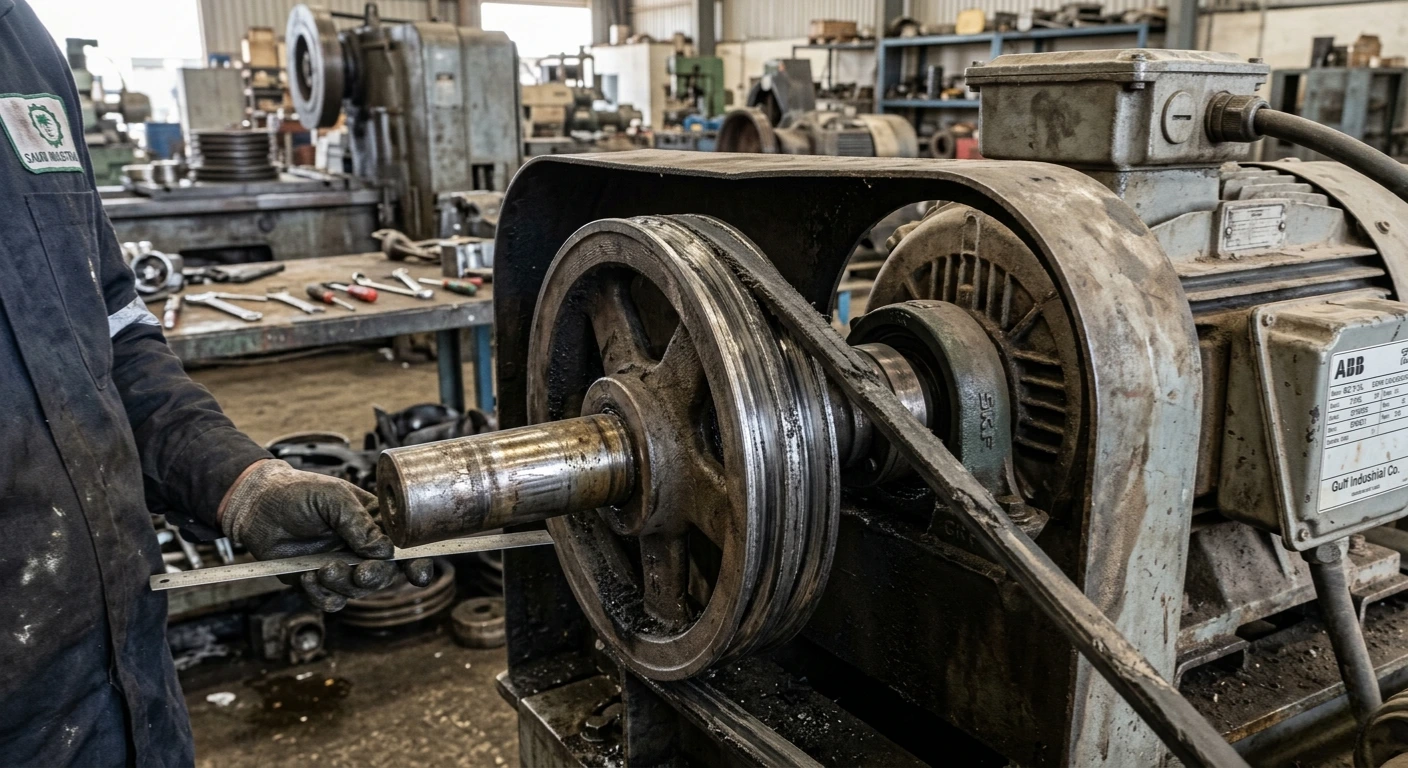
Most industrial pulley failures begin with small warning signs that maintenance teams overlook during routine inspections.
Common early pulley wear symptoms include:
- Belt dust near pulley assembly
- Unusual vibration
- RPM fluctuation
- High bearing temperature
- Belt slipping during startup
- Uneven groove wear
- Squealing sound
- Excessive motor amperage
- Reduced airflow or conveyor speed
These symptoms usually develop gradually. Technicians often replace belts repeatedly without checking pulley groove condition or shaft alignment.
One major warning sign is polished pulley grooves. Polished or unusually smooth pulley grooves can indicate wear or prolonged belt contact. When groove wear becomes excessive, the belt may sit incorrectly in the groove, reducing effective grip and contributing to belt slip under load.
These problems are frequently connected to Belt Slip and RPM Loss, pulley alignment procedure, and shaft vibration troubleshooting.
How Pulley Wear Affects RPM and Equipment Performance
Pulley wear changes the effective pulley diameter over time. Even small groove wear can alter belt position inside the pulley and affect final output RPM.
Industrial systems may experience:
- Reduced airflow
- Conveyor speed variation
- Motor overload
- Bearing overheating
- Increased vibration
- Lower production efficiency
For example, in HVAC systems, worn pulleys can reduce fan speed enough to affect cooling performance throughout an entire facility.
In conveyor systems, pulley wear can create unstable belt movement and inconsistent product flow.
Technicians often discover these issues during shutdown maintenance when RPM readings no longer match design calculations.
Maintenance engineers can verify unexpected RPM changes using the Belt Drive RPM Calculation method because excessive groove wear can change the belt's running position and effective pitch diameter, affecting the transmitted speed ratio.
This relationship is closely connected to Fan Speed vs Airflow because pulley condition directly affects airflow performance in ventilation systems.
Industrial Pulley Wear Inspection Reference Table
| Pulley Condition | Visible Symptom | Equipment Effect | Industrial Risk | Recommended Action |
|---|---|---|---|---|
| Polished grooves | Belt slipping | RPM loss | Reduced efficiency | Replace pulley |
| Uneven groove wear | Vibration | Bearing stress | Bearing failure | Check alignment |
| Cracked pulley edge | Noise and wobble | Unstable operation | Pulley breakage | Immediate replacement |
| Excessive rust | Poor belt grip | Speed fluctuation | Unexpected downtime | Inspect shaft assembly |
Why Pulley Wear Creates Hidden Bearing Problems
Many technicians focus only on belts while ignoring how pulley wear affects bearings and shafts.
When pulley grooves wear unevenly, belt tension becomes unstable. This instability transfers vibration directly into:
- Bearings
- Shaft couplings
- Motor mounts
- Fan assemblies
- Gearboxes
Over time, bearings begin overheating because the shaft no longer rotates smoothly.
One common industrial mistake is increasing belt tension to stop slipping caused by worn pulleys. This temporarily reduces slip but overloads bearings and accelerates shaft wear.
Another dangerous mistake is operating equipment continuously despite rising vibration levels. Many technicians focus only on temporary belt performance while hidden pulley wear continues damaging shafts, bearings, and motor assemblies internally.
These conditions are closely related to Belt Tension Calculation, Conveyor Belt Speed Calculation, bearing lubrication inspection, industrial vibration analysis, and shaft coupling inspection procedure.
How Experienced Technicians Inspect Pulley Condition
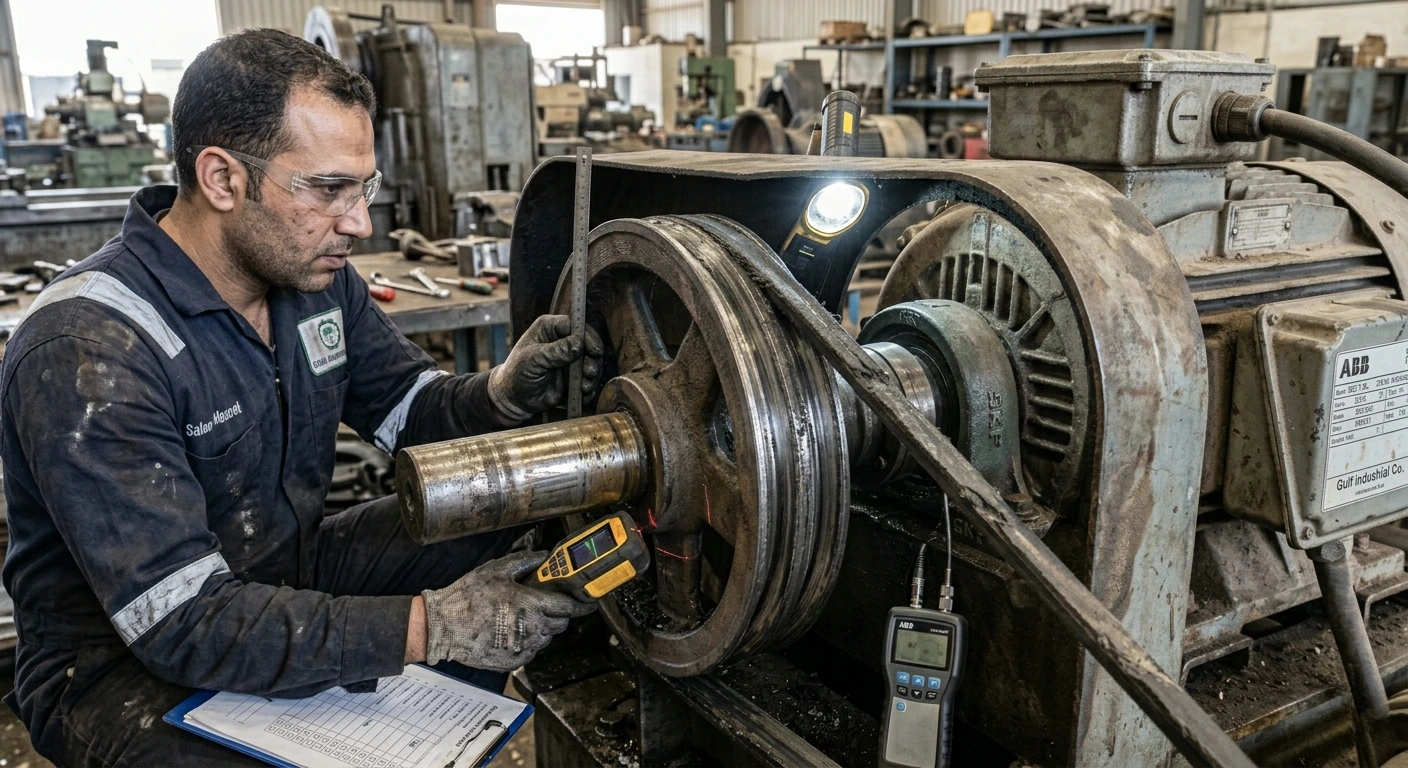
Professional maintenance teams never inspect pulleys visually alone. Proper inspection includes:
- Groove wear measurement
- Laser alignment testing
- RPM verification
- Vibration monitoring
- Bearing temperature inspection
- Belt tension testing
- Shaft movement inspection
During shutdown maintenance, technicians often compare actual pulley groove dimensions against manufacturer specifications.
In many industrial plants, pulley wear is discovered only after:
- Motor overload alarms
- Fan airflow reduction
- Conveyor instability
- Repeated belt replacement
- Unexpected vibration spikes
By the time these symptoms become obvious, production efficiency may already be reduced. In continuous HVAC and conveyor systems, delayed pulley replacement can contribute to expensive downtime and repeated maintenance shutdowns.
For deeper understanding, technicians should also learn Pulley Measurement Guide, Pulley Speed Ratio Formula, pulley groove inspection procedure, shaft speed calculation basics, belt tension adjustment guide, industrial maintenance inspection checklist, and fan airflow troubleshooting.
Common Technician Mistakes That Accelerate Pulley Wear
Several maintenance mistakes can rapidly destroy pulley systems.
Common technician errors include:
- Installing incorrect belts
- Ignoring pulley alignment
- Over-tightening belts
- Ignoring vibration trends
- Operating at excessive RPM
- Skipping lubrication inspections
- Using damaged shafts
In Gulf industrial facilities, dust contamination is another major issue. Dust enters pulley grooves and acts like abrasive material, accelerating groove wear dramatically.
Technicians should understand that pulley wear is not only a mechanical problem. It directly affects energy efficiency, airflow stability, motor load, and overall equipment reliability.
Real-World Engineering Insight
Consider a Gulf HVAC facility where technicians report repeated fan belt failures every few weeks despite installing new belts regularly.
After detailed inspection, we discovered the actual problem was severe pulley groove wear on the driven pulley. The polished grooves reduced belt grip and caused continuous RPM instability.
The maintenance team had been increasing belt tension repeatedly to stop slipping, which overloaded the bearings and increased shaft vibration.
Situations like this are extremely common in Gulf industrial environments where dust contamination, high temperatures, and continuous equipment loading accelerate pulley groove wear much faster than technicians expect.
After replacing the worn pulley, correcting alignment, and resetting belt tension properly, vibration dropped immediately and airflow performance stabilized.
Experienced technicians understand that pulley wear symptoms are early warning signs of larger mechanical problems developing inside the entire belt drive system.
Conclusion
Pulley wear symptoms should never be ignored because a worn pulley can affect belt grip, RPM stability, vibration, bearing loading, and overall equipment performance. Repeated belt failure is often a sign that the pulley condition, alignment, and belt tension also need to be inspected.
For reliable troubleshooting, maintenance teams should inspect pulley grooves, verify alignment, measure actual RPM, and compare the pulley condition with the manufacturer's specifications before replacing components. Early detection can help prevent unnecessary belt replacement, bearing damage, and unexpected downtime.
Frequently Asked Questions
What are the first signs of pulley wear?
Common early signs include belt slipping, vibration, polished grooves, belt dust, RPM fluctuation, and squealing noise.
Can pulley wear reduce equipment RPM?
Yes. Worn pulley grooves affect belt grip and effective pulley diameter, which can reduce output RPM.
Why do belts fail repeatedly on worn pulleys?
Worn pulleys create poor belt contact, uneven tension, and slipping that rapidly damages belts.
How do technicians inspect pulley wear?
Technicians inspect groove condition, alignment, vibration, shaft movement, RPM, and bearing temperature.
Can pulley wear damage bearings?
Yes. Uneven pulley wear creates vibration and unstable belt tension that overload bearings over time.
Use RPM Tools to Detect Pulley Wear Problems
For accurate pulley inspection and RPM troubleshooting, technicians can use the Pulley RPM Calculator to verify pulley speed changes, detect RPM loss, and troubleshoot industrial belt drive problems more accurately. For deeper system analysis, engineers also use the How to Calculate Belt RPM guide and the Pulley Ratio Explained resource to diagnose pulley wear related performance issues in industrial systems.