
Conveyor Belt Speed Calculation for Industrial Conveyor Systems
Conveyor Belt Speed Calculation directly affects production efficiency, material handling stability, motor load, and equipment reliability in industrial conveyor systems. In many industrial plants, incorrect conveyor speed gradually creates belt slip, unstable material flow, excessive vibration, overheating, and unnecessary downtime long before operators identify the real mechanical problem.
Before modifying conveyor pulley systems, maintenance teams often verify rotational speed using the Pulley RPM Calculator to ensure the conveyor operates within safe production and mechanical limits. Engineers also compare pulley speed behavior using the How to Calculate Pulley RPM guide to verify whether pulley ratio changes are increasing conveyor speed beyond safe operating conditions.
Understanding conveyor belt speed calculation helps technicians optimize production efficiency, reduce belt slip, improve material handling stability, and prevent unnecessary equipment failures in conveyor systems, crushers, packaging lines, cement plants, and industrial processing facilities.
What Is Conveyor Belt Speed
Conveyor belt speed refers to the linear movement speed of the conveyor belt surface as it rotates around pulleys and rollers. Unlike RPM, which measures rotational motion, conveyor speed measures how fast material moves through the system.
Conveyor speed is commonly measured in:
- Meters per second (m/s)
- Meters per minute (m/min)
- Feet per minute (FPM)
Conveyor belt speed directly affects:
- Production capacity
- Material flow rate
- Product handling quality
- Belt wear rate
- Motor load
- Power consumption
- System vibration
In heavy industrial systems, excessive conveyor speed can cause product spillage, unstable material flow, and premature belt damage.
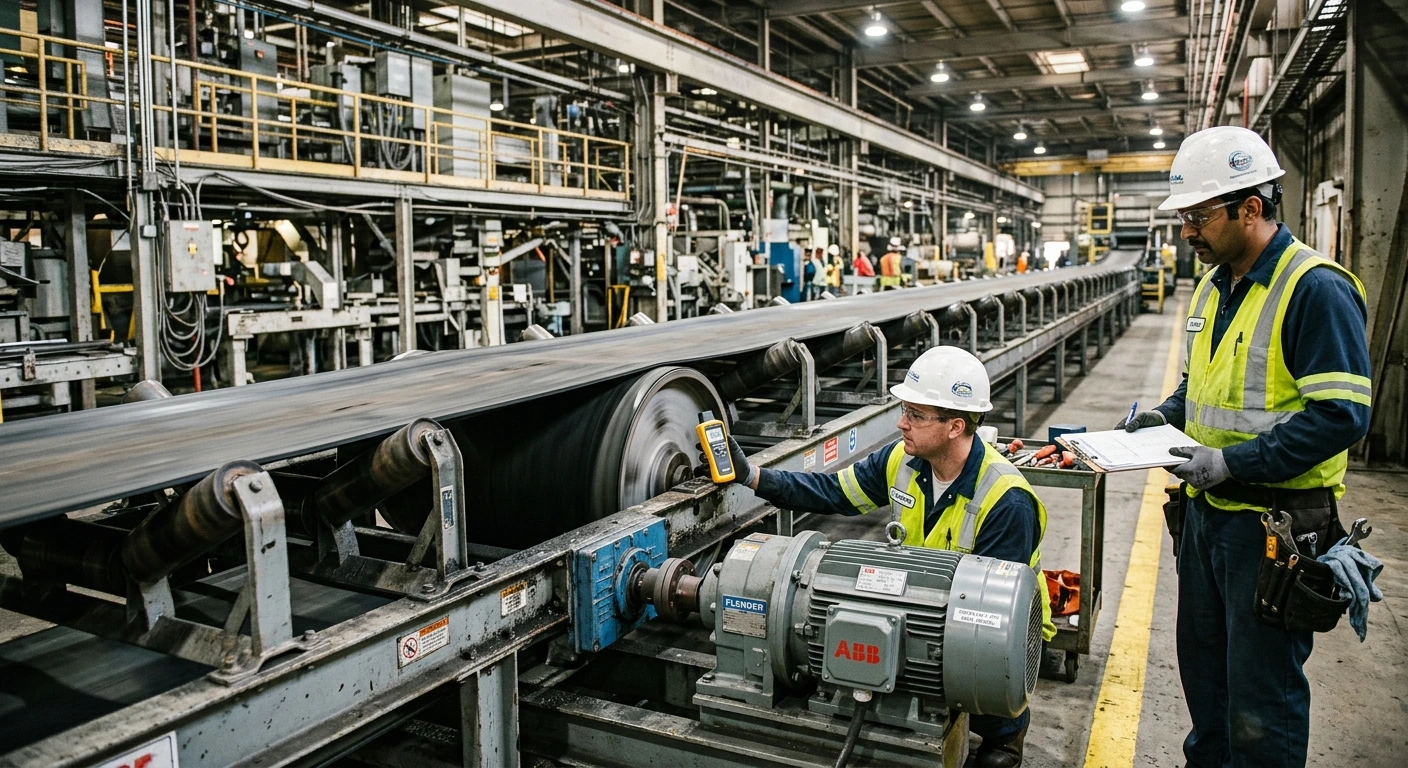
In cement plants, crushers, and packaging facilities, unstable conveyor speed often creates hidden operational problems such as transfer point blockage, rising motor temperature, material overflow, and repeated belt tracking issues during peak production periods.
Conveyor Belt Speed Calculation Formula
The standard conveyor belt speed calculation formula is:
Conveyor Speed = π × Pulley Diameter × RPM
To calculate conveyor speed in meters per second:
Conveyor Speed (m/s) = (π × Pulley Diameter × RPM) ÷ 60
Where:
- π = 3.1416
- Pulley Diameter = meters
- RPM = conveyor pulley rotational speed
This engineering formula is applicable to flat belts, V-belts, and most conveyor belt drive systems where belt motion is determined by the driver pulley diameter and rotational speed.
This formula helps maintenance technicians determine the actual movement speed of conveyor belts during operation.
The formula is closely related to Belt Speed Calculation Formula because both calculations use pulley diameter and RPM relationships. Maintenance technicians also use the Pulley Speed Ratio Formula to verify whether pulley ratio adjustments are affecting conveyor throughput and motor load correctly.
Practical Conveyor Speed Calculation Example
Consider a conveyor drive system operating with:
- Drive pulley diameter = 0.40 meters
- Motor speed = 960 RPM
Using the formula:
Conveyor Speed = (3.1416 × 0.40 × 960) ÷ 60
Conveyor Speed = 20.1 meters per second
This means the conveyor belt surface moves approximately 20.1 meters every second.
In real maintenance work, technicians compare calculated speed with production requirements to prevent conveyor overload and material instability.
Experienced maintenance teams also monitor vibration behavior, motor amperage, belt tracking, and pulley temperature because incorrect conveyor speed can slowly reduce system stability without immediate visible mechanical failure.
These calculations are frequently connected to Belt Drive RPM Calculation and Conveyor Belt Slip Causes, which help maintenance engineers diagnose conveyor performance problems, belt slip, and drive system efficiency.
How Conveyor Speed Affects Industrial Operations
Conveyor speed has a direct effect on production quality and mechanical reliability.
Excessive conveyor speed can create:
- Material spillage
- Product damage
- Belt vibration
- Motor overload
- Pulley overheating
- Bearing failure
Low conveyor speed can create:
- Reduced production output
- Material accumulation
- Process bottlenecks
- Poor system efficiency
In Gulf industrial facilities such as cement plants and packaging industries, conveyor speed optimization is critical because conveyors often operate continuously under dusty and high-temperature conditions.
When conveyor speed exceeds safe operating limits in high-temperature environments, belts often experience faster wear, unstable tracking, excessive dust generation, and increased maintenance frequency across industrial material handling systems.
Industrial Conveyor Speed Reference Table
| Pulley Diameter | Operating RPM | Calculated Conveyor Speed | Industrial Application | Operational Effect |
|---|---|---|---|---|
| 250 mm | 720 RPM | 9.4 m/s | Packaging conveyor | Stable product handling |
| 400 mm | 960 RPM | 20.1 m/s | Cement conveyor system | High material transfer rate |
| 300 mm | 1440 RPM | 22.6 m/s | Crusher conveyor | Fast material movement |
| 180 mm | 850 RPM | 8.0 m/s | Assembly line conveyor | Controlled movement |
Most conveyor speed problems develop gradually during continuous operation. Routine RPM verification and belt speed inspection help technicians identify unstable production conditions before they create larger conveyor reliability issues.
Common Conveyor Belt Speed Calculation Mistakes
Many technicians calculate conveyor speed incorrectly because they ignore real operating conditions.
Common mistakes include:
- Using incorrect pulley diameter
- Ignoring belt slip
- Using motor RPM instead of pulley RPM
- Ignoring gearbox reduction ratio
- Using outside diameter instead of pitch diameter
- Skipping load condition verification
One common problem in industrial conveyor systems is changing pulley size to increase production speed without checking belt tension and motor amperage.
Before increasing conveyor speed to improve production, verify that the conveyor is the actual process bottleneck. In many plants, transfer points, feeders, or downstream equipment limit throughput rather than belt speed itself.
These problems are commonly connected to Common Pulley Mistakes, Belt Slip and RPM Loss, and Belt Tension Calculation, which help maintenance teams identify the root causes of conveyor performance problems before replacing major components.
How Technicians Verify Conveyor Belt Speed
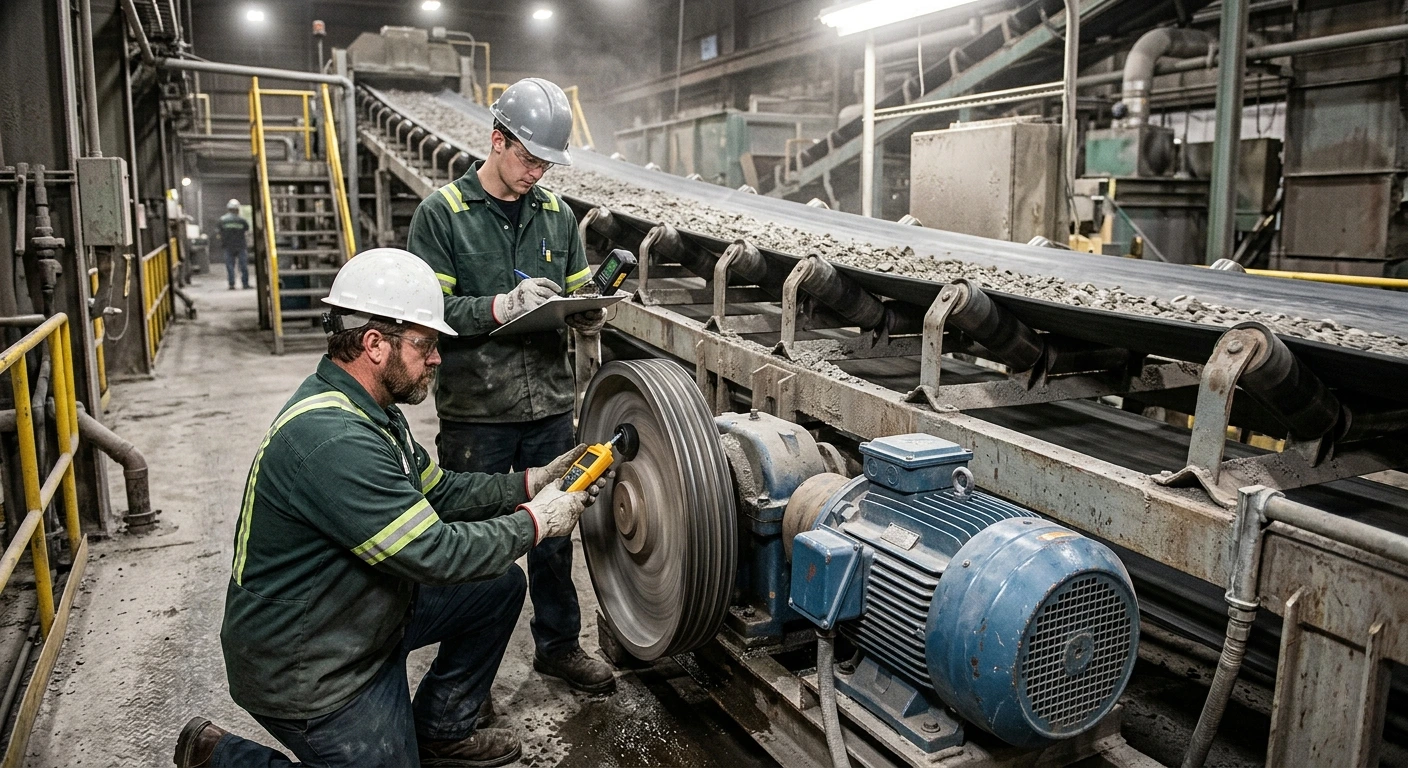
Experienced maintenance technicians verify actual conveyor speed after installation and maintenance work.
Common verification methods include:
- Laser tachometer testing
- RPM measurement
- Conveyor timing checks
- Production output verification
- Vibration analysis
Technicians compare calculated conveyor speed with actual production conditions to identify:
- Belt slip
- Incorrect pulley ratio
- Gearbox issues
- Motor overload
- Bearing vibration
These conditions are frequently related to Pulley Measurement Guide and Pulley Alignment Problems, which help technicians inspect pulley condition, alignment accuracy, and mechanical causes of unstable conveyor operation.
Technicians also compare conveyor speed behavior with topics such as Pulley Diameter and Belt Speed Relationship, RPM to Belt Speed Formula and Calculation, Belt Speed ft/min Conversion Guide, What Is a Good Belt Speed, and Common Belt Speed Calculation Mistakes when troubleshooting production performance and conveyor reliability issues.
Real World Engineering Insight
In Gulf industrial facilities, conveyor belt speed calculation becomes extremely important because many plants operate continuously in dusty and high-temperature environments.
One common issue I’ve seen during shutdown maintenance is technicians increasing conveyor speed to improve production output without verifying belt tension and pulley condition. Initially, production improves, but after several weeks the conveyor begins vibrating heavily and belts start slipping.
Maintenance teams often discover these problems late because small conveyor speed increases may continue affecting material handling stability and mechanical reliability long before major operational failure becomes visible.
In one cement plant, a maintenance team changed conveyor pulleys without recalculating final belt speed. The conveyor began moving material too quickly, causing spillage and unstable loading at transfer points.
After recalculating conveyor speed and correcting pulley dimensions, the system stabilized and material handling efficiency improved significantly.
During troubleshooting, engineers also verified RPM behavior using the How to Calculate Belt RPM guide because incorrect pulley RPM was one of the main causes of unstable conveyor speed and repeated belt slip problems.
During troubleshooting, engineers frequently compare conveyor speed calculations with the Belt Speed Calculator and evaluate pulley dimensions using the Pulley Diameter and Belt Speed Relationship guide to identify hidden speed losses caused by pulley wear, belt slip, and incorrect replacement components.
Experienced technicians understand that conveyor belt speed is not just a calculation. It directly affects production efficiency, material flow stability, equipment reliability, energy consumption, and long-term maintenance costs.
Frequently Asked Questions
What is conveyor belt speed calculation?
Conveyor belt speed calculation determines how fast a conveyor belt surface moves during operation.
Why is conveyor belt speed important?
Conveyor speed affects production output, material handling stability, belt wear, and motor load.
What units are used for conveyor belt speed?
Conveyor speed is commonly measured in meters per second, meters per minute, and feet per minute.
Can incorrect conveyor speed damage equipment?
Yes. Incorrect conveyor speed can create vibration, material spillage, belt slip, and premature component failure.
Should conveyor belt speed be checked after changing pulleys?
Yes. Even a small change in pulley diameter can significantly change conveyor speed. Always verify the new speed after replacing pulleys or modifying the drive system.
How do technicians verify conveyor belt speed?
Technicians commonly verify conveyor belt speed using laser tachometers, contact tachometers, RPM measurements, conveyor timing checks, and production performance observations.
Continue Learning About Conveyor Belt Speed
Calculating conveyor belt speed is only one part of conveyor system optimization. The following engineering guides will help you verify operating speed, troubleshoot performance issues, and improve conveyor reliability.
Engineering Tools
Calculation Fundamentals
- Belt Speed Calculator – Calculate belt speed using pulley diameter and RPM.
- How to Calculate Belt Speed – Learn the complete calculation process.
- Belt Speed Formula Explained – Understand the engineering formula behind belt speed calculations.